
Women’s golf putters
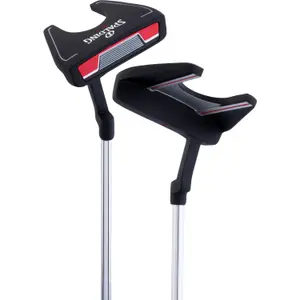
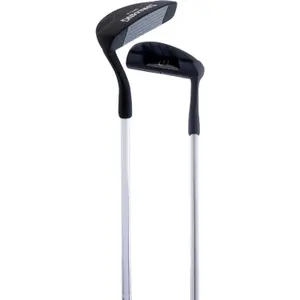


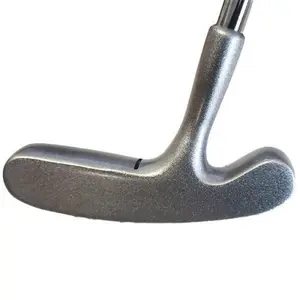
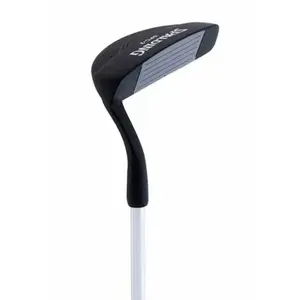

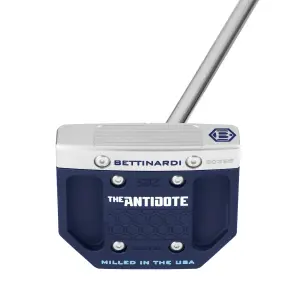
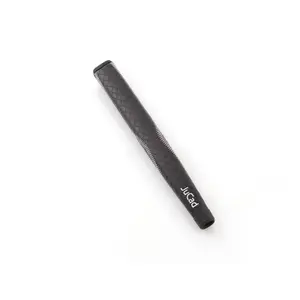
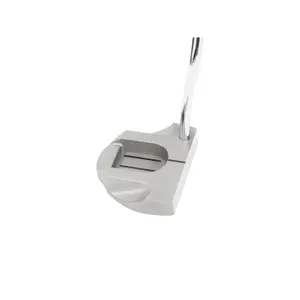
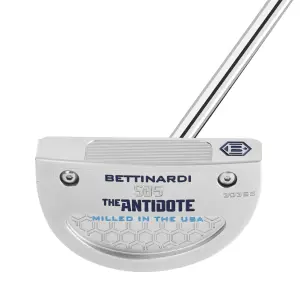
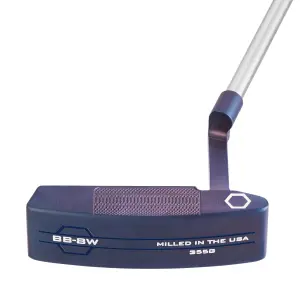
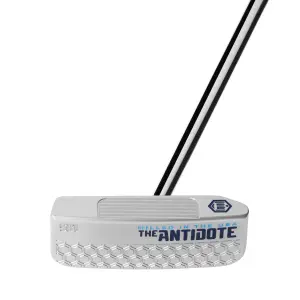
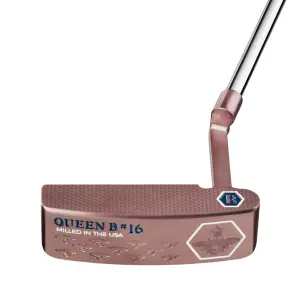
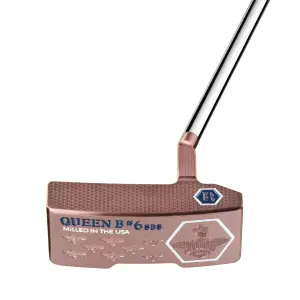
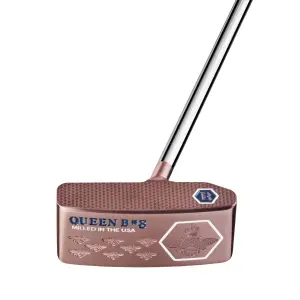
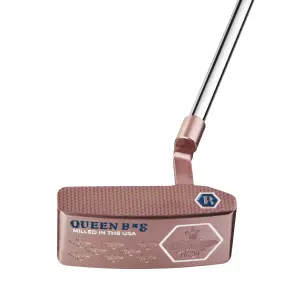
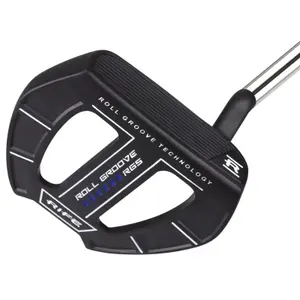
Our selection of women's putters includes the Spalding Bullseye, a blade putter offered in thirty-five inches, along with our tips on how to adjust it to your height, choose between blade and mallet, understand weight distribution and grip, and work on your putting to save strokes on the green.
On the green, every stroke counts.
Putter length: adjusting it for a female golfer
The length is the first adjustment of a putter: at address, the eyes should be positioned above the ball line, or very slightly inside, with the arms hanging freely from the shoulders. A putter that is too long encourages standing up and pushing the ball away, which distorts alignment. Most female golfers play with thirty-two to thirty-four inches; the Spalding Bullseye, delivered at thirty-five inches, can be shortened by a professional, who cuts the shaft and then replaces the grip. This work slightly alters the club's balance, allowing for a head weight to regain the feel of the original.
The rest of the bag
Women's clubs also include:
All clubs are gathered on the women's clubs page.
The Spalding Bullseye and the blade head tradition
The blade head, slim and compact, is the historical shape of the putter. The name Bullseye refers to one of the most famous models in golf history, the Bulls Eye by American John Reuter Jr., patented in 1947, whose shaft was attached at the center of the head for better shot balance. The Spalding Bullseye takes this clean putter idea, appreciated by players who like to feel the ball on contact and whose stroke follows a slight arc. The blade requires more consistency than a mallet but it gives very precise feedback on the quality of centering with each putt.
Blade or mallet, face-balanced or hanging toe
A mallet putter, with a wide and deep head, shifts weight away from the center of the face: it twists less on off-center shots and facilitates alignment thanks to its sight lines. The blade, less weighted at the back, offers more feel. The balancing completes the choice: when balanced on a finger, a face-balanced putter points to the sky and suits straight strokes, while a putter with a hanging toe points towards the ground, supporting arcing motions, with the face opening and closing naturally. The putter grip, the only one allowed to have a non-circular section, finally offers a flat side for properly positioning the thumbs.
Good deals
Good deals can also be found in good plans, promotions, clearance, sales, Black Friday. The new arrivals showcase the latest collections, and items shipped in 24h are prepared and dispatched within 24 hours. The key events of the year follow a stable order: the Black Friday at the end of autumn, the end-of-year holidays, the winter sales, the French Days in spring, followed by the summer sales and back-to-school season.
Frequently asked questions
How to properly hold your putter?
The palms face each other, thumbs flat on the grip’s flat side, with light and constant pressure. The wrists remain firm throughout the action: it’s the shoulders that swing the putter like a pendulum.
Is it allowed to anchor your putter against your body?
No, since January 1st, 2016, the rules prohibit resting the putter or a hand against the body during the stroke. Long putters remain allowed, provided they are not anchored.
How to improve putting skills at home?
A putting mat is enough to work on consistency: aim for a coin or roll the ball between two tees that are barely further apart than the head. A few minutes a day significantly improves face alignment.
How to read the slope of a green?
Observe the green upon arrival, when you can see its general shape, then position yourself behind the ball, crouched, to identify the lowest side. The slower the putt at the end of its journey, the more the slope causes the ball to turn.
Is a thick grip necessary on your putter?
A thick grip limits the action of the small muscles in the hands and wrists, stabilizing the face for players who shake during short putts. A thin grip offers more feel over longer distances.






