
Golf sand wedges for girls
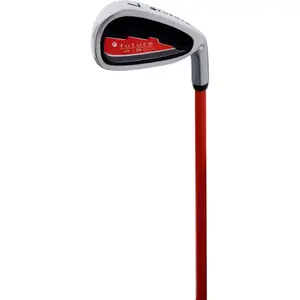
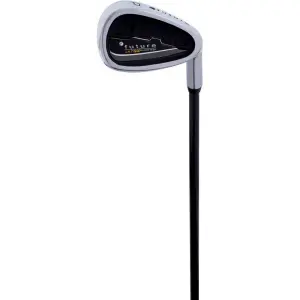
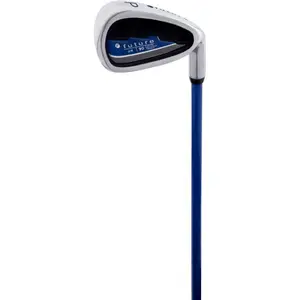

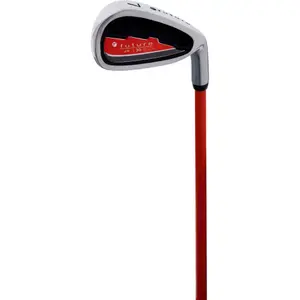
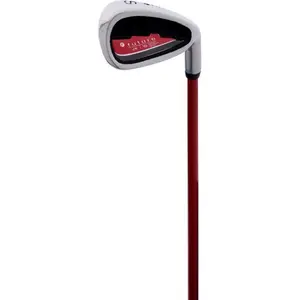
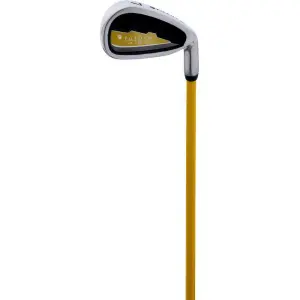
Our page girl's sand wedges brings together our tips for choosing a wedge for a young golfer: a lightweight club with a flexible shaft, a slim grip suitable for small hands, a loft and bounce that make bunker exits and high approaches easier, and markers to adjust the length as they grow and improve.
The short game, with complete confidence.
A lightweight club to accelerate in the sand
The sand offers strong resistance at the club head: to get the ball out, the young golfer must go through this material with speed. That’s why a junior girls' sand wedge focuses on lightness: lightweight head, graphite shaft with flexible bend and reduced overall weight. An adult club, being heavier, makes her tense her arms and slow down before impact, which leaves the ball in the bunker. With a suitable club, she can fully cock her wrists and relax her swing. This ease also benefits lifted approaches, where the ball needs to go high to clear an obstacle and land softly.
The rest of the bag
Girls' clubs also come in:
All clubs are gathered on the girls' clubs page.
Between pitching and lob wedges: the place of the sand wedge
In a complete bag, wedges are distributed by loft levels. The pitching wedge, around forty-four to forty-eight degrees, is used for full shots; the gap wedge, around fifty or fifty-two, fills the gap; the sand wedge, from fifty-four to fifty-eight, takes over; the lob wedge, beyond that, keeps its very high trajectories for experienced players. In a junior half-set, the sand wedge is often the only open club in the bag: it handles bunker exits, chips by the green, and small approaches. This helps the young golfer learn to gauge the distance by adjusting the swing's amplitude.
Grip, lie and length: fitting to her physique
Three adjustments ensure that a sand wedge fits well in hand. The grip should be thin enough for the fingers to wrap around effortlessly: if it's too thick, it restricts wrist action, which is crucial in short game. The lie angle is checked at address: the sole should sit flat, without the toe or heel lifting, otherwise the ball will go off course. The length is measured in relation to the player's height, standing straight with relaxed arms. During each growth spurt, a teacher or a specialized shop checks these three points, and a new grip can be enough to extend the club’s life.
Good deals
Good bargains can also be found in good deals, promotions, clearance, sales, Black Friday. The new arrivals showcase the latest collections, and items shipped in 24 hours are prepared and dispatched within 24 hours. The key times of the year follow a consistent order: Black Friday at the end of autumn, the year-end holidays, the winter sales, the French Days in spring, followed by the summer sales and back-to-school.
Frequently asked questions
What bounce should a young beginner choose?
A high bounce, over twelve degrees, helps the sole glide through the sand without getting stuck and tolerates impacts that are too far behind the ball. This is the most reassuring setting for discovering bunkers.
Can you touch the sand with your club before playing in a bunker?
No, rule 12.2b forbids touching the sand just in front of or behind the ball, as well as during a practice swing or when the club is being lifted. The penalty is two strokes in stroke-play and loss of hole in match-play.
Should you shorten an adult sand wedge for a girl?
This is not advisable: cutting the shaft stiffens the club and leaves a head that is too heavy for a child. A junior model, designed from the start for her size and strength, is much easier to play.
When is the right time to give a sand wedge to a young golfer?
As soon as she plays regularly at the driving range or on a short course, often with a half-set. The sand wedge then allows her to work on her short game, which accounts for a large part of the shots in a round.
How to improve the short game while having fun?
Place a hoop on the green and count the balls that stop in it, or set a challenge for consecutive successful bunker exits. These games develop touch and confidence more quickly than repetitive drills.






