
Racing motorcycle gloves for the track
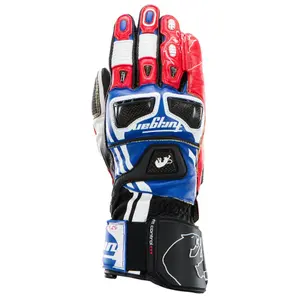


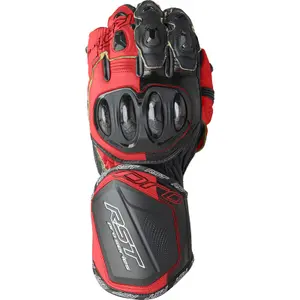


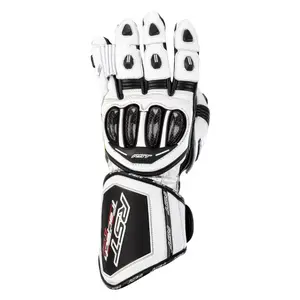


The racing motorcycle gloves gathered here are aimed at the track and sporty roads: goat, cow or kangaroo leather, knuckle protectors, palm sliders to protect the wrist, and long cuffs. You can find the Alpinestars GP Plus R, the RST Pro Series GP with D3O protections, the Furygan Styg reinforced with Kevlar, the Five Stunt, RS-C and SF, and women's cuts at RST and Five.
Maximum protection, from the track to the road.
What distinguishes a racing glove from a road glove
A racing glove is primarily recognised by its long cuff, which extends up the forearm and slips under the sleeve of the leather so that no skin is left exposed during a slide. It is made from thick full-grain leather, reinforced in impact areas. On the back of the hand, a rigid shell covers the metacarpals and phalanges; underneath the palm, a hard plastic slider allows the hand to slide on the asphalt instead of getting caught, protecting the scaphoid, the wrist bone most at risk. Finally, a bridge often connects the little finger to the ring finger to prevent the pinky from turning backwards in a fall.
The other gloves
Motorcycle gloves also come in:
All the gloves can be found on the gloves page.
Alpinestars, RST, Furygan, Five: compared models
The Alpinestars GP Plus R features a palm and back made entirely from leather, dual-density TPU knuckle protection, and a stretch aramid fabric cuff, inherited from the brand's racing gloves. The RST Pro Series GP is crafted from kangaroo leather reinforced with Kevlar, featuring a carbon knuckle shell and D3O protection. The Furygan Styg, made of goatskin leather, adds Kevlar reinforcements in the crash areas and has a long cuff with dual closure. For women, the RST TracTech Evo combines cowhide and kangaroo, while the Five RFX Sport has a feminine cut. The Five Stunt, RS-C, and SF Evo gloves, with short cuffs, maintain a sporty look for the road.
EN 13594 standard and KP rating: reading the label
Since 20 November 2016, wearing certified gloves is mandatory in France for both the rider and passenger of a powered two-wheeler. The EN 13594 standard distinguishes two levels: level 1, designed for the road, and level 2, which has higher abrasion, cut, and tear resistance tests, recommended for the track. The KP marking, for knuckle protection, indicates that the glove has passed the joint protection test. On the label, a motorcycle pictogram reminds users of these results: for track riding, a level 2 KP is aimed for, whereas a level 1 KP is sufficient for sporty road use.
Good deals
Good bargains can also be found in the good deals, promotions, clearance, sales, and Black Friday. The new products showcase the latest collections, and items shipped in 24h are prepared and dispatched within 24 hours. The year's highlights follow a consistent order: Black Friday at the end of autumn, the end-of-year holidays, winter sales, French Days in spring, followed by summer sales and back-to-school season.
Frequently asked questions
What is the difference between a racing glove and a summer motorcycle glove?
The summer glove emphasises ventilation, with a short cuff and textile inserts. The racing glove, made from thick leather, covers the wrist and forearm and adds rigid shells and sliders: it offers better protection in a slide but is warmer in summer.
How to choose the size of racing gloves?
You measure the circumference of your hand below the knuckles, without the thumb, and compare it to the brand's size chart. The glove should feel snug when trying it on, with the fingers almost reaching the end, as the leather stretches slightly over the first few rides.
Is kangaroo leather more durable than cowhide?
At equal thickness, kangaroo leather is more abrasion-resistant, allowing for thinner leather and better feel for the controls. Cowhide, being thicker, remains robust and durable, while goatskin offers a good compromise in flexibility.
How to maintain motorcycle gloves made of leather?
Remove insects and dust with a damp cloth, then nourish the leather with a suitable cream or lotion. When wet, let them dry in the open air, away from a radiator that would harden and crack the leather.
Are racing gloves suitable for everyday use?
They can be worn on the road, but their long cuff does not fit well under a city jacket, and the thick leather keeps you warm in summer. For daily commutes, a racing glove with a short cuff is more practical.






