
Inline skates and quad skates

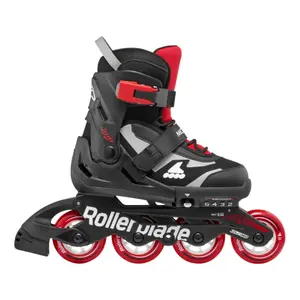


The Rollers page brings together inline skates and quads, from fitness to freeskate, from speed to aggressive skating, from Rollerblade, Powerslide, USD, Iqon, Playlife, Chaya, Fila, Tempish, and FlyingEagle, with adjustable kids' skates that grow with their feet. For skating on leisure rides, in the city, at the skatepark, or over long distances.
Skating in the city, on leisure rides, at the skatepark, or on track.
Fitness, freeskate, speed or aggressive: which roller
The fitness roller, like the Rollerblade Macroblade, combines a soft, padded boot with medium wheels and a heel brake: it's the model for leisure and getting back into it. The freeskate, such as the Powerslide Zoom, Kaze and Imperial, the Rollerblade Twister XT or Iqon, features a hard shell on a short frame for weaving between urban obstacles and executing tricks. The speed roller, with large wheels, like the Powerslide Zoom Renegade, focuses on long-distance gliding. The aggressive model, like the USD Sway, launched by Powerslide, has small hard wheels and a hollow frame for sliding on ramps and rails in the skatepark.
Rollers and skateboards on the site
The world of rollers and skateboards also includes:
- Protective gear, helmets, knee pads, and wrist guards.
- Wheels.
- Spare parts, bearings, frames, and brakes.
- Skateboards.
- Scooters.
- Shoes.
- Accessories.
The quad roller, from Plimpton to derby roller
The quad owes its shape to American James Plimpton, who developed in 1863 a skate with four wheels arranged in pairs, on pivoting axles that turn when you lean your foot. This wide base makes the quad very stable when stationary and moving backwards, which is why it's popular for dancing, casual skating, and roller derby, a contact sport played as a team on an oval track. The stopper, located at the front, is used to brake and pivot. The Chaya quads, like the Airbrush or the Karma Pro, are aimed at dancing and the skatepark, the Fila Quad Ace is suitable for beginners, and the Hudora My First Quad helps younger children find their balance.
Adjustable children's rollers: grow without changing pairs
A child's foot often gains a size each year: the adjustable roller extends thanks to a button or lever that slides the front of the boot, over three or four sizes. The Rollerblade Microblade, the Tempish Enbo Duo, or the Playlife Joker are examples. For beginners, smaller diameter wheels are preferred, which are more stable and slower, with a heel brake and a boot that provides good ankle support. The girls' models, like the FlyingEagle Nadia, have the same adjustments. We check the size at the start of each term: the toes should just touch the front without being curled, with a heel snugly at the back of the boot.
Good deals
Good deals can also be found in the good deals, promotions, clearance, sales, and Black Friday. The new items showcase the latest collections, and the items shipped in 24h are prepared and dispatched within 24 hours. The highlights of the year follow a stable order: the Black Friday in late autumn, the end of year festivities, the winter sales, the French Days in spring, then the summer sales and back-to-school season.
Frequently asked questions
What rollers to choose for starting at adulthood?
A fitness roller with a soft, padded boot, with wheels from 80 to 90 millimeters and a heel brake, offers comfort and stability. You learn to push off, turn and brake before moving on to a more rigid or faster model.
How to brake on inline skates?
The heel brake is the simplest: you move the foot with the brake forward, lift the toe, and apply pressure gradually. The T-stop, dragging a wheel sideways behind you, comes next, followed by the snowplow and the slide for those more comfortable.
What shoe size to take for rollers?
You generally take your street shoe size, trying them on with sports socks. The toes should just touch the front and the heel shouldn't lift; a rigid freeski shell hardly stretches over time.
What hardness of wheels to choose?
The hardness is measured in A: around 82A or 85A for city and fitness, softer for grip on damaged surfaces, harder, around 88A and above, for aggressive skating on smooth concrete. A soft wheel absorbs better but wears out faster.
At what age to start roller skating?
Around three or four years old, a child can start learning with adjustable rollers with small wheels, or with a more stable quad. The first sessions are on a smooth, flat surface, first learning to fall and get back up.






