
Aviron Bayonnais, the Basque club
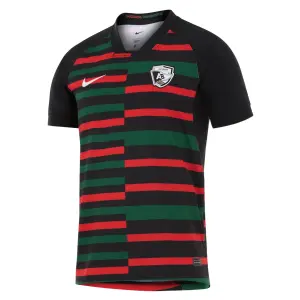
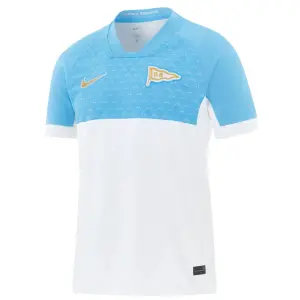
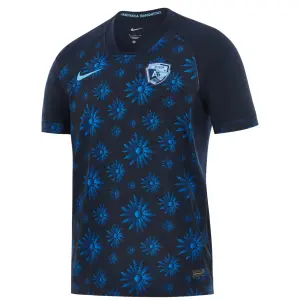


Our Aviron Bayonnais page brings together the home and away jerseys of the Basque club and its home and away socks, and tells the story of a rowing club that has become a stronghold of rugby: the Brennus Shield from 1913, the Jean-Dauger stadium, the Peña Baiona taken over by the stands, and the sky blue and white.
The sky and white of the Basque Country.
Rowers from the Adour to the Brennus of 1913
The Aviron Bayonnais was founded in 1904 by rowers breaking away from the Société nautique de Bayonne; the rugby section was created in 1906, driven by the Landesman Pierre Fabre. The success was rapid: in 1913, the club defeated SCUF in the final and won the Bouclier de Brennus, propelled by a passing game that was innovative at the time. The title of 1934, won in the final against local rivals Biarritz, followed by that of 1943, rounds off the achievements of a club that has kept, over the century, the name of its original discipline.
The other clubs
The clubs of Top 14 and Pro D2 are also present:
- Stade Toulousain.
- Union Bordeaux Bègles.
- Stade Rochelais.
- Castres Olympique.
- Racing 92.
- Montpellier Hérault Rugby.
All clubs are brought together on the Top 14 and Pro D2 page.
Jean-Dauger, the Peña Baiona and the derby
The club plays at the Jean-Dauger stadium, named after the international player from Aviron in the forties and fifties, a master of the game in Bayonne. Before kick-off, the stands join in the Peña Baiona, a tune from the bandas that has become the anthem of the city and the Bayonne festivals, sung while standing by the entire stadium. On days of Basque derby against Biarritz, just a few kilometres away, the arena is adorned in sky blue and white in a fervour that spills over into the streets of Petit Bayonne.
Sky blue and white shirts and club socks
The home shirt features the sky blue and white of Aviron, with the club crest on the heart, the one you see every weekend in the stands of Jean-Dauger. The away shirt, in a different shade, is used for travels and allows for a change of kit. The socks, for both home and away, go up to just below the knee, completing the gear for supporters who play themselves, whether in leisure rugby or at rugby school, and want to wear the Bayonne colours from head to toe.
Good deals
Great deals can also be found in the good deals, promotions, clearance, sales, Black Friday. The new arrivals showcase the latest collections, and items shipped in 24h are prepared and dispatched within 24 hours. The major events of the year follow a stable order: the Black Friday at the end of autumn, the end-of-year festivities, the winter sales, the French Days in spring, followed by the summer sales and back to school.
Frequently asked questions
What size rugby socks should I choose?
Rugby socks are chosen based on shoe size, with each size covering a range of two or three sizes. If you're between two sizes, go for the larger one if you wear shin guards, and the smaller one for a firmer fit.
How can I stop my rugby socks from slipping?
During matches, many players wrap a sticky tape or elastic band just below the knee to hold up the sock. For training or in the stands, an elastic cuff is sufficient, as long as you don't wash the socks too hot, which loosens it.
How do I wash a rugby shirt without damaging it?
Turn it inside out, wash it at a maximum of thirty degrees on a delicate cycle, without fabric softener, which clogs up the technical fibres. Dry it on a hanger rather than in the tumble dryer, and never iron the crest or markings.
What’s the difference between a supporter shirt and a match shirt?
The match shirt is cut close to the body in a stretchy fabric that offers little grip to the opponent. The supporter shirt has the same design but is cut straighter and more comfortably, designed for the stands and everyday wear.
Against whom did Aviron win the 1943 final?
In 1943, during the war, Aviron Bayonnais won decisively against CASG, a Parisian club, with a score of thirty-three to zero. This victory concluded a prosperous era that began thirty years earlier with the Brennus of 1913.






