
VI Nations: the Tournament jerseys


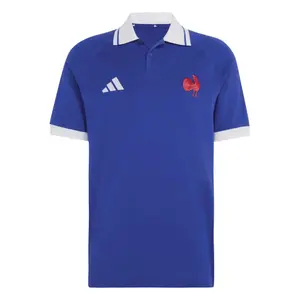


The VI Nations page brings together the jerseys, shorts, jackets, scarves, flags, and balls of the six teams in the Tournament: France, England, Ireland, Scotland, Wales, and Italy, in supporter or authentic versions, for adults and children. The oldest international rugby tournament is experienced in the stands as well as in front of the screen, in the colours of your nation.
The colours of the six nations in the Tournament.
From 1883 to the Six Nations Tournament
The Tournament began in 1883 between England, Scotland, Ireland, and Wales, under the name of the Home Nations Championship. France joined in 1910 to form the Five Nations Tournament, before being excluded in 1931; it only returned to the competition in 1947, after the war. Italy made its entry in 2000, and the event took on its current name of Six Nations Tournament. Every winter, between February and March, each team faces the other five once, alternating the hosting from one edition to the next. Since 2017, bonus points reward large victories and narrow defeats.
Grand Slam, Triple Crown and match trophies
Winning all five matches means achieving the Grand Slam, the ultimate feat of the Tournament. The Triple Crown goes to the British or Irish team that beats the other three. Several matches also have their trophy: the Calcutta Cup between England and Scotland since 1879, the Millennium Trophy between England and Ireland since 1988, the Centenary Quaich between Scotland and Ireland since 1989, the Giuseppe Garibaldi trophy, designed by Jean-Pierre Rives, between France and Italy since 2007, and the Auld Alliance trophy between France and Scotland since 2018, in memory of players who died during the Great War. The last place gets the wooden spoon.
Supporter or authentic jersey: how to choose
Each nation offers its jersey in two versions. The supporter version features a looser fit and soft fabric, comfortable for the stands or everyday wear, and can be washed without special care. The authentic version, or player version, has a tighter fit like that of the internationals, with fabric that is more resistant to pulls and panels that limit opposing grabs: it’s often chosen one size up. Scotland and Italy, dressed by the Italian supplier Macron, offer their home and away jerseys, just like Wales. Kids' jerseys allow young supporters to wear the same colours as their favourite players.
The nations
The page is organised by nation:
The other teams, rest of the world, other nations, can be found on the nations page.
Colours and emblems of the six nations
Each jersey carries a strong identity. France plays in blue, marked by the rooster; England in white with the red rose; Ireland in green, with the shamrock, and it unites players from the Republic of Ireland and Northern Ireland under one jersey. Scotland wears navy blue with the thistle, Wales dons red and the three feathers of the Prince of Wales, and Italy has the azure inherited from the House of Savoy. Each nation also releases an away jersey, worn in case of a colour clash with the opponent, often in a more unexpected shade that refreshes the supporter’s wardrobe.
Frequently asked questions
What size rugby jersey should I get?
The supporter version fits like a standard t-shirt, while the authentic version is very fitted. Compare your chest measurement to the brand's guide, and for a player jersey, take one size up if you want some room.
When does the Tournament take place?
The Tournament is held every winter, over five matchdays from early February to mid-March, with rest weekends between certain matchdays. The schedule alternates between home and away matches from one edition to the next.
What is the Crunch?
This is the nickname for the match between France and England, the most anticipated encounter of the Tournament from the French perspective. The rivalry between the two neighbours often makes it a decisive match for the title or the Grand Slam.
How should I care for a rugby jersey?
Wash it inside out, at thirty degrees and without fabric softener, to preserve the printing, badges, and fabric treatment. Air dry it, never tumble dry, and avoid ironing the prints.
What should I wear to the stadium in February for a Tournament match?
A jersey should be worn over a warm layer, with a jacket and a scarf in the colours of your nation, as the stands can be cold in the evening. A flag completes the outfit to support your team during the anthems.






