
Volleyball socks


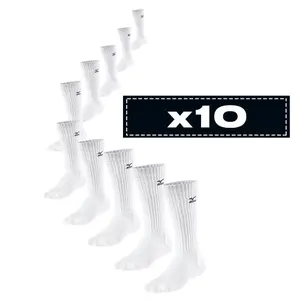
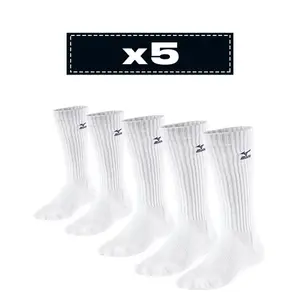
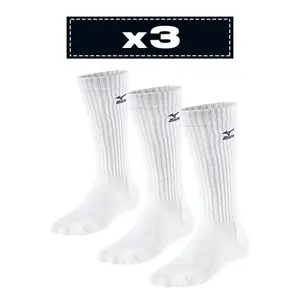
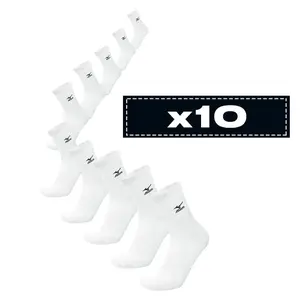
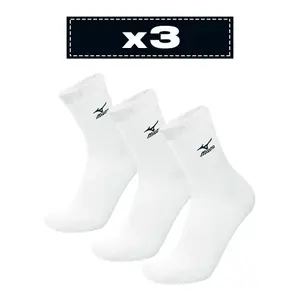
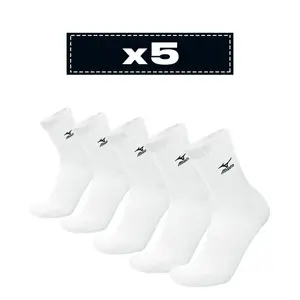


Our selection of Socks for volleyball includes player socks: Mizuno Volley, high and Comf, Mikasa Quarter and Technical short, Piu Adrenalina Samba, Figi and Best, as well as socks of the French team.
The comfort of your foot, jump after jump.
A technical sock
In volleyball, the foot takes on hundreds of jumps and receptions per match, along with many lateral movements. The volley sock is therefore technical: it has a reinforced cushioning under the heel and forefoot to absorb shocks, a breathable mesh on top to wick away sweat, and support at the arch to prevent the sock from slipping in the shoe. It thus reduces blisters and friction burns.
The rest of the textile
Volleyball textile also comes in:
All the textile can be found on the textile page.
Two lengths
The high socks, like the Mizuno high ones or those of the French team, go up to the calf: they protect the shins during slides and dives in defence, and form part of the official kit. The short socks, or quarter socks, like the Mikasa Quarter and Technical, stop above the ankle: lighter and cooler, they are preferred for training. The Piu Adrenalina, Samba, Figi and Best, and the Mizuno Comf focus on comfort and colour.
Size and care
You choose your socks based on your size, without any bunching underfoot that could cause blisters. Club socks are often chosen in the colours of the team, matching the shirts and shorts. You wear the socks you trained in during a match, to avoid surprises. They should be washed inside out, at thirty degrees, without fabric softener, which reduces the mesh's ability to wick away moisture, and you should replace your pair when the cushioning wears thin.
Good deals
Good deals can also be found in good deals, promotions, clearance, sales, Black Friday. The new arrivals showcase the latest collections, and items shipped within 24h are prepared and dispatched in 24 hours. The major events of the year follow a stable order: Black Friday at the end of autumn, the end-of-year holidays, the winter sales, the French Days in spring, followed by the summer sales and back-to-school.
Frequently asked questions
High or short socks for playing volley?
High socks protect the knees and shins during dives and slides on the floor. Shorter ones, which are cooler, suit players who wear knee pads and prefer lightness over protection.
What size of socks to choose?
Take the size range that includes your shoe size. If you're on the edge of two ranges, the smaller one fits better and doesn't bunch up in the shoe, which is the main source of blisters during matches.
Do volley socks work for beach volley?
Beach volley is played barefoot: indoor socks are not useful there. Only specific sand socks are used, in high heat to protect from the burning sand, or in cold weather.
How to wash sports socks without damaging the cushioning?
Turn them inside out and wash them at thirty or forty degrees, without fabric softener as it reduces sweat wicking. Avoid high-temperature tumble drying, which loosens the elastic fibres.
Why do volley socks have reinforced cushioning?
A player jumps and lands hundreds of times per match: the cushioning under the heel and forefoot absorbs some of the shocks and protects the sole. It also limits friction, hence blisters, during lateral movements.






