
Outdoor gear on sale: water bottles


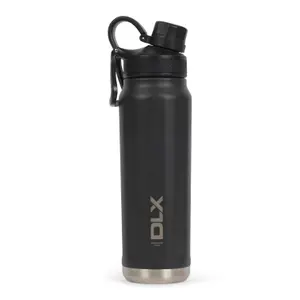


The sales on Outdoor Equipment focus on hikers' hydration: insulated stainless steel bottles Stanley, soft flasks Hydrapak that roll up when empty, lightweight Tritan bottles Regatta, aluminium bottles O'Camp or those by Esbit. Perfect for keeping water cool in summer, having a hot drink in winter, or travelling light on a trail, all at a discounted price.
Drink at the right temperature, at a discounted price.
Stainless steel double wall: how an insulated bottle works
An insulated bottle relies on two stainless steel walls separated by an air gap: without air between them, heat hardly circulates, neither to the outside nor to the inside. This is the principle that William Stanley Jr. patented in 1913 with a fully steel vacuum bottle, stronger than the glass models of the time, which gave rise to the Stanley brand. The Klean Kanteen Rise and Élémenterre Kaktus bottles follow the same construction. An insulated bottle keeps a drink cool or hot for long hours, but it weighs more than a single-wall bottle: it's the right choice for a sunny day or a winter outing, less so for a trek where every gram counts.
Other outdoor sales
Outdoor sales are also available for:
All outdoor sales can be found on the outdoor page.
Foldable straw, loop cap or handle: which drinking system
The cap changes how a bottle is used just as much as its material. The Stanley IceFlow includes a straw that pops up with a gesture: you can drink while walking, without unscrewing or tilting your head, and it folds down for travelling closed. The Stanley Quencher FlowState, with its handle and three-position rotating lid, is better suited for camping, the car or base camp than for walking. The loop cap of the Klean Kanteen Rise attaches to a carabiner or can be held with a finger, and its wide mouth accommodates ice cubes. Before setting off, you check the seal by turning the full bottle upside down over a sink.
Soft flasks, Tritan and aluminium: lightweight bottles
When weight is a priority, we leave stainless steel for lighter materials. The soft flasks Hydrapak, like the Packflask or Flux, roll up when empty and fit in a pocket: trail runners and hikers fill them at water fountains and shelters. The Tritan bottle from Regatta, a rigid copolyester without BPA, remains clear and can withstand falls on rocks. The aluminium bottle from O'Camp combines lightness and durability; it does not retain temperature, making it suitable only for cool or room temperature water. None of these lightweight bottles insulate: in strong heat, keep it out of direct sunlight to maintain pleasant drinking water.
Cleaning a bottle and avoiding odors
A bottle should be rinsed with hot water after each outing and dried cap open, upside down, to ensure no moisture is trapped inside. Once a week, or after putting anything other than water inside, it should be washed with a bottle brush and a few drops of dish soap; to combat a persistent taste, a spoonful of baking soda left overnight in hot water does the trick. The silicone seals in the cap often come apart: this is where deposits can accumulate. For insulated bottles, whether they can go in the dishwasher depends on the model: some accept it, others do not, and the exterior paint wears off more quickly. So, follow the manufacturer's instructions.
Frequently asked questions
How much water to bring for a day of hiking?
On average, you should plan for half a litre of water per hour of walking, more if you're going uphill or it's very hot. For a full day, two litres is a good base, to be topped up at sources and fountains marked on the map before you depart.
Can you put a fizzy drink in an insulated bottle?
Most manufacturers advise against it: the gas puts the cap under pressure and can cause leaks or sudden openings. Check the model's instructions, and also avoid milk or juices left for a long time, which can ferment.
Does a stainless steel bottle give a taste to the water?
Food-grade stainless steel is neutral and doesn't transfer any taste, unlike some low-quality plastics. A slight metallic taste may appear on a new bottle: a first careful wash with hot water usually suffices to make it disappear.
What size bottle to choose for trail running?
For trail running, it’s better to have several small containers of about half a litre, distributed at the front of the vest, rather than one large bottle. They can be drunk without stopping, balance the load, and leave space free once empty.
Can you freeze a bottle to keep water cool?
You don’t freeze an insulated bottle: when water freezes, it takes up volume and can warp the wall or damage the vacuum. A Tritan bottle or a soft flask filled to three-quarters can handle this better, depending on the manufacturer's instructions.






