
The Black Friday Equestrian
The Black Friday equestrian sale brings together equipment for riders and their horses as winter approaches: breeches with knee patches or full seat, riding jackets and gilets, boots and ankle boots, helmets, stable and turnout rugs, halters and grooming products. Riders and horse owners prepare for cold weather sessions and long days in the stable, from the riding school to the competition field.
It's time to get ready for winter at the stables and find a gift for a rider.
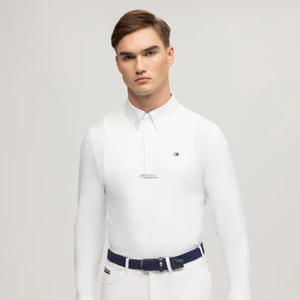
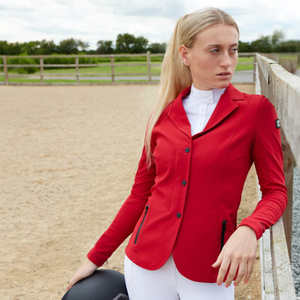
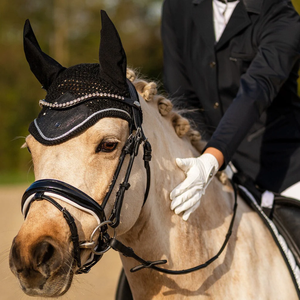
Riding trousers: knee patches, full seat and grip
A riding trouser is primarily distinguished by its grip on the saddle. Knee patches, reinforcements placed on the inside of the knees, allow for free movement of the legs and are suitable for jumping, where the rider often balances on their stirrups. The full seat extends this reinforcement to the rear and inside of the thighs: it provides a stable and deep seat for dressage. Silicone grips have largely replaced leather and suede, as they provide grip without slipping and dry quickly. For winter, a thermal version lined with brushed fleece retains heat during long sessions in the outdoor arena.
By audience
The offer is organised by audience:
- Women, trousers, jackets and boots.
- Men.
- Horse accessories, blankets, halters and grooming.
Boots, ankle boots and mini chaps: the right shaft height
The choice is between the tall boot and the ankle boot paired with mini chaps. The boot, made of leather or synthetic material, is chosen based on foot size, shaft height and calf circumference, measured at the widest part: when new, it should reach just below the knee bend, as the leather will compress as it breaks in. The ankle boot, shorter, can also be worn on foot for stable duties, and the mini chaps, gaiters that cover the calf, replicate the contact of a boot against the horse's side. In all cases, a marked heel prevents the foot from slipping through the stirrup in case of a fall.
The rest of the Black Friday
The Black Friday also comes in different categories: football, running, lifestyle, indoor sports, winter sports, top brands, on the Black Friday page.
Horse blanket: size, filling and clipping
A blanket is chosen based on the horse's length, measured from the middle of the breast to the point of the hindquarters along the side; this measurement in centimetres corresponds to the size indicated by manufacturers. The filling, expressed in grams, determines the warmth: a blanket without filling protects against rain and wind, a lightweight model is suitable for autumn, and a heavy model for the coldest weather. A clipped horse needs a warmer blanket than one that retains its winter coat. In the paddock, a waterproof and breathable fabric, resistant to tearing, is chosen, and a lighter stable blanket is kept for the night in the box.
Frequently asked questions
What standard must a riding helmet meet?
In Europe, a riding helmet bears the CE mark and meets the EN 1384 standard, the 2023 version of which strengthens impact testing. It is chosen based on the exact head circumference, without any movement, and should be replaced after any heavy fall, even if there are no visible marks on the shell.
What jacket should you wear when riding in winter?
A down jacket or a back-slit riding jacket falls on either side of the saddle without riding up at the back. A short cut allows for free hand movement on the reins, and reflective strips make the rider visible during evening rides.
Should you wear a body protector when riding?
A back protector is recommended for jumping and mandatory on the cross country course in eventing. It absorbs some of the impact in the event of a fall on the back. It should be chosen based on the length of the torso, without hindering the seat or touching the saddle's cantle.
What gloves should you choose for riding in winter?
Equestrian gloves with insulation keep fingers warm while maintaining feel on the reins. Look for a reinforced palm between the ring and little fingers, where the rein passes, and a snug wrist that stops cold air from getting in.
How do you choose a halter for your horse?
The halter is chosen based on the horse's size, typically pony, cob or full, with a noseband allowing two fingers to pass underneath. Nylon resists the elements and is easy to wash, leather is more elegant, and a halter lined with sheepskin prevents rubbing in the box.






