
Basketball shoes Peak


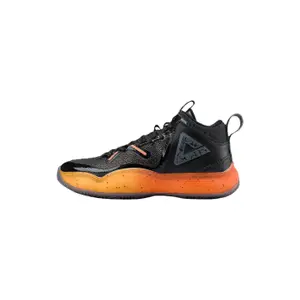


Our basketball shoes Peak page features the Chinese brand that has equipped Tony Parker and Dwight Howard, along with its Taichi cushioning technology, a foam that adapts to the force of impact. You will also find our tips for choosing between high-top and low-top styles, finding the right size, and maintaining the grip of the sole on the court.
Cushioning from China, on the court.
Peak and NBA players
Peak, a Chinese brand founded in 1989 in Quanzhou, gained international recognition in basketball by teaming up with NBA players. French point guard Tony Parker had a signature line named after him, designed around his speed and changes of pace, while centre Dwight Howard, a multiple All-Star Game selection, also received his own models. These shoes showcased the brand's technical prowess, as it designs its basketball models for the demands of high-level play: hard landings, repeated jumps, and rapid direction changes.
Other brands
Basketball shoes are also available by brand:
All shoes can be found on the shoes page.
Taichi, cushioning that adapts to impact
The Taichi technology has become the signature of Peak. It is a so-called adaptive foam, whose response varies according to the force and speed of the impact: it is soft when the foot lands gently, while walking or jogging, but it firms up during a violent shock, like landing from a rebound or a dunk, to cushion and then stabilize the foot. Its name references tai-chi, a Chinese martial art that combines flexibility and firmness. For a basketball player, the benefits are twofold: comfort throughout the game and a base that doesn’t compress when the ankle absorbs the most pressure.
High-top or low-top depending on your position
A basketball shoe is primarily chosen based on one’s playing style. Big men, who grapple for rebounds and sometimes land on an opponent's foot, prefer a high-top shoe and generous cushioning in the heel. Guards and forwards, who rely on quick starts and crossovers, opt for a low-top, lighter shoe that allows freedom of movement at the ankle. Traction then depends on the sole: a tightly chevron-patterned sole grips the court, while a thicker rubber sole performs better on outdoor asphalt. Finally, the heel counter must secure the foot to prevent slipping during sudden stops.
Good deals
Great bargains can also be found in the good deals, promotions, clearance sales, sales, and Black Friday. The new arrivals showcase the latest collections, and items shipped within 24h are prepared and sent out in 24 hours. Major sales events occur throughout the year in a steady order: Black Friday in late autumn, the holiday season, winter sales, the spring French Days, then summer sales and back-to-school promotions.
Frequently asked questions
Does a Peak basketball shoe suit playground use?
It all depends on the sole's rubber: a soft rubber made for courts wears out quickly on asphalt. For outdoor play, check that the model specifies an outdoor-resistant sole, and if possible, keep a pair dedicated for the gym.
What size should I choose for a basketball shoe?
Try on the pair at the end of the day, wearing the thick socks you use for playing, and leave about half a centimetre in front of your big toe. When jumping, the heel shouldn’t lift off: if it does, tighten the lacing or try a different size.
How long do a pair of basketball shoes last?
For a player training two to three times a week, a pair maintains its quality for several months to a year. Signs of wear include: cushioning that feels hard upon landing, a slick sole that slips, and a heel counter that no longer supports the heel.
How to maintain basketball shoes?
Wipe the soles after each session, as dust reduces grip on the court. Allow the pair to air dry, with insoles removed, away from a radiator, and never put them in the washing machine, which damages the glue.
Do high-top shoes prevent sprains?
A high-top design restricts ankle mobility and provides a sense of support, but its actual effect on preventing sprains is debated. Tight lacing, balance training, and wearing an ankle brace after an injury are more reliable protections.






