
Golf practice mat
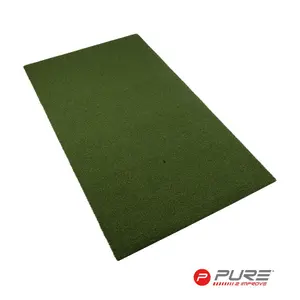
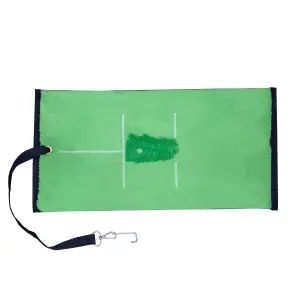
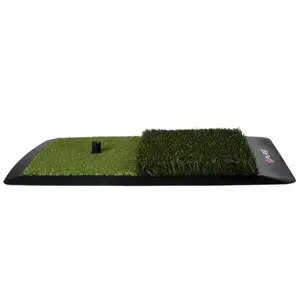
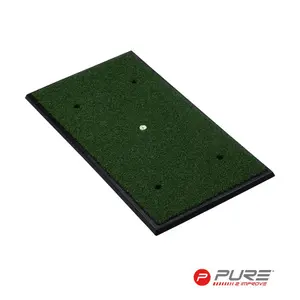
Our Practice Mats page brings together our tips for hitting golf balls at home, in the garden or in a garage: dense synthetic grass, shock-absorbing underlay, rubber tee placement, dimensions and foot placement area, to choose a mat that protects the wrists and clubs and faithfully replicates a fairway lie.
The practice, at the end of the garden.
What the practice mat brings to training
The practice mat allows you to repeat your swing without damaging the lawn or depending on the club's schedule. Its surface, always the same, helps compare shots from one session to another and work on a specific point: grip, ball position, weight transfer. Golfers maintain their feel in winter, when the courses are waterlogged, and beginners learn to hit the ground after the ball without fear. A short daily session reinforces habits better than a long session once a month, hence the value of a mat always ready for use.
Other accessories
Golf accessories also come in various forms:
All accessories can be found on the accessories page.
Fibres, underlay, and tee: anatomy of a good mat
A good mat is primarily judged by its fibres: dense and short, they mimic a closely mown fairway and allow the club head to glide instead of bouncing. Below, a thick foam or rubber underlay absorbs the impact when the club hits the ground, protecting wrists, elbows, and the soles of the irons. Some models feature a short grass section for irons and a thicker area, or a tee holder made of rubber for woods and the driver. A heavy or non-slip base prevents the mat from moving during the swing.
Dimensions, installation, and lifespan of the mat
The dimensions determine its use: a hitting mat alone, about a metre long, is easy to store, while a large mat that accommodates feet places the player at the same level as the ball for a realistic stance. It should be installed on a surface that is flat and hard, checking the available height for a complete swing with the longest club. Outdoors, a draining and UV-resistant model withstands rain and sun. Regularly brush the fibres to straighten them and slightly shift the impact point from one session to another to spread the wear.
Good deals
Great deals can also be found in the good deals, promotions, clearance, sales, Black Friday. The new arrivals showcase the latest collections, and items shipped within 24 hours are prepared and sent within 24 hours. The highlights of the year follow a stable order: Black Friday in late autumn, the holiday season, the winter sales, the French Days in spring, then the summer sales and back to school.
Frequently asked questions
What thickness of practice mat should I choose?
For hitting irons, aim for a thick and firm underlay that absorbs impact without sinking. A mat that is too thin will bounce on the hard ground, tiring the joints and giving false feedback with each contact to the ground.
Can a practice mat be used indoors?
Yes, if the ceiling height allows for a full swing with your longest club. Place the mat on a flat and stable surface, and start with half-swings to check the available space around you.
Does a practice mat damage clubs?
A mat with dense and soft fibres wears irons very little. Entry-level models, with stiff fibres laid on a hard base, grip the club's sole more and mark the heads faster.
Does a practice mat hide fat shots?
Partially, as the club glides over the fibres even when it hits the ground too early. Watch the ball flight and the mark left on the mat: a clear mark before the ball's position indicates a premature contact.
When should I replace my practice mat?
When the fibres remain flattened despite brushing, when the underlay becomes hard, or when the club catches on impact. At this point, the mat no longer cushions and does not replicate the behaviour of a fairway.






