
New and training golf balls


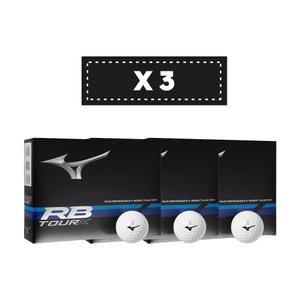
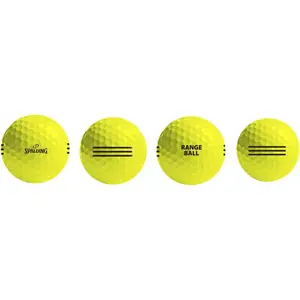
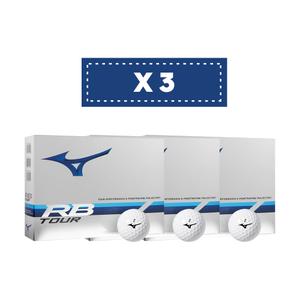
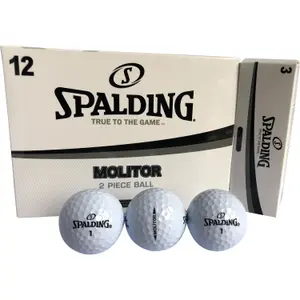
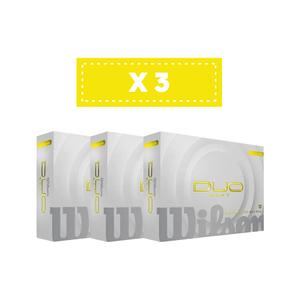
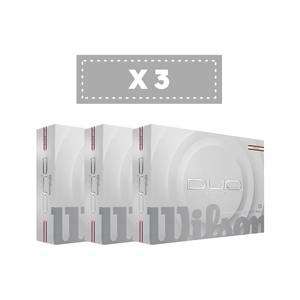
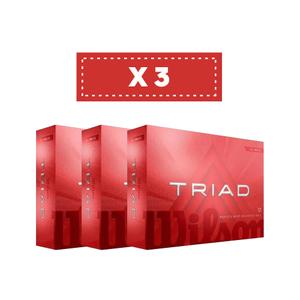
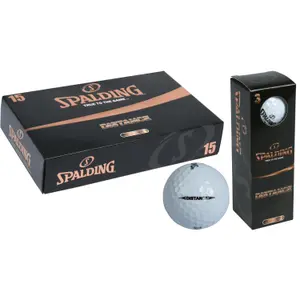
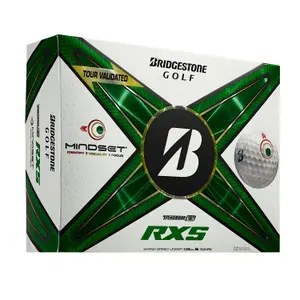
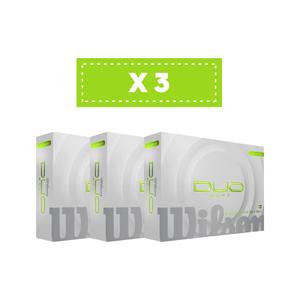
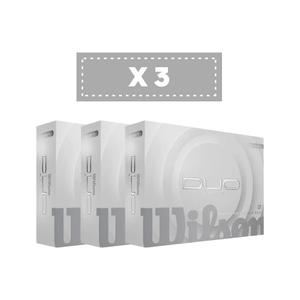
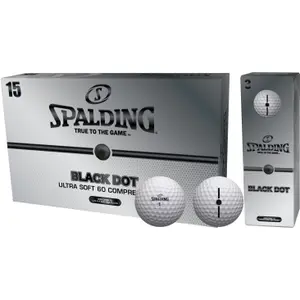
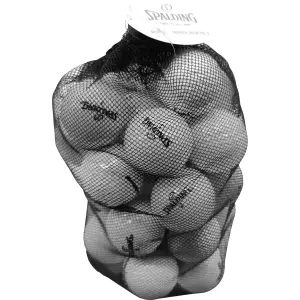
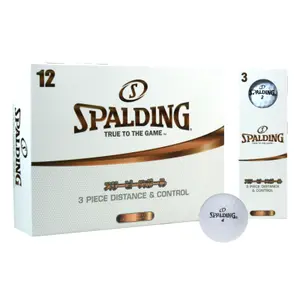
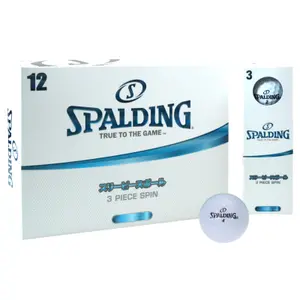
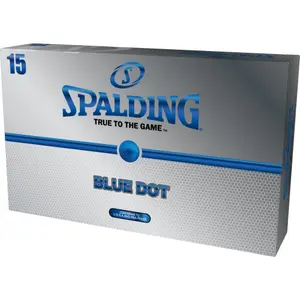
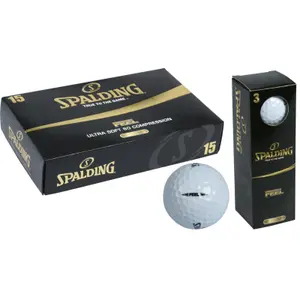
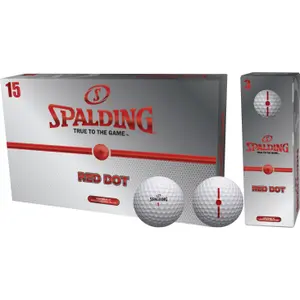
Our selection of golf balls includes new balls for the course and training balls for the driving range or the garden. Two-piece balls for distance and durability, multi-layer balls with a urethane cover for control around the green, compression suited to swing speed: everything you need to find the ball that matches your level.
The ball that fits your game.
Diameter, weight, dimples: what the rules say
A golf ball that meets the R&A and USGA rules has a diameter of at least 42.67 millimeters and weighs no more than 45.93 grams. There are no maximum size or minimum weight limits set, but a ball that is larger or lighter would lose distance. The rules also cover initial speed, symmetry, and total distance, which are measured on a machine.
The dimples, typically between three hundred and five hundred depending on the model, create a thin layer of turbulent air that reduces drag; combined with backspin, they generate lift that makes the ball fly. Their number is not regulated, but their design influences the trajectory height.
By type of ball
Balls come in different types:
Golf accessories also include gloves, tees, training equipment, practice mats, umbrellas, electronics, on the accessories page.
Two-piece or multi-layer: how a ball is made
The two-piece ball combines a large rubber core with an ionomer cover, a hard and cut-resistant resin. It spins less, which reduces slices and hooks, and travels far: it's the ball for beginners and casual players. The multi-layer ball, with three, four, or five layers, has intermediate layers and adopts a cover made of urethane, which is softer and grips the grooves of wedges.
The result: more spin on approaches, a ball that stops quickly on the green, and a softer feel when putting. However, urethane marks more easily, and the ball costs more, which makes it suitable for regular and precise players.
New, training, or recover: what use
New balls ensure consistent compression and performance from one ball to another, which is essential for playing a course or competition. Training balls meet different needs: foam balls or limited-flight balls for practicing your swing in the yard safely, practice balls with thick covers that can withstand thousands of hits but don't fly as far.
In between the two, recovery balls, retrieved from water hazards and sorted, are suitable for courses where many are lost. Before going out, mark your ball with a pen: the rules consider a ball lost if the player cannot identify it.
Good deals
Good bargains can also be found in good deals, promotions, clearance, sales, Black Friday. The new arrivals showcase the latest collections, and items shipped within 24 hours are prepared and dispatched in 24 hours. The highlights of the year follow a stable order: Black Friday in late autumn, the year-end holidays, the winter sales, the French Days in spring, then the summer sales and back-to-school.
Frequently asked questions
What compression to choose according to your swing speed?
A low-compression ball, often under seventy, deforms more on impact and is suitable for swings that are slow, such as those of many beginners and seniors. Fast hitters prefer a high compression, around ninety or more, to better control their trajectory.
How to clean your golf balls?
Soak the balls for about twenty minutes in warm soapy water, then brush the dimples with a soft brush. Avoid abrasive products or bleach, which dull the cover; on the course, a damp towel is enough between holes.
Does a golf ball lose its qualities over time?
A new ball stored at room temperature keeps its performance for several years. However, the heat of a car trunk, extreme cold, or a long stay in water can damage the core and reduce distance.
Why play with a coloured ball?
A yellow or orange ball is easier to spot in tall grass, under a grey sky, or in low winter light. Its performance is the same as a white ball of identical construction: the choice is a matter of visual comfort.
Why do my balls go to the right?
For a right-handed player, a ball that goes to the right often indicates an open clubface at impact or a swing path that goes from outside to inside, creating a slice effect. A two-piece ball, which spins less, reduces this curve without correcting it.






