
Club space to equip your handball club




The club space for handball brings together purchases made at the level of an association: goals and nets, sets of balls, kits of uniforms, socks and glues ordered in bulk. This page helps leaders organize these purchases by category, from the handball school to seniors, and plan an annual budget without leaving any team out.
Everything needed to keep a club running.
An equipment plan by age category
The easiest way is to create a table by category: number of licensed players, ball size, kits to renew, coach's needs. The youngest players use size zero or one, the middle schoolers use size one or two depending on gender and age, the senior women use size two and the senior men use size three. This breakdown prevents a youth team from practicing with balls that are too heavy taken from the adults. It also allows for orders to be grouped by size and to take advantage of batches rather than buying items individually as needed.
The rest of the equipment
The handball equipment also includes:
All equipment is gathered on the equipment page.
Four-a-side goals and mobile goals for handball school
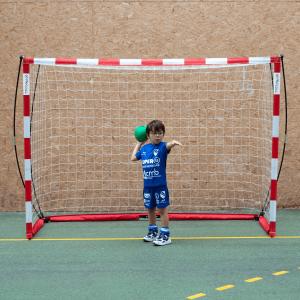
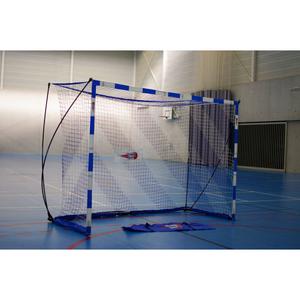
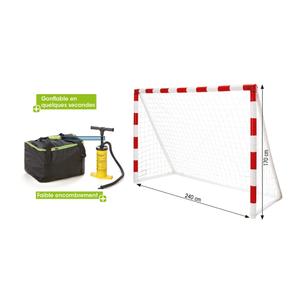
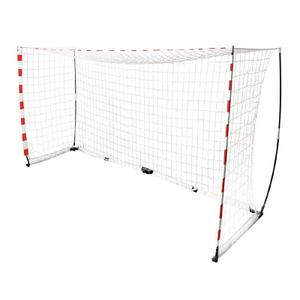
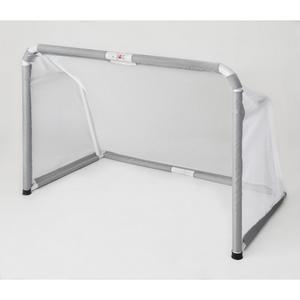
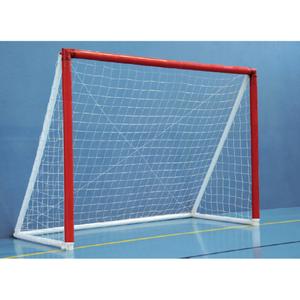
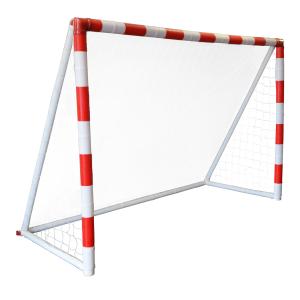
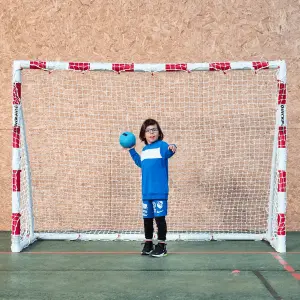
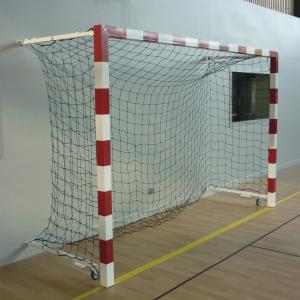
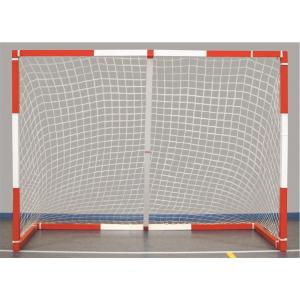
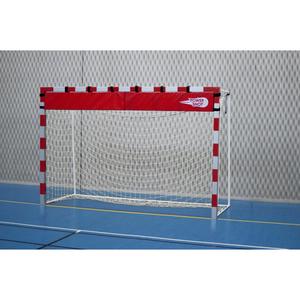
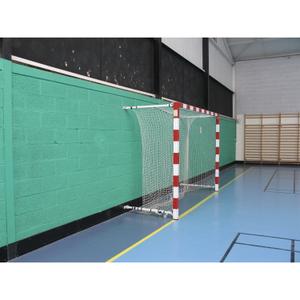
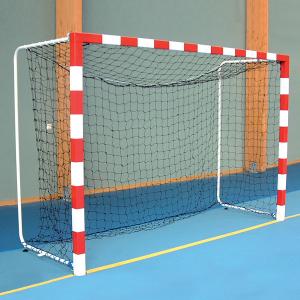
The handball school doesn't always play with the three-meter by two-meter goals. The four-a-side handball, encouraged by the federation, uses goals that are two meters forty wide and one meter seventy high, on a reduced pitch: three playing areas fit in a traditional gym. Mobile goals, which are lighter, allow for setting up these workshops across the pitch. Like competition goals, they must stay stable, weighted or fixed, to never tip over onto a child who hangs on them, and their nets should be checked at each setup.
Order calendar and equipment manager
A club benefits from assigning the equipment to an identified manager, who maintains the inventory and centralizes the requests from coaches. The typical calendar starts in spring with an assessment of expected numbers, then continues in June with orders for kits and balls, for delivery before the end of August resumption. Purchases of consumables, glue, cleaner, or socks, are then spread out over the year according to actual use. A budget broken down by category also makes it easier to apply for grants from the municipality or department, which often fund part of the equipment.
Good deals
Good bargains can also be found in the good deals, promotions, clearance sales, sales, Black Friday. The new arrivals showcase the latest collections, and items shipped within 24 hours are prepared and dispatched in 24 hours. The highlights of the year follow a stable order: the Black Friday at the end of autumn, the end-of-year holidays, the winter sales, the French Days in spring, followed by the summer sales and the back-to-school period.
Frequently asked questions
What equipment should be prioritized for a new section?
Balls in the right size for each player, two-colour bibs, a few cones, and a set of match kits. The goals are usually provided by the municipal gym: check their fastening and the condition of the nets before the first session.
How to distribute equipment across multiple gyms?
Set up a kit for each hall, with balls, pump, bibs, and a first aid kit, stored in a bag or a locked cupboard. The inventory of each kit, displayed inside, allows coaches to quickly report what is missing.
Does a club need to buy its own handball goals?
In most cases, the municipality provides the fixed goals in the gym. The club invests more in mobile goals for handball school or beach handball, and in replacement nets in case of tears.
How to involve parents in equipment management?
Assign a parent representative to each team who collects the bag of balls and bibs at the end of the session. A washing rotation chart for the jerseys spreads the workload and prevents kits from being forgotten in a trunk.
When should the club's equipment be renewed?
Do an assessment at the end of each sports season: smooth or deformed balls, damaged nets, discoloured bibs. Replacing part of the equipment each year smooths out the budget and avoids having to buy everything at once.






