
Padel balls Dunlop
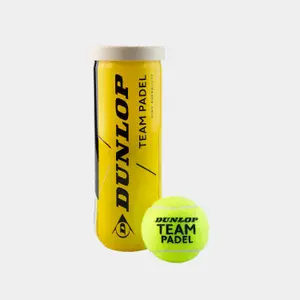
Our Dunlop page features padel balls from the historic brand known for rubber and racket sports, along with our tips for choosing between fast balls, control balls, and eco-friendly balls, depending on your level, the temperature, and altitude, as well as how to properly store them.
The expertise of rubber, in a ball.
The expertise of rubber
Dunlop takes its name from John Boyd Dunlop, the inventor of the pneumatic tyre in 1888. This expertise in rubber, the raw material for the core of balls, naturally led the brand to tennis and squash balls, and then to padel. A quality ball depends on a consistent core that maintains its pressure, and a felt that withstands the abrasion of the sandy court and the glass.
Other brands
Padel balls are also available by brand:
All balls are gathered on the balls page.
Fast, control or eco
Padel balls come in different speeds. Fast balls, which are more pressurised, are suitable for offensive players, indoor play, and cold days. Control balls, which are slower, reassure beginners and adapt well to high temperatures when the ball travels quickly. Eco-friendly balls, like the Eco range from Dunlop, reduce the impact of their production and packaging for more sustainable play.
Storing them
A ball starts losing its pressure as soon as the tube is opened, even without playing. Play with your balls in the following days, and replace them when the bounce noticeably weakens. A pressure maintenance system extends their life between matches. Store the tubes at room temperature: the heat of a car boot in summer or the cold of winter can alter the pressure and the bounce. Always keep a new tube in your bag for important matches.
Good deals
Good bargains can also be found in the good deals, promotions, clearance, sales, and Black Friday. The new arrivals showcase the latest collections, and items shipped in 24h are prepared and sent in 24 hours. Major events of the year follow a set order: Black Friday in late autumn, the holiday season, winter sales, the French Days in spring, followed by the summer sales and back-to-school.
Frequently asked questions
What’s the difference between a padel ball and a tennis ball?
A padel ball looks like a tennis ball, but it is a bit less pressurised, which makes it slower and better suited for short exchanges in a closed glass court.
How do I choose between fast balls and control balls?
Fast balls are suitable for experienced players and cold days when balls lose speed. Control balls, which are slower, make it easier for beginners to exchange and are better for playing in hot weather.
Why does altitude change the behaviour of balls?
At altitude, the less dense air makes the ball faster and livelier. One should choose less pressurised balls to achieve a normal bounce, while in lower areas, standard balls are adequate.
How can I keep my padel balls for longer?
Seal the tube well after each match and store it at room temperature, away from sunlight. A pressure maintenance system, which keeps the pressure around the balls, significantly extends their lifespan.
Why is Dunlop a specialist in balls?
Dunlop takes its name from John Boyd Dunlop, the inventor of the pneumatic tyre in 1888. Its mastery of rubber, the material of the balls' core, has led it into tennis, squash, and now padel balls.






