
Dunlop, a historic brand of padel


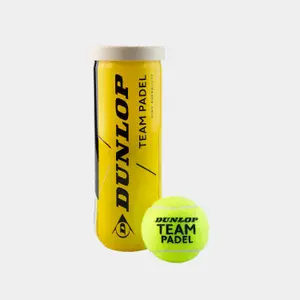


Our Dunlop page is dedicated to the British brand in the padel arena, particularly its Eco balls, designed to last and sold in plastic-free recyclable packaging. You'll find the story of a name born from rubber, what sets a pressureless core ball apart from a pressurised ball, and our tips for choosing your balls based on your playing style.
A historic name in the padel arena.
From the Tyre of 1888 to the Padel Court
The name Dunlop refers to John Boyd Dunlop, a Scottish veterinarian based in Belfast, who developed an inflatable tyre for his son's tricycle in 1888. This mastery of rubber led to the creation in 1910 of a branch dedicated to sport, which became Dunlop Sport. Since 2017, the brand has belonged to the Japanese group Sumitomo Rubber Industries, which also manufactures its padel balls. This expertise is present in the core of each ball, which determines the bounce and consistency of play from one rally to another when the ball hits the sandy ground and then rebounds off the walls.
Other Brands
Padel brands are also represented:
All brands are gathered on the brands page.
Dunlop Eco Balls, a Pressureless Core
The Dunlop Eco ball features a pressureless core: its bounce does not come from compressed air inside, but from the thickness and elasticity of its rubber wall. It does not deflate once the tube is opened and maintains consistent performance throughout the matches. Its synthetic felt, chosen for its resistance to abrasion from sand and repeated contact with walls and fencing, further extends its lifespan. The packaging also makes a difference: the tube containing three balls is entirely recyclable and contains no plastic.
An Eco Ball for Which Player
The Dunlop Eco ball is primarily aimed at those who use a lot of balls: clubs and padel schools that hold numerous group lessons, groups of friends meeting up several times a week, and players who practice their shots from a ball basket. Upon unboxing, a pressureless core provides a slightly firmer bounce and a sensation that feels a bit heavier than a new pressurised ball, but the gap narrows as the latter loses air. For training and casual games, this consistency matters more than the liveliness of the first few minutes of play.
Good Deals
Good deals can also be found in good deals, promotions, clearance, sales, Black Friday. The new arrivals showcase the latest collections, and items shipped in 24h are prepared and dispatched within 24 hours. The highlight events of the year follow a stable order: Black Friday at the end of autumn, the festive season at the end of the year, winter sales, spring's French Days, followed by summer sales and back-to-school season.
Frequently Asked Questions
Does a pressureless padel ball bounce less well?
When unboxed, its bounce is similar but slightly firmer than that of a new pressurised ball. The main difference lies in longevity: the pressureless ball does not lose air and keeps the same bounce match after match, whereas a pressurised ball gradually softens.
How many matches does it take to change a pressureless ball?
Since it does not deflate, it is the wear of the felt that determines this: when it becomes smooth or fuzzy, the ball travels faster and grips less on spins. A cracked or deformed ball after hitting the fence should be replaced immediately.
Is the packaging of Eco balls recyclable?
Yes: the tube of Eco balls is designed without plastic and is completely recyclable. Once empty, it should be placed in the recycling bin appropriate for its material, following your community's guidelines, thus avoiding an additional plastic tube with each purchase.
Who manufactures Dunlop padel balls?
The Dunlop Sport brand has been part of the Japanese group Sumitomo Rubber Industries since 2017, a specialist in rubber, which manufactures its balls. The name comes from John Boyd Dunlop, the Scottish inventor of the inflatable tyre in 1888.
How to store an opened tube of balls?
Store the balls in their tube, away from sunlight and moisture: heat hardens the rubber and cold makes it slower. Even without internal pressure, a wet ball becomes heavier and loses its liveliness, so let it dry in the open air before storing it.






