
Table tennis balls and ping-pong


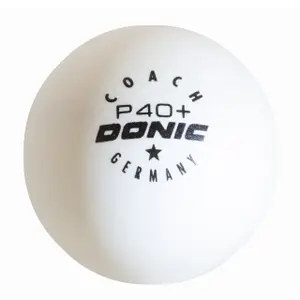


The Table Tennis Balls page brings together balls from ping-pong Tibhar, Dunlop, Donic, andro, Tremblay and Sunflex: competition balls, training balls in packs of several dozens, and outdoor balls for outdoor tables.
The right ball for the club, school, or garden.
The 40 Millimetre Ball
The official table tennis ball measures 40 millimetres in diameter. Once made of celluloid, it is now made from plastic, hence the 40+ label on many boxes, like the Dunlop 40+ Pro Tour or the Donic P40+. This change has slightly slowed the game and altered the spin. The ball is white or orange, a colour chosen to contrast with the table and the background of the room.
Table Tennis on the Site
Table tennis also includes:
- Rackets.
- Shoes.
- Accessories, nets, covers and cleaners.
All the equipment is gathered on the table tennis page.
The Stars
The quality of a ball is often indicated by its stars. A three-star ball, the most consistent in bounce and roundness, is used in competition; balls approved by the international federation carry its label. One or two-star balls, which are cheaper, are suitable for training and school use. Packs of 120 balls, like the Donic Coach, are used for basket drills where the coach delivers balls in succession without interruption.
Playing Outside
Outdoor balls, like those from Tibhar, are heavier and more durable: they cope better with wind and impacts on outdoor tables made of concrete or resin. Classic balls, which are very light, get blown away with the slightest breeze. For family ping-pong, blister packs of Tremblay or Sunflex balls are sufficient. Store your balls away from heat, which can deform them, and replace any cracked ball that no longer bounces straight.
Good Deals
Great finds can also be found in the good deals, promotions, clearance, sales, Black Friday. The new arrivals showcase the latest collections, and items dispatched within 24h are prepared and shipped out in 24 hours. The highlights of the year follow a steady sequence: Black Friday at the end of autumn, the year-end holidays, the winter sales, the French Days in spring, followed by summer sales and back-to-school offers.
Frequently Asked Questions
What is the diameter of a ping-pong ball?
A regulation ball measures 40 millimetres in diameter and weighs 2.7 grams. The old 38 millimetre balls are no longer used in competition.
What do the stars on a box of balls mean?
The stars indicate the quality level: a three-star ball is the most consistent in bounce and roundness, reserved for matches. One or two stars are suitable for training and leisure.
Which ball should be used on an outdoor table?
An outdoor ball is heavier and more durable than a standard ball: it is less affected by the wind and withstands humidity and impacts better on a concrete or resin table.
Celluloid or plastic ball: what's the difference?
The plastic ball, marked 40+, has replaced celluloid in competition. It is more durable and a bit less lively, it spins slightly less, which has slowed the game and modified the spins.
Why buy training balls in bulk?
Basket drills and club training use up a lot of them. A bulk pack of several dozen balls avoids constant picking up and is more economical than competition boxes.






