
Tennis balls for every surface




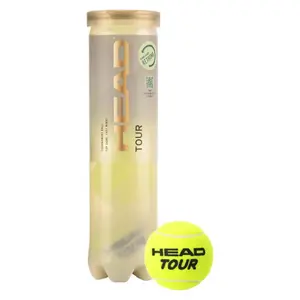



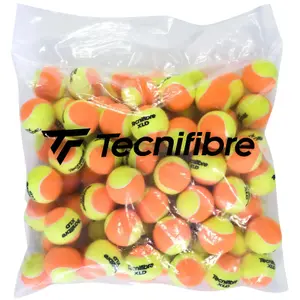





Our selection of tennis balls brings together balls from major tournaments and clubs: Wilson Roland-Garros, Dunlop ATP Tour, Slazenger Wimbledon, Head Pro and Tour, Babolat Team, Tecnifibre Club, pressureless balls from Dunlop, green and orange beginner balls, training ball bags from Head.
The right ball for every surface and every level.
Pressurised or non-pressurised
Most tennis balls are pressurised: their rubber core contains a pressurised gas that gives them a lively bounce and a precise feel. Once the tube is opened, they gradually lose their pressure and liveliness over a few weeks. Non-pressurised balls, like Dunlop Pressureless, get their bounce from the thickness of their rubber: firmer to the touch, they retain their qualities for a long time and are suitable for ball machines and training.
The rest of the equipment
Tennis also includes:
All things tennis can be found on the tennis page.
The balls of the major tournaments
Each major tournament has its official ball. Wilson supplies the ball for Roland-Garros, designed for clay: its felt withstands the dirt that sticks to it. Slazenger has been the ball of Wimbledon since 1902, making it one of the oldest partnerships in sport. Dunlop provides the balls for ATP circuit tournaments. Clay balls, like the Wilson Roland-Garros Clay or Babolat Team Clay, are designed for clay surfaces; All Court balls, like the Dunlop Fort or Wilson Tour Premier, are suitable for all surfaces, from hard courts to synthetic grass.
Beginner balls
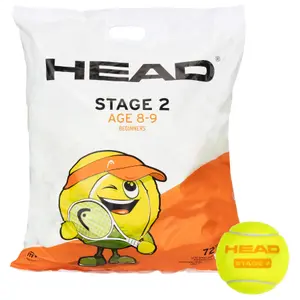
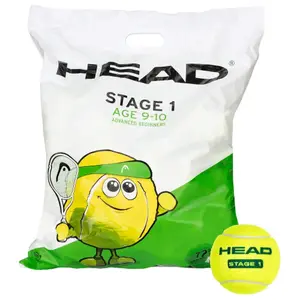
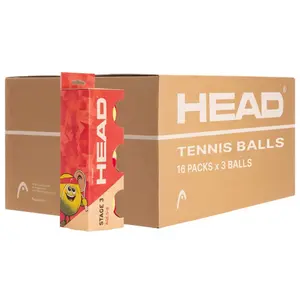
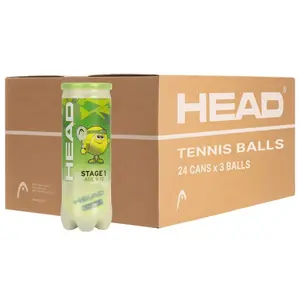
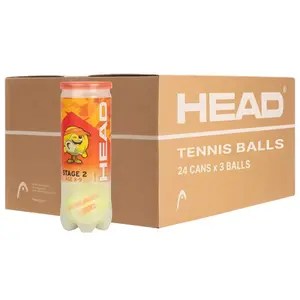
For children, tennis is played with slower balls that bounce lower and slower: red balls for the youngest on a smaller court, orange balls, like the Dunlop Stage 2, followed by green balls, like the Dunlop Stage 1 or Head T.I.P, before moving on to the classic yellow ball. Clubs and tennis schools equip themselves with bags of seventy-two balls, like the Head Trainer, which are more economical for training. The balls from Swedish player Robin Söderling, a finalist at Roland-Garros, complete the range.
Great deals
Good deals can also be found in the special offers, promotions, clearance, sales, and Black Friday. The new arrivals showcase the latest collections, and items shipped within 24h are prepared and dispatched within 24 hours. The highlights of the year follow a stable order: the Black Friday at the end of autumn, the year-end holidays, the winter sales, the French Days in spring, then the summer sales and back-to-school.
Frequently asked questions
Why are tennis balls yellow?
The balls were white or black at first. The International Federation adopted yellow in 1972, as it was more visible for viewers, and Wimbledon followed suit in 1986.
How long does a tennis ball keep its bounce?
A pressurised ball loses its liveliness a few weeks after the tube is opened, faster if it is played a lot. A regular player will willingly open a new tube every two or three matches.
What ball should I choose for a child starting out?
The orange ball, slower and with a lower bounce, is suitable for around eight to ten years old on a smaller court. The green, intermediate ball prepares for the transition to the classic yellow ball on a full court.
Competition ball or club ball, what's the difference?
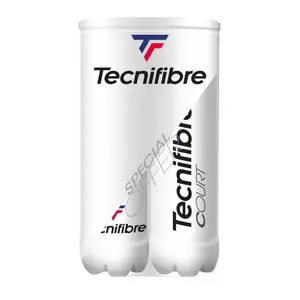
The competition ball, like the Wilson Roland-Garros or the Dunlop ATP Tour, offers high-quality felt and a very consistent bounce. The club ball, like the Tecnifibre Club, prioritises durability for training.
Which tennis ball for clay courts?
On clay, choose a ball with regular felt that picks up little dirt, like the Wilson Roland-Garros, designed for this surface. On hard courts, a ball with reinforced felt, called extra duty, is more resistant to abrasion.






