
Spike Running Shoes


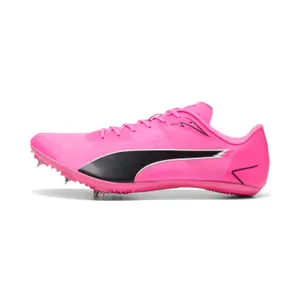
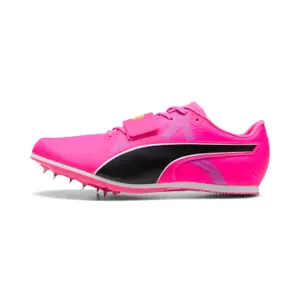
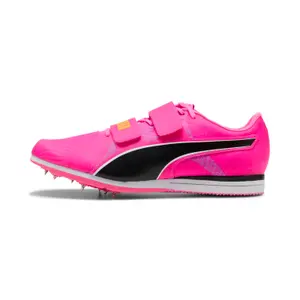


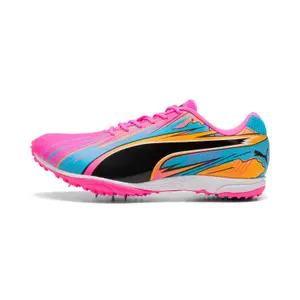
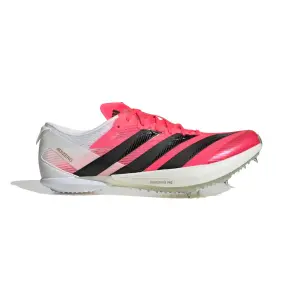
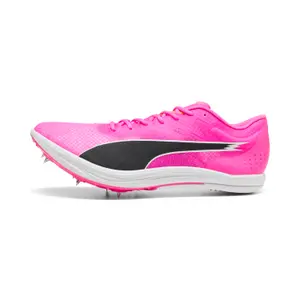

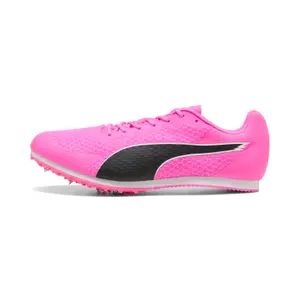


The Athletics Shoes page brings together spike shoes for sprinting, middle distance, jumping and cross-country, from adidas, Puma, Nike, Saucony and Hoka: Adizero, evoSPEED, Nitro Elite, ZoomX Dragonfly, Crescendo and children’s models.
One shoe per discipline, to grip the track.
A spike for each discipline
Sprint spikes, like the adidas Adizero Prime SP, Puma evoSPEED or Nike Rival Sprint, have a rigid plate at the front and almost no heel: you run on the front of your foot and every step must bounce back all the energy. Middle-distance and distance spikes, like the Nike ZoomX Dragonfly, Hoka Crescendo or adidas Distancestar, add cushioning for endurance. Cross spikes, like the adidas Adizero XCS, grip in grass and mud.
Athletics on the site
Athletics also includes:
Jumping shoes
Jumps have their own shoes. The long jump spike, like the adidas Adizero LJ, is stable and stiff to absorb the take-off. High jump spikes have spikes right under the heel, as the impulse comes from the heel forward. Versatile models, like the adidas Adizero Jumpstar or the allroundstar kids' shoes, are suitable for young athletes who try all events in a club.
The length of spikes
The World Athletics regulations limit the length of spikes: 9 millimetres at most on most synthetic tracks, and 12 millimetres in high jump and javelin; a shoe may have up to eleven spikes. Many stadiums impose short spikes of 6 millimetres to protect the track. They are screwed in with the provided key and replaced when they wear down. The shoe fits very snugly, without thick socks.
Good deals
Good deals can also be found in good plans, promotions, clearance, sales, Black Friday. The new arrivals showcase the latest collections, and items shipped in 24h are prepared and dispatched within 24 hours. The highlights of the year follow a stable order: Black Friday at the end of autumn, the year-end holidays, winter sales, French Days in spring, followed by summer sales and back to school.
Frequently asked questions
Does a young person starting in a club need spikes?
Not right away: the first sessions are done in running shoes. Spikes become useful when the child is racing on the track in competitions, with a versatile model featuring short spikes suitable for sprints and jumps.
Can you run on the road with spikes?
No: on asphalt, spikes wear down and slip, and the rigid plate without cushioning tires the legs. They are reserved for synthetic tracks, cross-country and dirt tracks, and warm-ups are done in running shoes.
What spikes should I use for a cross-country run?
On a muddy cross, long spikes grip in the soft earth and wet grass. On a dry or hard course, shorter spikes are sufficient: bring the key and a spare set on race day.
Sprint spikes or middle-distance spikes for the 800 metres?
The 800 metres is often run in middle-distance spikes, which are more comfortable over two laps with a slight cushioning at the heel. Runners who feel comfortable on the front of their foot can keep sprint spikes, which are stiffer.
What size should I choose for spikes?
Spikes should fit very snugly without any space at the front, often worn barefoot: take your exact size, or even half a size down. The foot should not move in the shoe during strides.






