
Tennis rackets on clearance
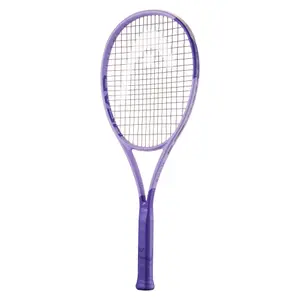

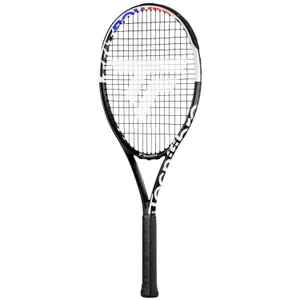


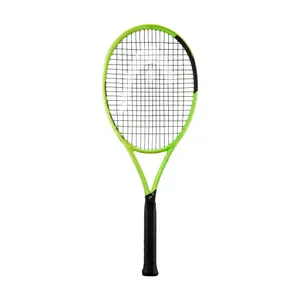
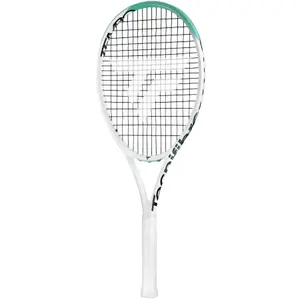


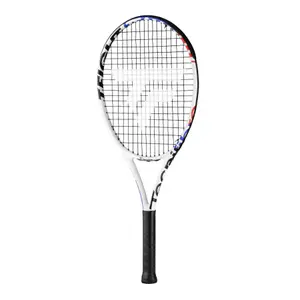
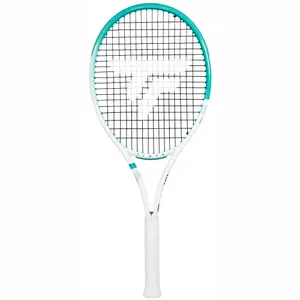


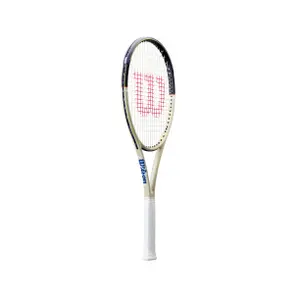
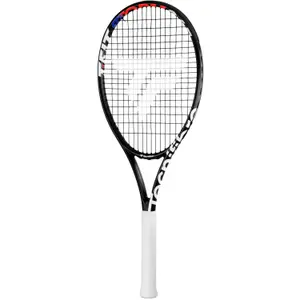

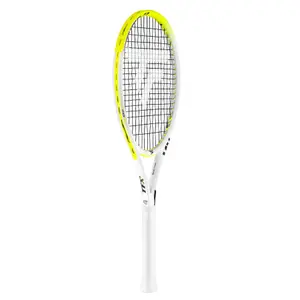


This clearance features tennis rackets at the end of their production run for everyone from beginner to advanced levels: Babolat Pure Drive, Pure Aero and Evoke, Head Speed, Extreme and Instinct, Wilson Blade, Pro Staff, Ultra and Triad, Tecnifibre TF-X1, T-Fight and T-Fit, Prince Warrior, as well as junior rackets from Babolat and Wilson. From lightweight frames that are forgiving to competition models, everyone can find the weight and head size that suit their game.
An older generation racket, at a gentler price.
Weight, head size and balance: how to read a racket's specification
Three factors describe a racket. The weight, without strings, ranges from around two hundred and fifty grams for lightweight models to over three hundred for advanced players' frames: the Tecnifibre T-Fit comes in two weights, two hundred and sixty-five and two hundred and ninety grams. The head size, in square inches, determines the tolerance: around one hundred for most versatile rackets, one hundred and ten for the Wilson Pro Staff Precision XL, and even more for the Head Instinct PWR, which sends the ball back effortlessly. Finally, the balance indicates whether the weight is more towards the head for power, or towards the handle for manoeuvrability.
Other clearance items
Tennis clearance also includes:
- Shoes.
- Textiles.
- Accessories, strings, grips and balls.
All clearance items are gathered on the tennis page.
Power, spin or control: the main families
Each range corresponds to a playing style. The Babolat Pure Drive, the first racket of the brand launched in 1994 and a winner at Roland-Garros with Carlos Moyá in 1998, remains the benchmark for accessible power. The Pure Aero, with its aerodynamic profile and open string pattern, promotes spin: it's the racket of Rafael Nadal and then Carlos Alcaraz. At Head, the Speed, associated with Novak Djokovic, targets arm speed and precision, while the Extreme emphasizes spin. The Wilson Blade and the Tecnifibre TF-X1 focus on control and feel, while the Wilson Ultra and the Prince Warrior offer a versatile compromise.
Junior rackets: length according to age
A child's racket is chosen based on its length, measured in inches, rather than its weight. A simple guideline: with an outstretched arm along the body, the head of the racket should reach just above the ground. Around six or seven years old, children generally use twenty-three inches, twenty-five from eight to ten years old, and then twenty-six before switching to an adult frame around eleven or twelve. The Babolat Drive Junior, available in three lengths, is suitable for children playing in clubs, and the Babolat Carlitos, inspired by Carlos Alcaraz, appeals to young fans. The Wilson Slam, lightweight with a large head size, makes early rallies easier. A racket that is too long can tire the shoulder and distort the stroke.
Light and comfortable rackets for starting out or relieving the arm
An adult who is starting or returning to tennis benefits from choosing a light and forgiving racket, weighing between two hundred and fifty-five and two hundred and eighty grams, with a generous head size. The Wilson Allure, the Babolat Evoke Team, and the Babolat Pure Drive Lite, a lighter version of the Pure Drive, meet this need. Players sensitive to elbow strain should consider the Wilson Triad: its technology separates the handle from the frame to filter out some vibrations upon impact. The Head Instinct PWR, with its very large head size, offers power without forcing the stroke. For these profiles, a soft string in multifilament, strung moderately, enhances comfort.
Frequently Asked Questions
What grip size should I choose for a tennis racket?
In Europe, grip sizes are numbered from zero to five. When holding the handle, there should be about the thickness of a finger between the fingertips and the palm; if between two sizes, take the smaller one and add an overgrip.
What tension should I have my racket strung at?
The recommended range is printed on the frame, usually between twenty-two and twenty-six kilos. A low tension gives more power and comfort, while a high tension offers more control but results in greater vibrations in the arm.
What is the difference between the Pure Drive and the Pure Drive Lite?
The Pure Drive Lite has the same head size and shape as the Pure Drive but weighs about thirty grams less. It is suitable for female players, teens, and beginners who want the power of the model without the fatigue.
Heavy or light racket: which one to choose?
A heavy racket is more stable on impact and absorbs shocks better, but requires strength and good technique. A light racket is easier to handle and quickly feels comfortable, though it offers a little less stability against fast balls.
When should I change my tennis racket?
A cracked frame or a hollow-sounding handle should be replaced immediately. Otherwise, it is time to change when your game evolves: a progressing player often transitions to a heavier and more precise frame.






