
Back to school for juniors in Reebok


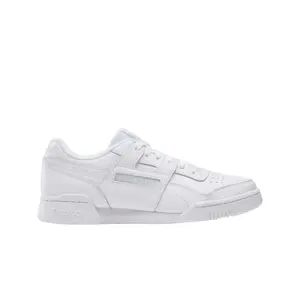


The junior Reebok selection for back to school brings together the British brand's models in children's and teens' sizes: leather sneakers inspired by 1980s classics, low-top tennis silhouettes, and lifestyle pieces featuring the vector logo. These are understated and sturdy shoes, easy to wear from the classroom to the weekend.
White leather classics, in junior sizes, tough enough for the playground.
From Bolton to the name of an antelope: the story of Reebok
The story of Reebok begins in 1895 in Bolton, northern England, where fourteen-year-old Joseph William Foster makes some of the very first spiked running shoes in his bedroom. His business becomes J.W. Foster and Sons, and in 1958, two of his grandsons, Joe and Jeff Foster, found a sister company. They name it after the name of a grey antelope from Southern Africa, the rhebok, found in a dictionary that Joe had won as a child in a race. This love of speed remains part of the brand's identity, moving from the athletics tracks to school playgrounds.
Classic Leather and Club C: two icons of the 1980s
Two models carry the lifestyle legacy of the brand. The Classic Leather, released in 1983, was originally a running shoe: its soft leather upper, cushioned midsole, and sleek silhouette allowed it to transition from track to pavement. The Club C, launched in 1985 for club tennis players, gets its C from the word champion; the year eighty-five attached to some versions recalls this birth year. With a low white leather upper, green or navy trim, and flat rubber sole, its design has hardly changed in forty years, making it a reliable choice for juniors.
The other brands for back to school
The other brands in the selection, adidas, Puma, Jack & Jones, Urban Classics, Only, New Era, can be found on the lifestyle junior page of the back-to-school operation.
What size Reebok for a child
Reebok sneakers should be chosen in the child's regular size, measured rather than guessed. Place the foot on a sheet of paper, heel against a wall, mark the tip of the longest toe, and add about a centimetre for growth and foot movement while walking. Between two sizes, the larger is preferable for a leather upper, which doesn't stretch much in length. For younger children, options with Velcro straps or elastic laces allow them to put on their shoes independently, without waiting for adult help. Size should be checked every three to four months for a growing child.
Maintaining the white leather of Reebok sneakers
The white leather of a Club C or Classic Leather keeps its shine with a few regular steps. After a day at school, a damp cloth removes dust before it settles into the grain. Stubborn stains can be treated with a soft brush and a little soapy water, but never in a washing machine, which distorts the upper and separates the sole. The rubber sole should be cleaned separately, and the laces washed by hand. A waterproofing spray for leather then protects the upper from puddles and grass stains. Let them dry naturally, stuffed with paper, away from a radiator that can crack the leather.
Frequently asked questions
What is the Reebok Pump?
Released on November 24, 1989, the Pump is a basketball shoe with an air chamber built into the tongue. It inflates by pressing a button shaped like a ball, and a valve at the heel releases pressure to adjust ankle support.
What country is Reebok from?
Reebok was born in England, in Bolton, near Manchester, where the Foster family had been making running shoes since the late 19th century. The brand later rose to prominence in the United States during the 1980s.
How is the name Reebok pronounced?
In English, it is pronounced "ri-bok," with a long i, like in the name of the antelope it comes from. In France, the pronunciation "ré-bok" is very common and well understood.
Is a Club C suitable for playing tennis today?
Originally designed in 1985 for club tennis, the Club C has become a style sneaker. Its flat sole works for the court and travel, but for an actual match or PE lesson, a modern sports shoe provides better support for the foot.
Is leather a good choice for children's trainers?
Yes, leather withstands the wear from playtime and keeps its shape longer than canvas. It also breathes better than synthetics, as long as you let it dry naturally after a rainy day.






