
The return of the clubs with Select




The selection Select for the new season brings together the balls from the Danish brand for football and handball, training models stitched to match balls, as well as the resin for handball courts. It's everything needed to equip a club, a sports section, or a child returning to training, in the right size and with the right ball for their field.
The Danish ball for football pitches and handball courts.
Eigil Nielsen and the thirty-two panel ball
Select was founded in 1947 in Denmark by Eigil Nielsen, goalkeeper for the Danish national team, who was looking for a more reliable ball than those of his time. In 1962, the brand produced and marketed the first ball with thirty-two panels, twelve pentagons and twenty hexagons, inspired by the geodesic domes of architect Buckminster Fuller. This construction creates a more regular sphere, a straighter trajectory and a bounce that is more consistent. It remains today the basis for the football and handball balls of the brand, from the beginner model to the competition ball.
Select and handball, from the Starligue to the Champions League
In handball, Select has become a reference: official supplier of the National Handball League since 2012, it also equips the EHF Champions League with its Ultimate ball, hand-stitched and certified by the European federation. For a club, the range is sorted by level: the training models, robust, withstand repeated sessions, and the match balls offer a finer touch and better grip. The resin Select Profcare, applied to the fingers, improves grip where the hall allows, and can be removed with a suitable cleaner.
Select football: hand-stitched, machine-stitched or thermobonded
A football Select is primarily chosen based on its construction. Hand-stitched, it offers tight seams and a soft touch, prized for matches. Machine-stitched, it withstands repeated strikes well and is suitable for club sessions as well as school. Thermobonded, it has heat-welded panels, which limits water absorption and stabilizes its trajectory in the rain. The surface also matters: a ball designed for synthetic or hard pitches withstands abrasion better than a match model used on a rough surface and retains its coating longer.
Other training brands
The selection also includes teamwear Macron, handball Kempa, equipment Sporti France, Tremblay CT, Lynx Sport and fitness Leader Fit, on the page training equipment and gear.
Inflate, store and make your balls last
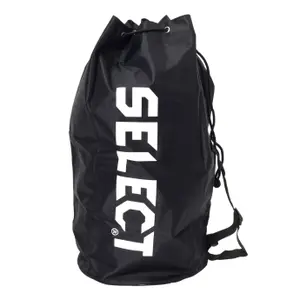
A ball maintains its quality if it is inflated to the pressure printed near the valve, checked with a gauge before each session: too soft, it strains the seams; too hard, it bounces badly and hurts hands. The needle should be moistened before entering the valve to avoid damage. After a match in the rain or on a muddy pitch, wipe the ball and let it dry at room temperature, away from a radiator. A ball net prevents them from rolling around in the boot and being damaged. For the new term, checking all the club's balls before resuming avoids any unpleasant surprises.
Frequently asked questions
What size football for a ten-year-old child?
Between eight and twelve years, size four is the standard in clubs, lighter and smaller than an adult ball. Size three suits those under eight years, size five for those over twelve or thirteen years, depending on the player category.
What size handball for a teenager?
A boy aged twelve to sixteen plays with size two, like women and girls from the age of fourteen; beyond sixteen, boys switch to size three. The youngest, from eight to twelve years, use size one, smaller and lighter.
Why is resin forbidden in some gyms?
Resin leaves sticky marks on the floor, walls and balls, which are difficult to clean: many gyms shared with schools prohibit it. Check with the club and clean the ball after use with a suitable product.
Is a Select ball suitable for futsal?
Futsal is played with a specific ball, heavier and with a reduced bounce to stay on the floor on a wooden court. Select manufactures for this practice: a classic football bounces too much indoors and is difficult to control badly.
How many balls to prepare for a club training?
The ideal is one ball per player for technical exercises, or at least one for every two, so that everyone can frequently touch the ball. Have some spare balls on hand for those that deflate or go far from the pitch.






