
BMX ramps, freestyle and race
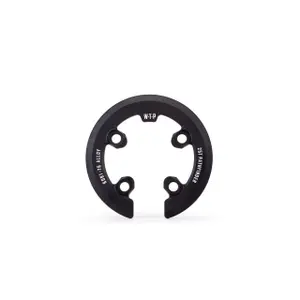
Our BMX Sprockets page brings together our tips for choosing the right sprocket for your BMX: number of teeth, small sprockets for freestyle, mounting on the axle or with bolts, guard sprockets for grinding, and gear ratios suited for park, street, dirt, or race.
The right gear ratio, and protection too.
Compactness is key
In freestyle, riders have adopted small chainrings, around twenty-five teeth, paired with a nine-tooth rear sprocket. This gear ratio is similar to that of older large chainrings, reducing bulk: the smaller chainring protrudes less under the frame and is less likely to hit edges, steps, and coping on ramps. It also lightens the drivetrain.
The drivetrain
The BMX drivetrain also includes:
All drivetrain information can be found on the drivetrain page.
Mounting and grinds
The chainring is mounted either by screws on a spider or directly onto the axle of the crank via splines for a more robust connection. Compatibility with the axle diameter is checked. Guard chainrings incorporate a full disc or a ring that protects the teeth during grinds and slides on rails: a benefit for street riders.
Competition and maintenance
In racing, riders choose a larger chainring, from thirty-six to forty-four teeth depending on their power and the track, made from lightweight, rigid aluminium, with an appropriate sprocket. The ideal gear ratio allows for an explosive start without tiring at the end of the straight. The chainring's tightness is checked regularly, and the chainring and chain are replaced when the teeth wear down.
Good deals
Good deals can also be found in good deals, promotions, clearance, sales, Black Friday. The new arrivals feature the latest collections, and items shipped within 24h are prepared and sent out within 24 hours. Key events of the year follow a stable order: the Black Friday in late autumn, the year-end holidays, the winter sales, the French Days in spring, followed by the summer sales and back-to-school.
Frequently asked questions
How many teeth should I choose for a BMX freestyle chainring?
Freestyle riders often use a chainring around twenty-five teeth, paired with a nine-tooth rear sprocket. This compact gear ratio offers a development close to the older large chainrings, with reduced bulk.
What gear ratio to choose in BMX racing?
In racing, the aim is explosive acceleration at the start and speed in straight lines. The gear ratio, chainring and sprocket, is chosen based on the rider's power, age, and track profile, and is refined during training.
What is a chainring with integrated protection?
This chainring features a full disc or a ring that covers the teeth, allowing sliding on edges during grinds without damaging the teeth or getting stuck. It's popular in street riding, where tricks on steps and ledges are common.
How can I tell if a BMX chainring is worn?
hooked teeth, a chain that skips under load or catches, indicate a tired chainring. The chain is often replaced at the same time, as a loose chain can quickly wear out a new chainring.
Chainring mounted on the axle or by screws: what's the difference?
Some chainrings mount directly on the crank axle, while others are fixed by screws on a spider of the crank. The mounting must match the crank: check the axle diameter or the screw spacing before ordering.






