
BMX race pedals and freestyle
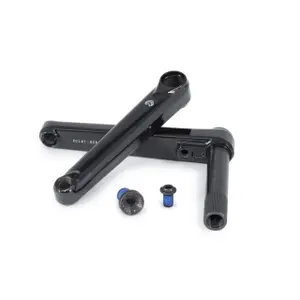
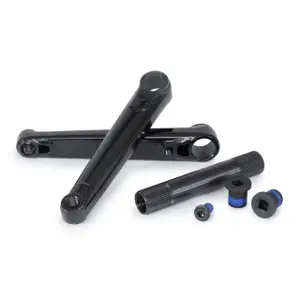
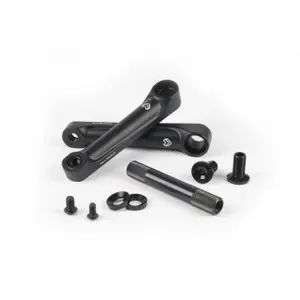
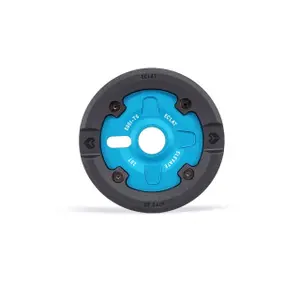
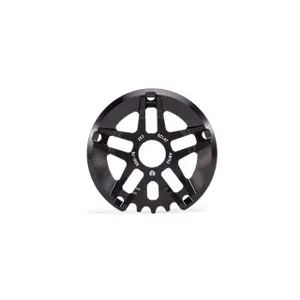
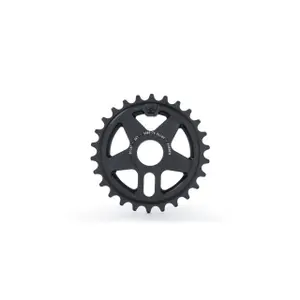
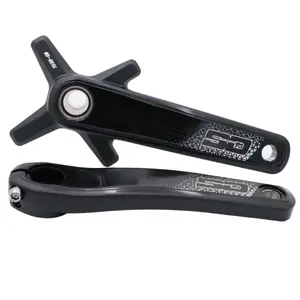
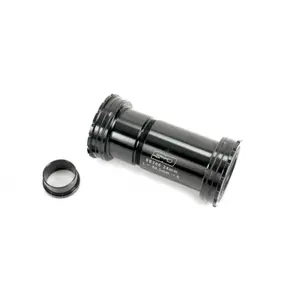
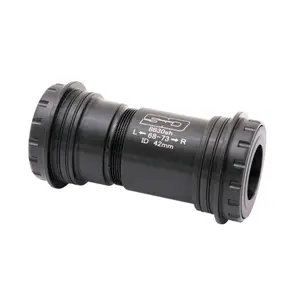
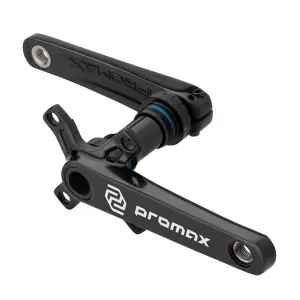
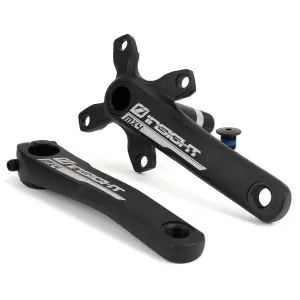
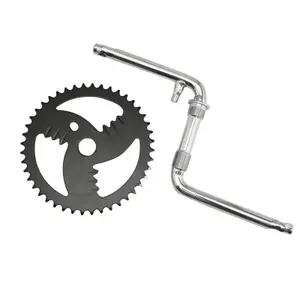
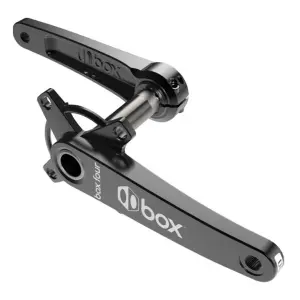
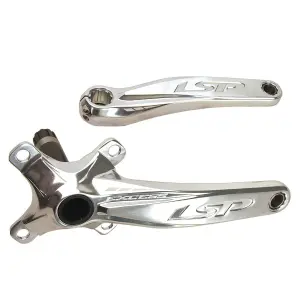
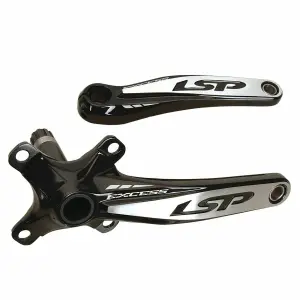
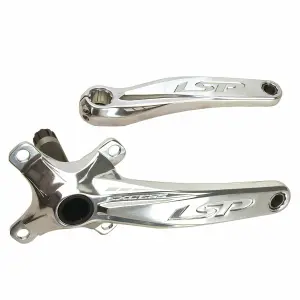
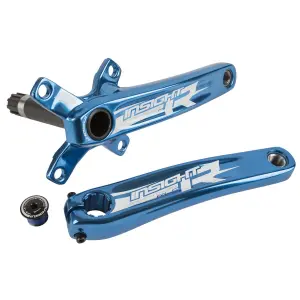
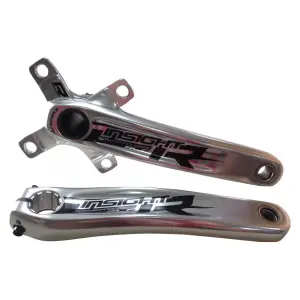
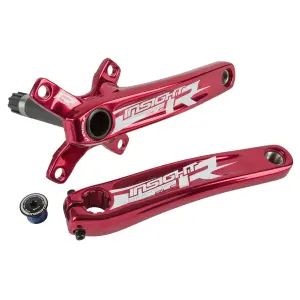
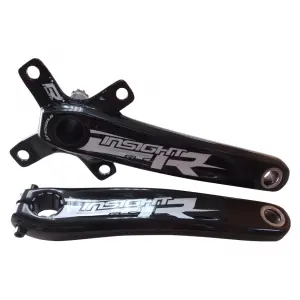
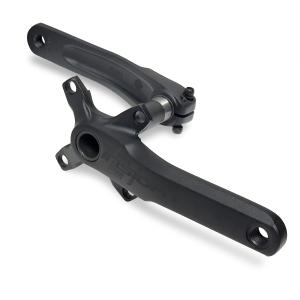
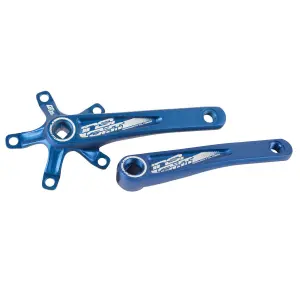
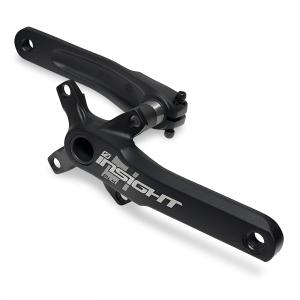
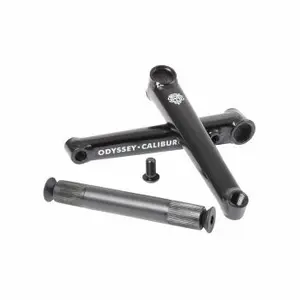

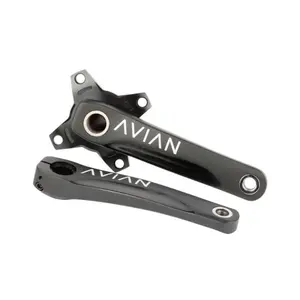
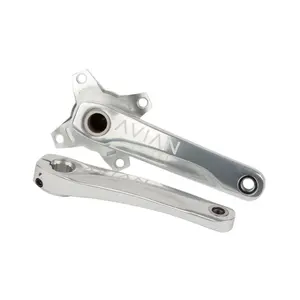
Our BMX Cranks page brings together our advice on choosing the right cranks for your practice: three-piece chromoly crankset for street and park, aluminium for racing, axle sizes of nineteen, twenty-two, or twenty-four millimeters, Mid, Spanish, American, or Euro bottom bracket, crank length according to the rider's size and chain direction.
The heart of propulsion.
One-piece, two-piece or three-piece
The first BMX bikes rode with a one-piece crank, a single bent steel bar forming the axle and both cranks, often nicknamed Ashtabula, after a manufacturer from Ohio. Heavy and quickly bent by impacts, it still equips some entry-level models. The three-piece has replaced it: two cranks tightened onto an independent axle by splines, usually forty-eight, and a bolt at each end; a twisted crank can be replaced on its own. The two-piece, where the axle is attached to one crank, reduces the number of parts to tighten and limits the risk of play.
The drivetrain
The BMX drivetrain also comes in:
All the drivetrain details are on the drivetrain page.
Axle and bottom bracket: measure before ordering
The axle comes in nineteen, twenty-two and twenty-four millimetres in diameter. The nineteen remains the most common in freestyle, offered by almost all brands; the twenty-two and twenty-four increase stiffness without necessarily being heavier. The bottom bracket depends on the frame: the Mid, with bearings fitted into a shell of about forty-one millimetres, equips most freestyle frames; the Spanish, of about thirty-seven millimetres, fits some frames; the American, of about fifty-one millimetres, is used for older or entry-level BMX bikes. The Euro bottom bracket, threaded, is found on race frames. Bearings and axle always share the same diameter.
Crank length and chain orientation
The crank length is measured from the centre of the axle to the centre of the pedal eye. In freestyle, most riders use cranks between one hundred sixty-five and one hundred seventy-five millimetres: shorter cranks gain ground clearance for grinds and responsiveness; longer cranks give leverage for take-off. In race, the length is based on age and height, from short cranks for kids to one hundred seventy-five millimetres and more for adults, for power at the start behind the gate. Then there's the chain orientation: RHD when the chain runs on the right, LHD on the left; many freestyle cranks adapt to both by reversing the arms.
Good deals
Good deals can also be found in good plans, promotions, clearance, sales, Black Friday. The new arrivals showcase the latest collections, and the items shipped in 24h are prepared and sent within 24 hours. The key events of the year follow a consistent order: Black Friday in late autumn, year-end holidays, winter sales, French Days in spring, then summer sales and back to school.
Frequently asked questions
How do I disassemble a three-piece BMX crank?
Loosen the bolt on each crank using the appropriate Allen key, then undo the pinch bolts if the model has them. Pull the crank off the axle and tap the axle out with a soft mallet to avoid damaging the splines.
Why is my BMX crank making a clunking noise?
A clunk often comes from a loose crank bolt or a worn bottom bracket bearing. Tighten the bolts to the specified torque, adjust the spacers to eliminate lateral play, and replace the bearings if they stick.
Do I need to change the bottom bracket when changing the crank?
Not always: if the new axle has the same diameter as the existing bearings, you can keep them. However, switching from a nineteen-millimetre axle to a twenty-two-millimetre axle requires new, compatible bearings.
Which crank should I get for a child's BMX?
A child needs shorter cranks, sized to their leg length, to pedal smoothly without the knee rising too high. Smaller BMX bikes come with them as standard, and this should be checked when upgrading to a higher frame.
Chromoly cranks or regular steel: what's the difference?
Chromoly, a steel alloy with chromium and molybdenum, often heat-treated, is much more durable than regular steel. It allows lighter tubular cranks that can withstand jumps and grinds without bending.






