
Bike seat posts for city bikes


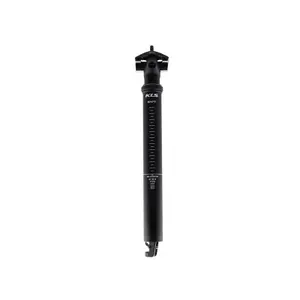
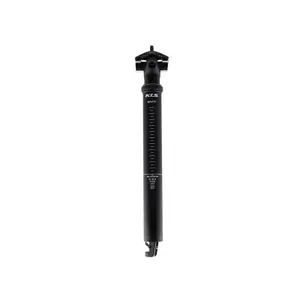
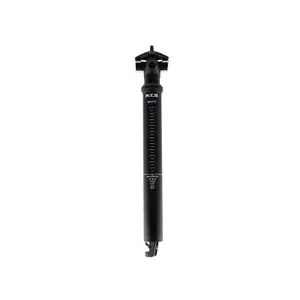


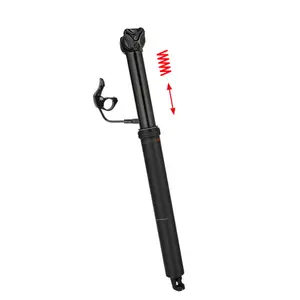
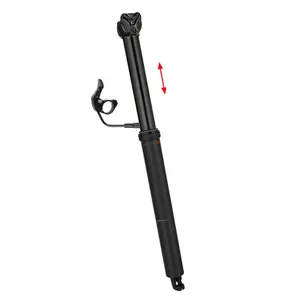
This selection of seat posts for city bikes includes rigid aluminum posts, Kalloy Uno, Pro PLT, Title or XLC Offset setback, and telescopic posts XLC and Fox Transfer that lower the saddle with the press of a button. Diameters range from twenty-five point four to thirty-one point six millimeters, with various lengths: perfect for finding the right position on an urban bike, hybrid bike, or electric bike.
The right height, for pain-free pedaling.
What diameter of seat post for your seat tube
The diameter of a seat post is not something you can guess: it is marked, engraved on the original post near the insertion mark, or measured with calipers inside the seat tube. A difference of two tenths of a millimetre is enough to make the clamp impossible to tighten or to let the seat sink while riding. Older city bikes made of steel often use slender diameters, around twenty-five millimetres, whereas newer aluminium frames adopt twenty-seven point two, thirty point nine, or thirty-one point six millimetres.
The Kalloy Uno is available in twenty-five point four and twenty-seven point two millimetres, with the former coming in four hundred millimetres long for larger sizes. We avoid makeshift reduction rings, which can cause play and creaking noises.
The other components
City components are also available:
All components can be found on the peripheral components page.
Rigid or telescopic post on a city bike
For the vast majority of journeys in the city, a rigid post made of aluminium is sufficient: lightweight and maintenance-free, it keeps the saddle at the chosen height once and for all. The Title post, with no setback, positions the saddle directly above the tube, while the XLC Offset shifts it back by about twenty millimetres, for cyclists who feel too close to the front of the bike.
The telescopic post meets another need: lowering the saddle when stopped to place both feet on the ground, then raising it again when setting off. The XLC version, approved for electric bikes, comes in one hundred and one hundred and fifty millimetres of travel; the Fox Transfer, in Factory finish, is aimed more at hybrid bikes that take on trails.
Height, minimum insertion and tightening the clamp
The proper saddle height leaves the leg almost straight at the bottom of the pedal stroke, with the knee maintaining a slight bend. Whatever height you choose, the post must remain inserted beyond the minimum insertion mark engraved on its shaft; above this, it can lever on the top of the seat tube and may crack the frame.
The clamp that grips the rails of the saddle should be tightened to the torque specified by the manufacturer, often indicated near the screws, using a torque wrench. On a carbon frame or post, a special mounting paste replaces grease. In the city, a screw collar rather than quick-release makes the post much less attractive to thieves.
Good deals
Good bargains can also be found in good deals, promotions, clearance, sales, Black Friday. The new arrivals feature the latest collections, and items shipped within 24h are prepared and dispatched in 24 hours. The highlights of the year follow a stable order: the Black Friday at the end of autumn, the year-end holidays, the winter sales, the French Days of spring, then the summer sales and back to school.
Frequently asked questions
How to know the required length of seat post?
You measure the part that needs to extend from the frame to its ideal saddle height, then add the required minimum insertion depth. Tall cyclists and frames with short seat tubes often need a post that is three hundred and fifty to four hundred millimetres long.
Is a suspended seat post useful in the city?
It absorbs some of the vibrations from cobblestones and kerbs, which relieves the back on a bike without suspension. It adds weight and a slight vertical movement: it's reserved for trips on bumpy roads and for cyclists sitting upright.
How to unstick a seized seat post in the frame?
Unscrew the collar completely, apply a penetrating oil at the joint, and let it work for several hours, then twist the saddle with small movements. When oxidation has welded an aluminium post to an aluminium frame, a workshop has suitable methods.
Does a telescopic post suit a city electric bike?
Yes, provided that it is approved for this use, like the telescopic post XLC, and that its diameter matches the frame. It allows the feet to touch the ground at every stop despite a saddle set high, which is reassuring on a heavy bike.
How to prevent your saddle from sinking while riding?
A saddle that sinks indicates an insufficiently tightened collar or a post with a slightly too small diameter. Check the marking on the post, clean inside the tube, and tighten to the specified torque; on carbon, a friction paste improves grip without crushing the tube.






