
Road bike brake pads

Starting at £408.55
£331.81
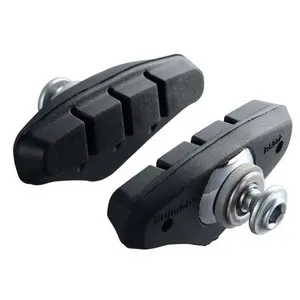

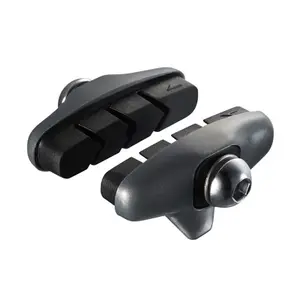
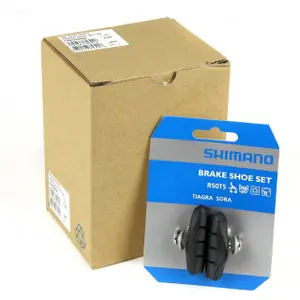
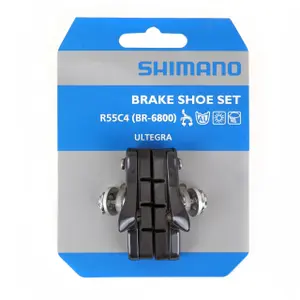
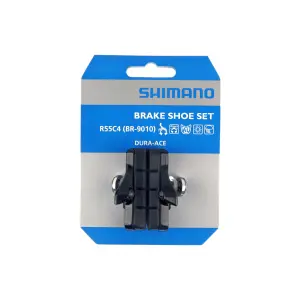
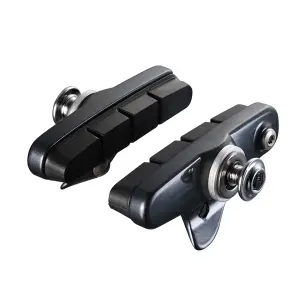
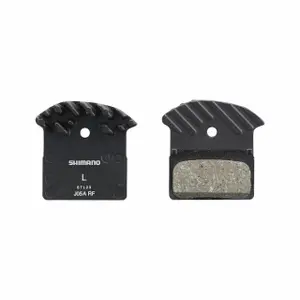
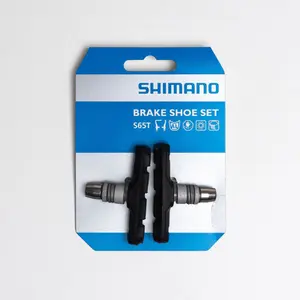
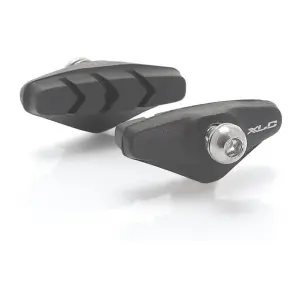
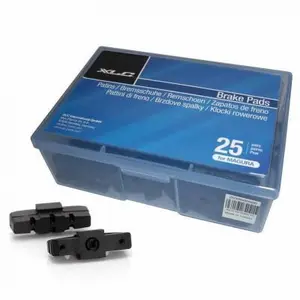
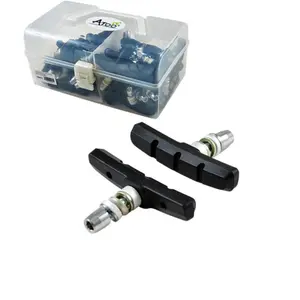
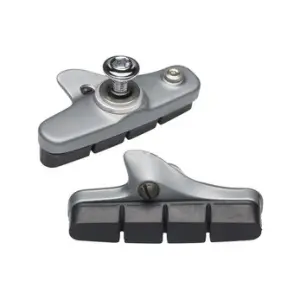
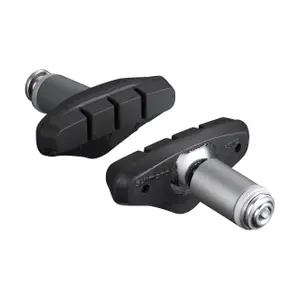
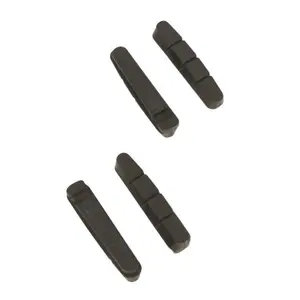
Our selection of Brake Pads for road bikes includes pads and cartridges Shimano for Dura-Ace, Ultegra, and 105 calipers, Shimano pads for Tiagra and Sora, specific rubber pads for carbon rims, and pads and cartridges XLC in Shimano and Campagnolo formats, along with our tips for installation, adjustment, and replacement.
Precise braking, ride after ride.
The brake pad, a wear part of the rim brake
On a road bike equipped with caliper brakes, the brake pad converts the pressure applied to the lever into friction against the brake track of the rim. Its rubber determines the power, progression, and performance in the rain, where the braking distance increases while the pad clears the water from the rim. As a wear part par excellence, it should be monitored like a tyre: a pad hardened by time, polished or embedded with gravel brakes less effectively and gradually wears down the track of the rim, eventually weakening it.
Road braking
Road braking also comes in:
All braking information is gathered on the braking page.
Cartridges Shimano, carbon rubber and XLC pads
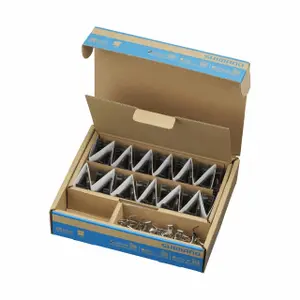
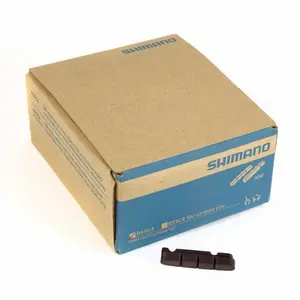
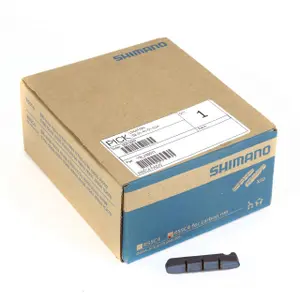
The cartridge pads Shimano consist of a metal pad holder screwed onto the caliper and rubber slid into a rail: only the rubber is replaced, without needing to reset everything. These cartridges equip the Dura-Ace, Ultegra, and 105 calipers, while dedicated pads fit the Tiagra and Sora groups. The rubber for carbon rims withstands the heat of braking without glazing or damaging the fibre; it should never be used on an aluminium rim, as metallic particles would embed in it. The XLC cartridges are available in Shimano format as well as Campagnolo format, which have different pad holders.
Installing, aligning and bedding in your road pads
The pad is fixed in the centre of the braking track, without ever touching the side of the tyre or extending beyond the rim. It is oriented with a slight pinch: the front of the pad touches the rim just before the back, which eliminates squeaking. An engraved arrow indicates the direction of wheel rotation, and the opening of a cartridge is always positioned towards the back. After installation, tighten the screw to the specified torque, check the lever travel, and then a few gentle brakes at moderate speed allow the new rubber to bed in before a descent.
Great deals
Good deals can also be found in great deals, promotions, clearance, sales, Black Friday. The new arrivals showcase the latest collections, and the items shipped in 24h are prepared and dispatched within 24 hours. The main events of the year follow a consistent order: Black Friday at the end of autumn, the end-of-year holidays, the winter sales, the French Days in spring, followed by the summer sales and the back-to-school season.
Frequently asked questions
When should I change my road brake pads?
As soon as the grooves moulded in the rubber have disappeared, when the pad is hardened, or when braking requires more effort on the lever. After a wet ride, also check for embedded gravel, which can prematurely wear the rim.
Why do my brake pads squeak?
The squeaking often comes from a pad mounted without pinch, polished rubber, or a dirty track. Clean the rim and pads with alcohol, lightly sand the surface of the pad, and check that the front touches the rim first.
How to brake properly in the rain with rim brakes?
Anticipate and lightly touch the levers a few seconds before actually braking: the pad clears the water from the track and regains its grip. Brake gradually, balancing the front, and maintain more distance from the cyclist ahead of you.
Should I change the front and rear pads at the same time?
You should always replace both pads of the same brake together for balanced braking. The front pad often wears out faster, as it is responsible for the majority of braking: front and rear can therefore be changed at different times.
How do I replace a worn pad on a road caliper?
Remove the small retaining screw, slide the old rubber out of the rail towards the back, then insert the new one in the same way, with the arrow pointing towards the front of the bike. Reattach the retaining screw, which is essential to prevent the rubber from escaping.






