
Bike Pedal Accessories


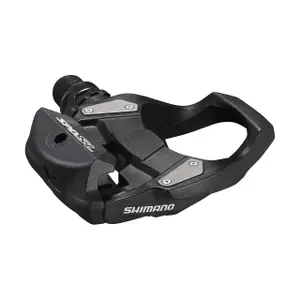


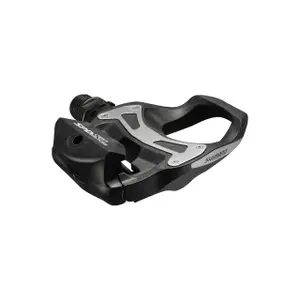
Starting at £73.37
£62.96


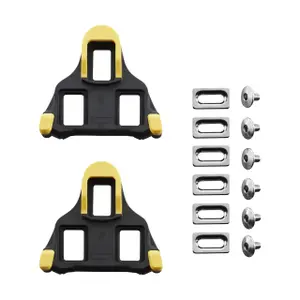
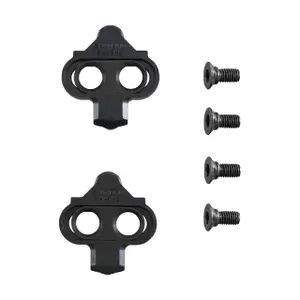


Pedalling accessories include the small parts that secure, protect, and signal the crankset: footstraps and straps to keep your foot in place with street shoes, chainring bolts and nuts, crank caps and screws, spare studs for flat pedals, and orange reflectors required by traffic regulations. Our tips help you identify the right standard before ordering.
The small parts that make a difference.
Footrests and straps: keeping your foot secured without automatic fittings
The footrest, a small metal or plastic cage attached to the front of the pedal, paired with a strap made of leather or nylon that wraps around the foot, was the standard for road cycling until the arrival of automatic fittings in the mid-1980s. It keeps the foot in the right place and allows for a slight upward pull when climbing, while accommodating regular shoes.
Today, it can be found on fixed-gear bikes, vintage racing bikes, and classic-style urban bikes. The footrest is chosen based on shoe size, so that the widest part of the foot sits above the axle. A strap that is too tight makes it difficult to get the foot out when stopped: in the city, it’s left looser.
The rest of the pedalling components
Pedalling components also come in various forms:
All parts are gathered on the pedalling page.
Chainring bolts and crank caps
The chainring bolts secure the chainrings to the arms of the spider; they consist of a female nut held in place by a notched key, and a male bolt tightened with an Allen or Torx key. Their length depends on the setup: shorter for a single chainring, longer for a double. A loose bolt causes a clacking sound with each crank turn, often confused with a deeper noise from the drivetrain.
The crank cap covers the housing of the fixing bolt on the axle and protects it from mud. On some through-axle setups, it also serves as a preload cap, which can be tightened by hand with a plastic tool. These parts are always replaced with the model specified for its standard.
Flat pedal pins and reflectors
The pins are the small protruding screws that provide grip for the sole on flat MTB or BMX pedals. They wear down, bend, or break when in contact with stones: they are replaced with pins of the same thread and length, screwed in from the back or top depending on the model, with a drop of thread-locking adhesive.
The orange pedal reflectors are required by French road law on any bike riding on public roads. Their up-and-down movement, typical of pedalling, catches the eye of motorists at night. They snap or screw into the pedal body and should be replaced as soon as they are cracked or missing.
Good deals
Good finds can also be found in good deals, promotions, clearance, sales, Black Friday. The new arrivals feature the latest collections, and items shipped within 24 hours are prepared and sent out in 24 hours. The key moments of the year follow a stable order: Black Friday at the end of autumn, the end-of-year holidays, winter sales, French Days in spring, then summer sales and back-to-school.
Frequently asked questions
What size footrest should I choose for my shoe size?
Footrests generally come in three sizes: small, medium, and large, each corresponding to a shoe size range indicated by the manufacturer. The right size places the widest part of the foot above the axle, without the toe of the shoe hitting the cage.
Why does the crankset make a clacking noise with each turn?
The clacking often comes from a loose chainring bolt or a crank that is incorrectly tightened on its axle. Each bolt is checked with a wrench while holding the nut at the back, then the tightening of the cranks; if the noise persists, the bottom bracket or a pedal may be at fault.
How do I replace a lost crank cap?
Check the standard of the crankset and the diameter of the thread, often marked on the crank or in the manual, then select the corresponding cap. Without it, water and mud reach the fixing bolt, which can end up oxidising and becoming difficult to unscrew.
What are the risks of riding without pedal reflectors?
In France, riding without orange reflectors on the pedals can lead to a fine during a check. More importantly, the cyclist loses a valuable visibility feature at night, as foot movement catches the eye of motorists long before the silhouette is seen.
Is thread-locking adhesive needed on chainring bolts?
A medium strength thread-locking adhesive, or the grease recommended by the manufacturer, prevents vibrations from loosening the screws. Only a small amount of product is applied to a clean thread, then tightened to the specified torque, usually engraved on the part or mentioned in the manual.






