
Bike pedals and sensors
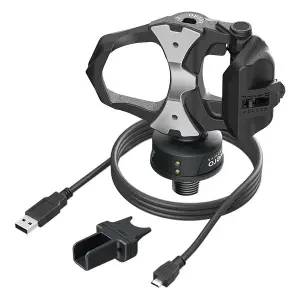

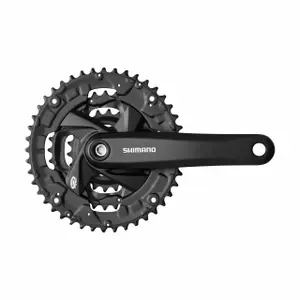
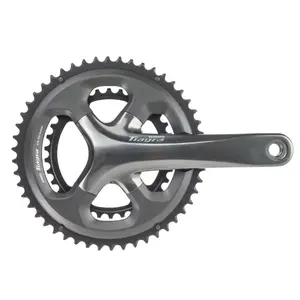
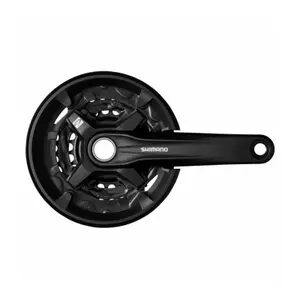


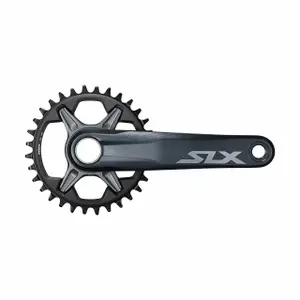
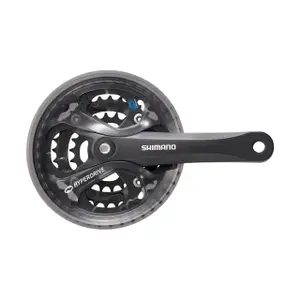
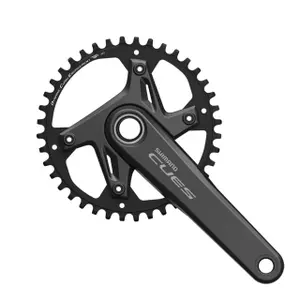
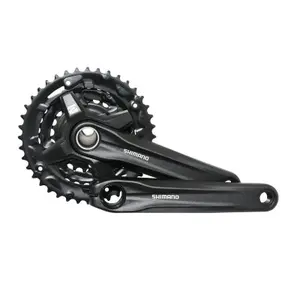
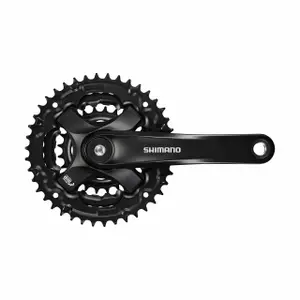
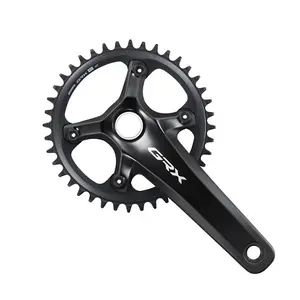
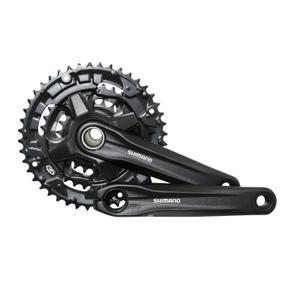
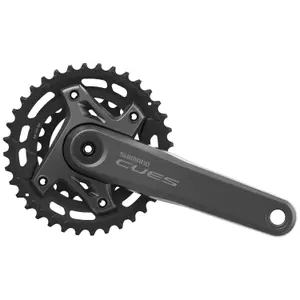
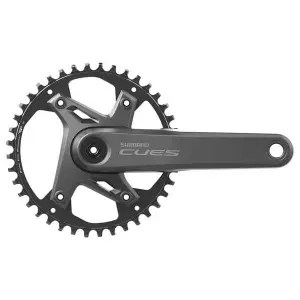
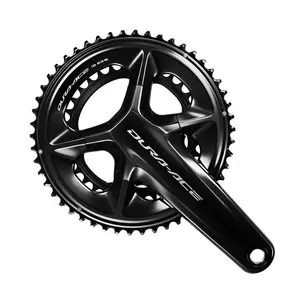
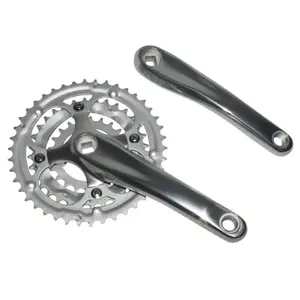

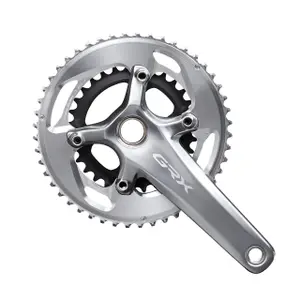
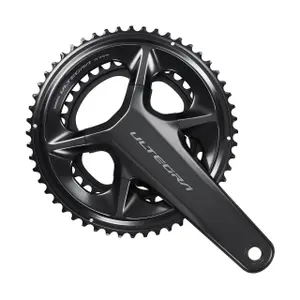
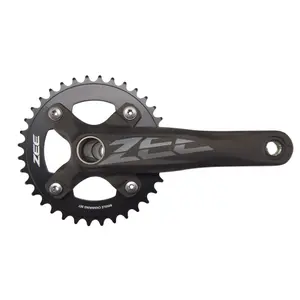
Our selection of Cranksets includes Shimano Cues, Altus, Acera, Essa, and Tourney, Sram Red AXS, XX Downhill, and NX Eagle, Box, Promax, Krayton oval, and Sunrace, as well as the Sram Red power meter integrated into the crankset, along with our tips for choosing the number of chainrings, crank length, and the axle standard compatible with your frame.
The motor of the drivetrain.
Single, double or triple chainring: the crankset architecture
The crankset brings together the two crank arms, the axle and the chainrings: it converts the push from the legs into pull on the chain. The single chainring, like the Shimano Cues or Sram NX Eagle, has become popular in mountain biking for its simplicity, with no front derailleur, paired with a cassette that has a very wide range. The double chainring, like the Sram Red AXS for road or Shimano Altus and Acera in mountain biking, offers finer gaps between gears. The triple, like the Shimano Tourney, maintains a very low gear for loaded touring bikes and the steepest climbs.
Pedalling
Pedalling components also come in various forms:
All the parts are gathered on the pedalling page.
Cank arm length and axle standards
The length of the crank arms, usually between one hundred and sixty-five and one hundred and seventy-five millimetres, is chosen based on the cyclist's size and their use: shorter crank arms are gaining ground in mountain biking, to avoid hitting obstacles, and in triathlons. The axle must match the bottom bracket: twenty-four millimetres for Shimano's Hollowtech II, twenty-eight point nine nine millimetres for the DUB from Sram, standardised since 2018 on the brand's cranksets, and square taper for many entry-level and city models. One also checks the chainline and the method of attaching the chainrings.
Power meter in the crankset and oval chainring
The power meter measures the effort actually produced in watts, regardless of wind or elevation, making it the reference data for training in zones. Integrated into the crankset, like the Sram Red AXS, it fits into the spider that holds the chainrings and measures the force from both legs, without touching the pedals or the cleats. The oval chainring from the Krayton crankset, machined from aluminium, increases the gear ratio where the legs push hardest and lightens it at the dead spots, at the top and bottom of the cycle, for a smoother pedal stroke and less muscle fatigue.
Deals
Good deals can also be found in the deals, promotions, clearance, sales, Black Friday. Our new arrivals showcase the latest collections, and the items shipped in 24h are prepared and dispatched within 24 hours. The key events of the year follow a consistent order: the Black Friday at the end of autumn, the holiday season, the winter sales, the French Days in spring, then the summer sales and back-to-school.
Frequently asked questions
How do you remove a bicycle crankset?
On an integrated axle crankset, loosen the bolts of the left crank arm, remove the preload cap, then pull out the axle on the transmission side. For a square axle, you'll need a puller screwed into the crank after removing the central bolt.
Can you switch to a single chainring on a mountain bike equipped with a double?
Yes, with a narrow-wide chainring that holds the chain without a guide. You often need a more graduated cassette and a compatible rear derailleur to maintain sufficient gears for climbing.
How many teeth should you choose for your chainring?
On the road, a compact with fifty and thirty-four teeth assists with climbs, while a semi-compact with fifty-two and thirty-six aims for speed. In single chainring mountain biking, thirty or thirty-two teeth suit most riders.
Is a Shimano Cues crankset compatible with all transmissions?
It is designed for the Cues range, whose parts are interchangeable among nine, ten, and eleven speeds. Check the number of chainrings, the chainline, and the bottom bracket before pairing it with another transmission.
How do you know if a crankset chainring is worn?
Sharp teeth, resembling shark fins, or a new chain skipping under load indicate a worn chainring. It's often replaced at the same time as the cassette and chain, which wear out together.






