
Bike chainrings


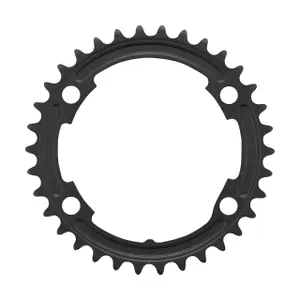


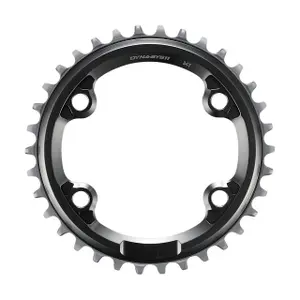

This page brings together chainrings for road bikes, mountain bikes and electric bikes: Shimano Dura-Ace, Ultegra and Tiagra chainrings specific to each crank, dual Rotor direct mount chainrings, single Sunrace chainrings, E*Thirteen and XLC chainrings for Bosch and Fazua motors, triple Prowheel chainrings and Kellys chainrings. Perfect for replacing a worn tooth or changing gears depending on the terrain.
The right gearing, from the crankset.
Compact, semi-compact or standard: which chainrings for road
On a road bike with a double chainset, the combination of chainrings fixes the range of gears. The compact combines a large chainring of fifty teeth with a small one of thirty-four: this is the most common setup, suited for hilly routes and cyclists who want to spin their legs uphill. The semi-compact, with fifty-two and thirty-six, targets regular riders, while the standard, with fifty-three and thirty-nine, is for powerful riders on flat terrain. On a gravel bike, the double Rotor direct mount with forty-six and thirty teeth goes even lower, to help climb loaded on trails. One less tooth on the small chainring is definitely felt on steep slopes.
The rest of the pedalling
Pedalling components are also available:
All the parts are gathered on the pedalling page.
Shimano chainrings: one reference per crankset
Road Shimano chainrings are not universal. The Dura-Ace, Ultegra and Tiagra cranks with four arms use a BCD of one hundred and ten millimetres, and each chainring is designed for a specific crank model, with its ramps and pins to help the chain shift up. Therefore, the reference engraved on the back of the crank is noted, of the type FC followed by letters and numbers, then the corresponding chainring is ordered in the correct tooth count. A worn chainring is recognisable by its teeth shaped like a hook or wave: the chain skips or slips under load. It is often replaced at the same time as the chain and the cassette, which wear out at the same rate.
Electric bike and mountain bike: direct mount and single chainring
On an electric-assisted bike, the chainring is fixed onto the motor's axle or spider, with a specific interface for each manufacturer. The E*Thirteen direct mount chainrings exist for the Bosch CX motor and for the Fazua Ride, with the steel one adding a spacer that corrects the chain line; the XLC mounts on a spider with one hundred millimetres BCD, the standard for mountain bikes. The Shimano chainrings for Steps motors complete this range. On a mountain bike, the single chainring removes the front derailleur: the one from Sunrace, with four arms, is compatible with ten to twelve-speed drivetrains, and its tooth count alternates between wide and narrow teeth to keep the chain in place on rough terrain.
Good deals
Good bargains can also be found in the good deals, promotions, clearance, sales, Black Friday. The new arrivals showcase the latest collections, and items shipped within 24 hours are prepared and dispatched in 24 hours. The major events of the year follow a stable order: the Black Friday in late autumn, the end-of-year holidays, the winter sales, the French Days in spring, followed by summer sales and back to school.
Frequently asked questions
How do you calculate the development of a chainring?
You divide the number of teeth on the chainring by that of the sprocket, then multiply by the circumference of the wheel. With fifty teeth at the front, seventeen at the back and a road wheel of about two metres ten, you move a little over six metres per pedal stroke.
Does an oval chainring have any benefits?
The oval chainring, popularised by the Spanish brand Rotor, increases the development during the phase where the leg pushes the hardest and reduces it at the dead spots. Many cyclists find it offers a smoother pedalling experience, especially uphill; others don’t notice any difference.
Does a triple chainring still have a place?
The triple chainring, like the one from Prowheel mounted on a crank of one hundred and seventy millimetres, offers a very wide range of gears with small steps between speeds. It is still valued on loaded touring bikes, although the single and double chainrings dominate.
Can you change just one chainring on a double?
This is possible if the wear is limited to either the large or the small chainring, as long as the tooth count is compatible with the other and the crankset. Shimano chainrings are designed as pairs so that the chain shifts in the right place: it’s best to stick to the original combination.
How long does a bike chainring last?
It all depends on chain maintenance: a chain replaced on time protects the chainrings, which can then last through several chains. An aluminium chainring wears out faster than a steel one, which is heavier but more durable, often chosen for electric bikes.






