
Boys' golf drivers
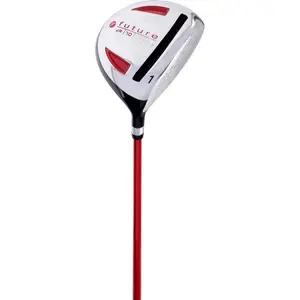
Our Drivers boys page brings together our tips for choosing a driver for a young golfer: appropriate length and weight for their height, generous loft, flexible shaft, forgiving head, and advice on how to learn to play their tee shots with confidence, from the practice range to their first competitions.
The first big drives.
A club that fits
A young player can't use an adult driver: it's too long, too heavy, and too stiff, which would affect their swing. The junior driver is designed according to size increments, with a lightweight head, a flexible graphite shaft, and a generous loft, often between thirteen and sixteen degrees, to help get the ball in the air despite a still modest swing speed.
The rest of the range
There are also boys' clubs:
All clubs are gathered on the boys' clubs page.
Starting your shot
tee, so that half of it is above the top of the clubface, and it is placed at the height of the heel of the front foot. The young player focuses on making a swing that is smooth and balanced rather than relying on strength: consistency is more valuable than distance. On a narrow course, using a fairway wood or hybrid off the tee is often a safer choice.
Improving at the practice range
The driver is practiced at the driving range, targeting specific areas and alternating with longer clubs to keep a sense of reference. The driver is updated alongside the set when the child outgrows their size increment. The golf school instructor helps choose the right club and correct trajectory flaws like slicing before they become a habit.
Good deals
Great bargains can also be found in the good deals, promotions, clearance, sales, and Black Friday. The new arrivals feature the latest collections, and items shipped within 24h are prepared and sent out in 24 hours. The key events of the year follow a stable order: the Black Friday in late autumn, the festive season, the winter sales, the French Days in spring, followed by the summer sales and the back-to-school period.
Frequently asked questions
How do you choose the length of a child's driver?
Junior drivers are offered in size increments: you measure the child in shoes and select the corresponding club so they can maintain a natural stance at address, without having to stand up too straight or excessively bend their back.
Can a boy use a cut-down adult driver?
This is not recommended: shortening an adult driver makes the shaft stiffer and throws off the balance, making the club too heavy. A junior driver, with a lightweight head and flexible shaft, maintains a natural swing.
What loft for a young golfer's driver?
A generous loft, usually between thirteen and sixteen degrees, helps the ball take off despite a still modest swing speed. A loft that is too closed causes the ball to roll rather than fly.
How can you avoid slicing with your driver?
Slicing often comes from an open clubface at impact or a club path that swings from outside to inside. Check your grip, align your feet and shoulders towards the target, and allow your arms to rotate naturally through the ball.
At what age can a child use a driver?
From their first rounds, a child can use a junior driver that suits their size. For beginners, a more open fairway wood may sometimes be easier and boost confidence off the tee.






