
Handball balls


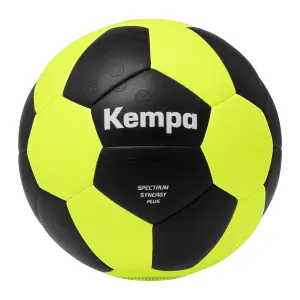


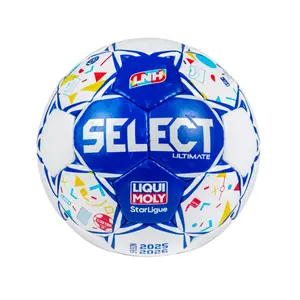


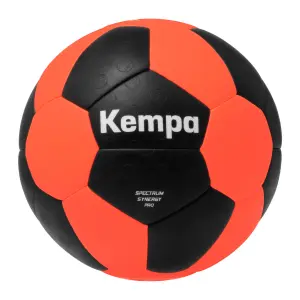


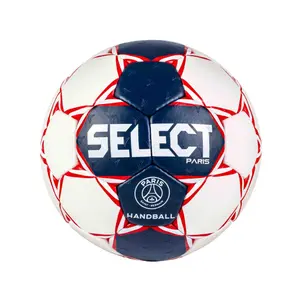


The handball balls page brings together match balls, training balls, leisure balls, and beach handball balls, as well as the supporter versions of the official balls from the French championships and the Champions League. Select, Kempa, Molten, Hummel, and Erima offer all sizes, from size 0 for the smallest to size 3 for men’s seniors.
Size, surface, and usage: three criteria for the right ball.
What size handball according to age and category
Handball uses four ball sizes. The size 0, the smallest, is used for early learning, baby-hand and the first mini-hand. The size 1, measuring 50 to 52 centimetres in circumference and weighing 290 to 330 grams, is for those under eleven and thirteen years old. The size 2, measuring 54 to 56 centimetres and weighing 325 to 375 grams, is for boys under fifteen and girls from fifteen years old, including seniors. Size 3, measuring 58 to 60 centimetres and weighing 425 to 475 grams, is reserved for older boys and male seniors. The Hummel Classic children's ball is designed for the first categories.
Competition, training or non-resin ball
For the same size, the usage differentiates the models. The competition ball, like the Molten Compet D60 Pro or the Select Solera, combines a soft cover and precise touch with a consistent trajectory, at the cost of quicker wear out. The training ball, like the Select Mundo or the Kempa Leo, features a more durable cover that withstands repeated sessions. The ball designed for playing without resin, like the Erima Magic, has a very grippy surface and a soft touch thanks to its cushioning system, even when slightly deflated: it’s the solution for halls where glue is banned. The Kempa Spectrum Synergy, made from thirty panels, offers various levels of grip.
Supporter versions of official balls and beach handball balls
The supporter versions replicate the design of match balls from major competitions: men’s and women’s French championships with the Ultimate range, EHF Champions League or a club ball like PSG's. Built more simply than the official ball, they are used for training, garden games or collecting. Beach handball, meanwhile, is played with a soft rubber ball, smaller and lighter than the indoor ball, which does not hurt the hands and does not slip on wet sand. It can be easily thrown and caught barefoot, without resin, making it a great beach ball for the whole family.
The complete selection
The selection is organised by use:
- Competition, match balls.
- Training, robust balls for sessions.
- Beach handball, soft balls for the sand.
- supporter versions, versions of match balls.
- Leisure, for family play.
- Ball lots, to equip a club.
- Accessories, pumps, nets and resin.
The handball player's equipment is completed with shoes, clothing, supporter items, club space, equipment, on the handball page.
Inflating, cleaning and storing a handball
A well-maintained ball retains its bounce and touch. The pressure, typically between 0.4 and 0.6 bar depending on the manufacturers and indicated near the valve, should be checked before each session: too hard, the ball injures fingers; too soft, it bounces poorly. The pump needle should be moistened before entering the valve to avoid damaging it. The resin is removed using a specific cleaner applied to a cloth, never with a household solvent that can harm the cover. Stored in a net or a ball bag, away from heat and sunlight, the ball won't lose its shape between training sessions.
Frequently Asked Questions
Why is resin banned in some gyms?
Resin sticks to floors, walls and equipment shared with other sports, and its cleaning costs municipalities a lot. Many halls ban it, which highlights the need for balls with a grippy surface designed to cope without it.
Can a handball be used outdoors?
Yes, but asphalt and concrete quickly wear out the cover of an indoor ball. For the courtyard or outdoor pitch, prefer a training or leisure ball with a thicker cover, and keep the match ball for the gym.
How many balls should be prepared for a club training session?
Count at least one ball for every two players, and ideally one per player for youngsters, to increase ball touches. A few spare balls prevent sessions from being interrupted when one deflates.
Why does a handball lose air?
Most balls have a latex bladder, soft and pleasant to the touch, but slightly porous: they need to be inflated regularly. Butyl bladders hold air better, but at the cost of a slightly firmer touch.
What handball is suitable for playing with family?
A soft leisure ball, sized for younger players, is suitable for both the garden and the beach. Its rubber or foam cover does not hurt the hands and can be wiped clean easily after play.






