
MMA gloves on clearance


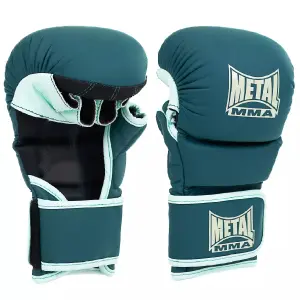


The MMA gloves gathered here at the end of the series are fingerless gloves for fighting, sparring, and grappling: Metal Boxe The Shell, Legacy and The Claw, Twins Special with laces, Tapout in leather, Booster, RDX, Joyagear, Ringhorns, Kwon and Dorawon, as well as a grappling glove adidas. Everyone can find the balance between hand protection and grip freedom that suits their practice.
Quality gloves from a previous collection.
Four, six or seven ounces: padding according to use
A MMA glove weighs much less than a boxing glove. The combat glove, weighing around four ounces, only protects the knuckles with a thin layer of foam: this is the model used in professional competitions, where punches are clean and grips are free. The sparring glove, like the Metal Boxe The Shell, goes up to six or seven ounces and adds padding that covers the back of the fingers: it spares the partner during training exchanges, which take up the majority of time spent in the gym. The grappling glove, like the one from adidas, very light, primarily protects the skin of the hands during wrestling and groundwork, when strikes remain rare.
Other clearance items
The MMA clearance also includes:
- Protective gear, shin guards, cups and mouthguards.
- Textiles, shorts and rashguards.
All clearance items are gathered on the MMA page.
Free fingers and open palm: grip and strike
MMA combines striking standing, wrestling and ground fighting: the glove must allow for striking, but also for gripping a wrist, controlling a neck or locking in a submission. Hence its free fingers and open palm, which allow the hand to close around the opponent, with the thumb free. The padding focuses on the back of the hand and the knuckles, with molded foam that shapes to a closed fist. The wrist strap, wide and often padded, keeps the joint aligned upon impact. Grappling gloves take this logic further, with an almost bare palm to maintain full sensitivity for grips.
Leather, synthetic, lacing or Velcro
Gloves made of leather, like the Tapout Pro or Twins Special models, shape to the hand and withstand hundreds of sessions. Synthetic leather, more affordable, works very well for beginners and can be cleaned with a quick wipe. Velcro fastening dominates in MMA, as it adjusts quickly in seconds; the Twins Special with lacing offers a more uniform support of the wrist but requires a partner's help to tie it. It's essential to regularly check that the foam hasn't compressed on the knuckles, a sign of a worn glove, and that the seams between the fingers remain intact, as they give way first during repeated grips.
The size of an MMA glove and fitting
MMA gloves generally come in sizes S to XL, according to the measurement around the hand at the knuckles, excluding the thumb; each brand publishes its guide. The right glove wraps the hand without squeezing the fingers, whether the fist is closed or the hand is open: too small, it cuts off circulation and hinders the closure of the fist; too large, it turns in grips and the knuckles no longer sit under the foam. For a proper fitting, wear the wraps you will use during training. Legal in France since January 1, 2020, under the aegis of the French Boxing Federation, MMA now has many clubs where these gloves have become essential equipment.
Frequently asked questions
Can you hit a bag with MMA gloves?
Yes, to work on combinations and precision, but the thin padding exposes the knuckles and wrists during long, hard sessions. For heavy work on a bag, a seven-ounce sparring glove or a boxing glove offers better protection.
How long do a pair of MMA gloves last?
With two or three sessions per week, a synthetic pair often lasts a year, a leather model longer. The seams between the fingers and the foam on the knuckles are the first wear points to monitor.
How to clean MMA gloves?
After each session, open the strap and let the gloves air dry, never closed in the bag. A damp cloth and a bit of mild soap clean the outside, and a disinfectant spray helps limit odours inside.
Do women need specific MMA gloves?
Not necessarily: most models are unisex, and size is what matters. A slim hand often takes an S or M, ensuring the knuckles sit well under the foam and the strap holds the wrist snugly without movement.
Are wraps needed under MMA gloves?
It's recommended: wraps support the small bones of the hand and the wrist, and absorb sweat. With an MMA glove, you choose shorter wraps or a thinner wrap to keep the fingers free for gripping.






