
Clearance Roller / Skateboard


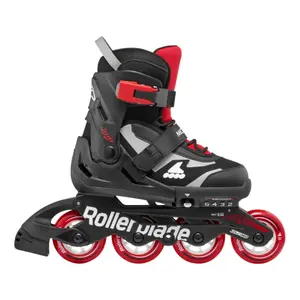


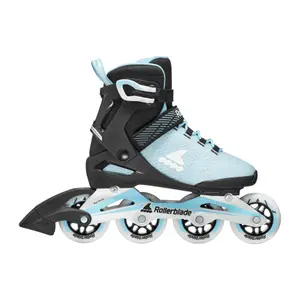


The clearance of rollers and skateboards brings together end-of-line products for gliding: leisure rollers Rollerblade, freeskate and speed rollers Powerslide and Playlife, quads Chaya, adjustable models for children, wheels, bearings, plates, helmets and protective kits. From the first ride on a bike path to the marathon on three large wheels, every practice finds its gear.
Roll in-line or on four wheels, for a softer price.
Macroblade, Microblade: the casual roller Rollerblade
Rollerblade was born in Minneapolis in 1980, when brothers Scott and Brennan Olson, hockey players, developed an inline skate to practice off the ice. The brand eventually lent its name to inline skating. Its Macroblade range is aimed at casual skating and fitness: thick boot, high cuff that supports the ankle, and heel brake included, with eighty-millimeter wheels that roll well without being unstable. The Microblade, for children, extends over four sizes thanks to an adjustment button, allowing the same pair to be kept for several years. The women's versions of the Macroblade follow a narrower foot shape.
End-of-line skating products
Clearance is also available in other sports:
All the end-of-line products are gathered on the clearance page.
Freeskate and speed: Powerslide and Playlife
The freeskate is the ultimate urban roller: slaloming between cones, sidewalk jumps, staircase descents. The Powerslide Zoom and Playlife Lancer or Flyte, on four wheels ranging from eighty to eighty-four millimeters, combine a rigid shell and a short chassis for quick turns. The speed rollers, like the Powerslide Zoom Renegade, are mounted on three large wheels of one hundred and twenty-five millimeters and a low shoe, which frees the ankle for a long and smooth push. Powerslide, a Bavarian company founded in 1994, also designed the Trinity mounting system, which lowers the chassis under the foot for better stability and power transfer.
Protection kit and helmet: beginner's gear
A protection kit, like the Rollerblade Skate Gear for kids, includes wrist guards, elbow pads, and knee pads in one purchase. The wrist guards are the most useful, as people instinctively reach out with their hands when falling: their rigid splint slides the hand to the ground instead of locking it, which spares the wrist. The hard-shell knee pads allow sliding on the knees, a reflex learned from the first falls. The helmet, like the Ennui Elite, primarily protects against falls backwards, where the back of the skull impacts the ground; it adjusts using a dial or cushioning pads, so it doesn't tip forward.
Quad roller Chaya: stability, dance, and derby
The quad roller places its four wheels in pairs, two at the front and two at the back, under a high shoe. This wide base makes it stable both at rest and in reverse, making it the skate for derby, dance, and artistic roller skating. The brake, a stopper made of rubber located at the front, is operated by pushing down on the toes. Chaya, a specialist in quads, has made its return to the streets with colorful models like the Airbrush, and the Chaya Pro backpack carries skates and protections. The soft wheels absorb the bumps of outdoor asphalt, while harder wheels glide better on smooth indoor surfaces.
Frequently Asked Questions
What size roller skates should I choose?
Take your usual city shoe size: the boot does compress a bit over time, but a roller that is too large will lift the heel and tire the ankle. Speed rollers, which are very snug, may even be taken half a size smaller.
How long does it take to learn roller skating?
A few sessions are usually enough for an adult to move forward, turn, and stop on a flat surface. Braking and going downhill require more practice, and taking an introductory class at a club saves a lot of time and builds confidence.
How do you maintain roller bearings?
Avoid puddles and sand, which can jam the ball bearings. When they become noisy or slow down, disassemble them, clean them with a degreaser, then add a drop of special oil before reinstalling them in the wheels.
How do you rotate the wheels of your roller skates?
The wheels wear unevenly, especially at the front and back of the chassis. Every few outings, swap the first and third wheels, the second and fourth, and flip them over to wear both edges evenly.
Inline skates or quads for a child?
Adjustable inline skates are often simpler for learning to move forward and brake thanks to the heel brake. The quad, which is more stable when stopped, reassures little ones but requires learning to use the front stopper before gaining speed.






