
Squash shoes on clearance
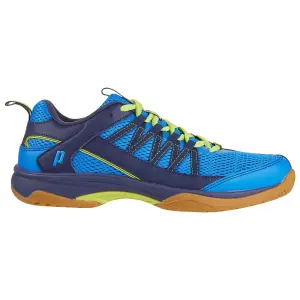
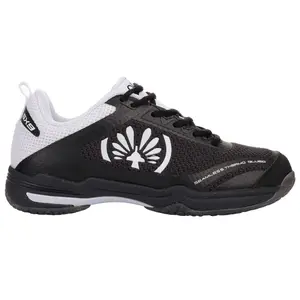
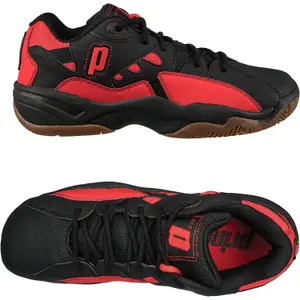
This selection brings together squash shoes from the end of the range, designed for explosive footwork on the indoor court: Prince Vortex Pro and Prince NFS, and Oliver Sport SX-9, non-marking clear-soled indoor shoes, with reinforced toe and lateral support for lunges to the corners and returns to the T.
A pair from a previous collection, at a friendlier price.
Non-marking sole: a club rule
On a squash court, the sole must be non-marking, and most clubs deny access to players who do not comply. The light floor and white walls otherwise retain black marks with every stop. Thus, squash shoes use a clear or translucent rubber, often made from natural rubber, which grips the varnished wood without leaving marks. This soft rubber provides a solid grip for quick bursts towards the ball, but it wears out faster than running shoe soles: we reserve these shoes for the court, where they maintain their grip much longer.
Other end-of-line items
Squash clearance also includes:
All end-of-line items are gathered on the squash page.
Lunges and direction changes: what squash demands
Squash involves short sprints, deep lunges into the corners, and returns to the T, at the centre of the court. In a lunge, the back foot drags along the floor by the toe: squash shoes feature a reinforcement at the front that protects the upper from this abrasion. Lateral support, provided by a firm upper on the sides, keeps the foot stable during direction changes, and a low profile brings the foot closer to the floor to limit ankle twists. The Prince Vortex Pro focuses on this stability, while the Prince NFS and the Oliver Sport SX-9 emphasise lightness for speedy players.
Prince and Oliver Sport, two specialists in rackets
Both brands in the selection come from racket sports. Prince, an American brand, made a name for itself in 1976 with the patent for the first oversized tennis racket, before becoming a major name in squash, from rackets to balls and shoes. Oliver Sport was founded in 1938 in Adelaide, Australia, driven by Jack Oliver; based in Germany since the late seventies, it specialised in squash and badminton. Their shoes incorporate the expertise of players who understand the demands of the court.
When to replace your squash shoes
A pair of squash shoes wears out first under the forefoot, where you pivot, and on the toe, which rubs with each lunge. When the sole pattern fades or your foot slips when starting, the grip is no longer sufficient: the pair should be replaced before injury occurs. The cushioning foam also compresses, making repeated landings harder on the heels and knees. A player who trains two to three times a week typically changes their pair each sporting season. Between matches, let your shoes air dry, outside of the bag, to preserve the upper and rubber.
Frequently asked questions
Can you play squash in badminton shoes?
Yes, badminton shoes are also quite suitable: they also have a non-marking rubber, a low profile, and good lateral support. Just check that the toe is reinforced, as the lunges in squash wear it out quickly.
Should a squash shoe be tight?
It should hold the foot firmly, without compression. The heel should not lift, and the foot shouldn't slide forward during lunges; leave about half a centimetre in front of the big toe.
How can you tell if a sole is non-marking?
Manufacturers indicate this by the non marking label on the sole or box. A clear, beige, or translucent rubber is a good sign; rubbing the sole on a white surface can confirm it.
Why do my shoes slip on the court?
Dust and sweat that fall on the floor reduce grip, just like a sole that has been dirtied by the street. Wipe the soles with a damp cloth before playing and report damp areas of the court.
Do squash shoes limit sprains?
Their low profile and reinforced upper on the sides reduce the risk of twisting during direction changes. They do not replace a proper warm-up of the ankles before playing.






