
Squash rackets on clearance
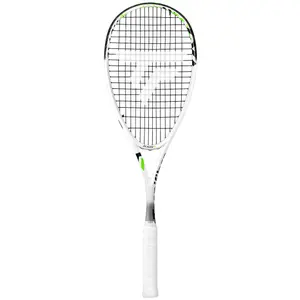
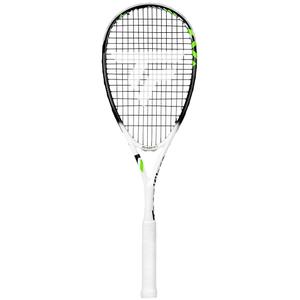
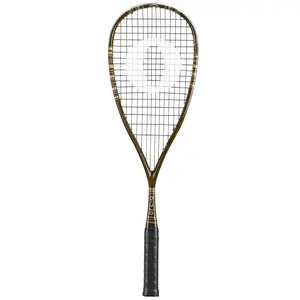
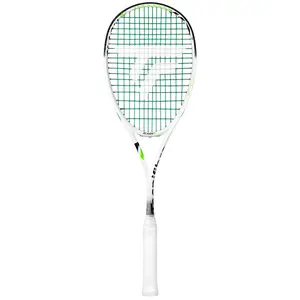
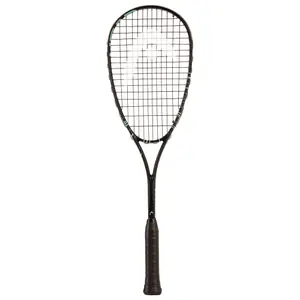
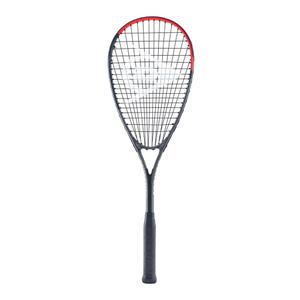
This page brings together the squash rackets from the end of the range, from the beginner-friendly model to the lightweight racket for competitive players. Tecnifibre Carboflex and Slash, Head Extreme and Cyber, Dunlop Tristorm and FX, Prince Vortex and Phoenix, Wilson Pro Staff and Hyper Hammer: each brand has its own balance and frame shape, and the Oliver Sport Punch Turbo equips young players.
A quality racket from a previous generation.
What the rules say about the racket
The World Squash Federation clearly defines the racket: a maximum length of six hundred and eighty-six millimetres, a width of two hundred and fifteen millimetres, a strung surface limited to five hundred square centimetres, and a weight capped at two hundred and fifty-five grams. In practice, most rackets weigh between one hundred and ten and one hundred and sixty grams, allowing for quick wrist movements in the limited space of the court. The frame, often made of graphite reinforced with aramid fibres, must withstand repeated impacts against the side walls without breaking.
Other end-of-line products
Squash clearance also includes:
All the end-of-line products can be found on the squash page.
Carboflex or Slash: both ranges Tecnifibre
Tecnifibre, a French brand born in 1979 around strings, launched its first squash racket in 2001 with Thierry Lincou, future world number one global. Its two ranges are distinguished by the shape of the head. The Carboflex features a teardrop head with an open throat: the hitting area extends towards the handle, giving the racket more power. The Slash reverts to a traditional head with a closed throat, being more compact and precise. On both, the X-Top technology replaces the plastic frame guard with active fibres at the top of the head, and the number attached to the name indicates the weight in grams.
Beginner, club player, or competitor
The beginner benefits from choosing a forgiving racket with a large head and moderate weight, which allows for off-centre strikes: the Dunlop Tristorm, with a titanium-reinforced frame, or the Team versions of Tecnifibre fulfil this role. The club player who plays weekly turns to a versatile racket, like the Head Extreme or the Dunlop FX, which offer a good balance between power and maneuverability. The competitor, who hits quickly and places the ball precisely, opts for a light racket around one hundred and twenty grams, like the Slash in Control version. Players who lack depth from the back of the court prefer a heavier racket with a head-heavy balance, like the Wilson Hyper Hammer.
What racket for a child
A child should not play with an adult racket that is too long and heavy for them: they would compensate with their arm, developing poor habits. Junior models are shorter, lighter, and have a thinner handle, suitable for a small hand. Their length increases with age, with beginner models for younger ones to almost adult rackets for teenagers. The Oliver Sport Punch Turbo is one of the rackets designed for children discovering squash in a club setting. As soon as growth allows, a light and forgiving adult racket takes over, without going straight to a competition model.
Frequently asked questions
What is the best squash racket brand?
No brand dominates overall: Tecnifibre, Dunlop, Head, Prince, and Wilson all manufacture top-level rackets. The right choice depends on the weight, balance, and shape of the head that suit one’s game, which should be tried if possible before purchase.
How to hold a squash racket?
Grip the handle as if shaking hands, with the thumb and index finger forming a V on top, the racket head slightly open. This grip works for both forehand and backhand, and the head stays high between strikes.
What string tension for a squash racket?
Most rackets are strung between twenty-five and thirty pounds. A low tension provides more power and comfort, while a high tension offers more control but at the expense of a drier feel on impact.
When to change the grip of a squash racket?
As soon as the grip becomes smooth, hard, or slips in the hand, which happens quickly for a regular player. An overgrip wrapped over the original grip can be easily replaced and allows for adjustment of the handle thickness.
Is a light racket necessarily better?
A light racket is quicker to handle at the front wall and during volleys, but requires a full swing to send the ball to the back of the court. A heavier racket, more stable at impact, helps players whose strokes still lack speed.






