
Equestrian Helmets / Bombs on Sale
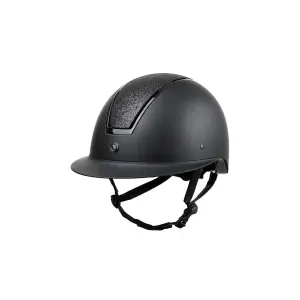


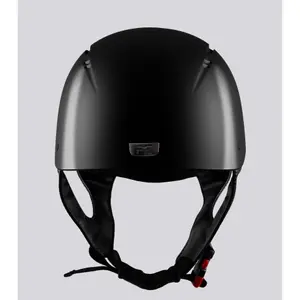
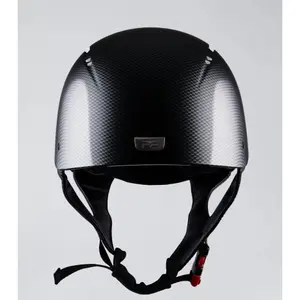
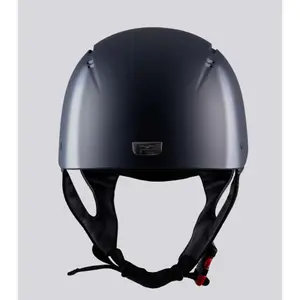
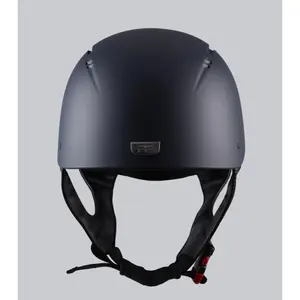
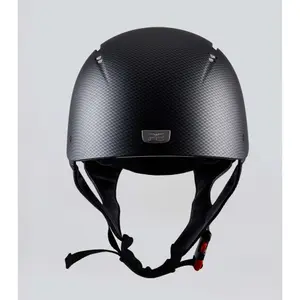
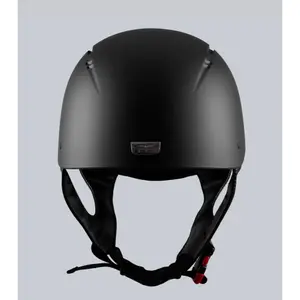


The Riding Helmets / Hats sale features approved helmets for daily work, riding out, and competitions: Samshield with an ultra-light shell, Harry's Horse, Horze and Horka with matte, shiny, or glitter finishes, Equipage with Mips system, Casco, Tattini, Back on Track with adjustable dial and polo visored helmets from BR. For both novice riders and competitors, at discounted prices.
Stay safe on horseback, at discounted prices.
Standards and certification of a riding helmet
A riding helmet sold in Europe carries the CE marking and a safety standard indicated inside the shell. The European reference standard, EN 1384, was revised in 2023 with raised requirements: the impact speed tested goes from 4.57 to 5.05 metres per second, and the penetration resistance is strengthened. Helmets certified according to the previous version, or according to certain standards recognised by the European Union, remain accepted in competitions. In France, a compliant helmet is mandatory in competitions, with the chin strap fastened as soon as the rider is on the horse. The certification label should be checked before any purchase, rather than relying on the appearance of the shell.
Other riding sales
Riding sales also include:
All riding sales are gathered on the riding page.
Finding the right helmet size
The size of a helmet corresponds to the head circumference in centimetres, measured with a tape measure a finger above the eyebrows and at the widest part of the back of the skull. A well-fitted helmet stays in place without the chin strap when tilting the head forward, without any pressure points on the forehead or temples. The adjustable dial at the back, like on the Back on Track, fine-tunes the fit and is suitable for heads between sizes or for children who are growing. At Samshield, the shell features an inner foam available in various sizes, allowing for a precise fit. The chin strap is finally adjusted to let a finger pass under the chin, no more no less.
Shell, inner lining and Mips system
The safety of a helmet relies on two layers: a rigid outer shell that distributes the impact, and a polystyrene inner lining that absorbs energy by crushing. Samshield, the French brand created by Sam Maloigne, has popularised a polycarbonate shell combined with variable density polystyrene, making for a helmet significantly lighter than those of the past. The Mips system, developed in Sweden since 1996 by neurosurgeon Hans von Holst and researcher Peter Halldin, adds a low-friction layer that allows the head to slide a few millimetres during an oblique impact, like on the Equipage Guardian. The shell's ventilation allows heat to escape, a major criteria for riding all summer long.
Visor, finishes and maintenance
The standard visor remains short to avoid obstructing the vision of the rider when approaching an obstacle. The polo visor, which is wider, like on the BR Omega, provides better protection from the sun and rain during long outdoor sessions. In terms of style, the matte finishes of the Harry's Horse Matterhorn, the velvet of the Regal Velvet, the crystals of the Horze Arix or the rhinestones of the Horka Dali allow for matching the helmet to the competition jacket. For maintenance, the removable inner foam should be taken out to wash by hand, the shell wiped with a damp cloth without solvent, and the helmet stored away from heat, never in a car boot in full sun.
Frequently asked questions
When should you replace your riding helmet?
After any fall with an impact to the head, even if the shell appears intact: the polystyrene may have compressed and no longer provides the same level of protection. Without a fall, many manufacturers recommend replacement after a few years, as materials age.
Which riding helmet should you choose for a child?
You should choose a helmet that fits the child's current size, never too big in the hope it will last: a helmet that moves does not protect. An adjustable dial and an easy-to-buckle chin strap help them wear it properly for each session.
Can you buy a second-hand riding helmet?
This is not recommended: there is no guarantee that it hasn’t already sustained an impact, and its materials may have aged. A new helmet, with its standard label and manufacturing date, offers known protection right from the first session.
What is the average weight of a helmet?
Current models often weigh between four hundred and six hundred grams, depending on size, shell and options such as the Mips system. A lightweight helmet puts less strain on the neck during long competition days or outings.
Is wearing a helmet mandatory for riding in a riding school?
Most riding centres require it for their riders, and it is mandatory in competitions. Even for a simple ride, it remains the best protection against head injuries in case of a fall or kick.






