
City bike pedals




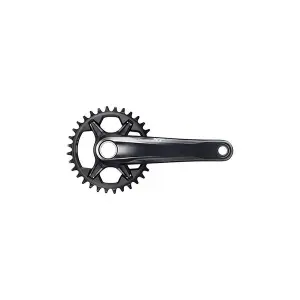
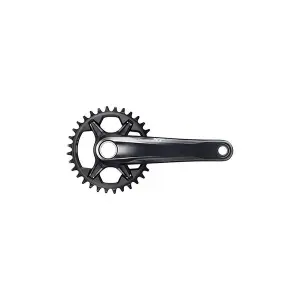




The city bike pedal set transfers the effort from the legs to the chain, with specific requirements for urban use: durability, low maintenance and clothing protection. This page brings together single chainring pedal sets with chain guards, models compatible with a chainguard, and square taper pedal sets that equip most city and trekking bikes.
Peddling in the city without staining your trousers.
Single, double or triple chainring: which crankset for the city
Most city bikes ride with a single chainring, with around thirty-eight to forty-two teeth, paired with a hub with internal gears or a rear derailleur. This setup, without a front derailleur, is lightweight, quiet and requires almost no adjustment. The double or triple chainring remains common on hybrid and trekking bikes that carry loads or tackle hills: the small chainring, around twenty-eight teeth, makes climbing easier. For a replacement, use the same number of chainrings as originally fitted, otherwise you may also have to change the shifter and front derailleur.
The transmission
The city transmission also varies:
The entire transmission can be found on the transmission page.
Chain guard and casing: a crankset that protects your trousers
The chain guard, a ring made of plastic or aluminum fixed to the outside of the chainring, prevents the bottom of your trousers from getting caught between the teeth and staining with grease. Depending on the model, it can be riveted or screwed on and may sometimes be replaced separately. A crankset designed for a bike with a full casing must have a compatible diameter and mounting points with this casing, which encloses the entire chain: protected from splashes, it wears much more slowly. Before buying, also check the chainline, to ensure the chainring stays aligned with the rear sprocket.
Square or splined axle: identifying your bottom bracket
The bottom bracket determines the compatible crankarms. The square axle, simple and economical, has crankarms fitted onto a cone: it remains the standard for city bikes. There are two tapers, JIS and ISO, which are not interchangeable and should be identified before any replacement. Splined axles, like the ISIS standard for example, offer more rigidity. Additionally, the crank length is usually engraved on the back, often one hundred and seventy millimeters, and the width of the bottom bracket of the frame is generally sixty-eight millimeters.
Good deals
Good deals can also be found in the good deals, promotions, clearance, sales, and Black Friday. The new arrivals showcase the latest collections, and items shipped in 24h are prepared and sent out within 24 hours. The highlights of the year follow a stable order: Black Friday at the end of autumn, the winter holidays, the winter sales, the French Days in spring, then the summer sales and back to school.
Frequently asked questions
How do I remove the crankset from a city bike?
Remove the screw or nut from each crankarm, then screw an extractor into the threading of the crankarm to detach it from the axle. The bottom bracket can then be taken out with the appropriate tool, often undoing the right side in reverse.
What crank length is used on a city bike?
The common length is one hundred and seventy millimeters, sometimes one hundred and sixty-five on smaller frame sizes. If replacing, keep the original length to avoid changing your position on the bike.
Why is my crankset creaking when pedalling?
A creaking noise often comes from a crankarm that is loose on its axle or from a worn bottom bracket. First, tighten the crankarm screws to the specified torque; if the noise persists, the bottom bracket needs to be disassembled, cleaned, greased, or replaced.
Is the crankset on an electric bike different?
Yes, on a central motor electric bike, the crankarms mount directly onto the motor axle and the chainring is specific to each motorization. A standard crankset is only suitable for electric bikes with a motor in the wheel.
How can I tell if a crankset is worn out?
Sharp teeth shaped like shark fins or a chain that skips under load indicate a tired chainring. Any lateral play in the crankarms suggests a worn bottom bracket, which should be replaced before the play increases.






