
City bike transmission


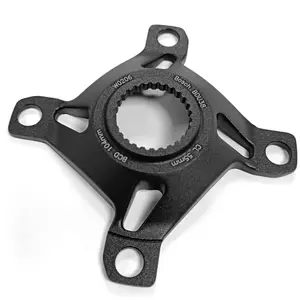
The city bike transmission includes cables and housings, chains, sprockets, chainrings, cranksets, and derailleurs, with parts from Sturmey-Archer, Sunrace, Shimano, or FSA. It is used to restore a bicycle that is used every day, whether it has an internal gear hub or a derailleur, or to replace the cranks of an electric bike with a central motor.
A simple and sturdy transmission for riding every day, in the rain as well as in the sun.
Hub with integrated gears: the legacy of Sturmey-Archer
The hub with integrated gears houses its planetary gears within the rear hub, protected from water and spray. The English brand Sturmey-Archer, founded in Nottingham, developed the first three-speed hub in 1902, based on patents from Henry Sturmey and James Archer; this principle is still used on Dutch bikes and classic city bikes.
Shifting is done via a single cable controlled by the lever. The Shimano Nexus hubs with seven or eight speeds expand the range for hilly towns. The Sunrace cable and housing designed for the Sturmey-Archer three-speed hubs restore a sticking mechanism.
Derailleur, cover, or belt: which transmission for the city
The derailleur offers more gears for less weight, useful on long journeys or steep climbs. However, being exposed to rain and winter salt, it requires more frequent cleaning and adjustments than a closed hub. City bikes with derailleur systems usually combine seven to nine sprockets with a single chainring, protected by a cover or chain guard that keeps the bottom of your trousers clean.
The carbon belt replaces the chain on some integrated hub bikes: it doesn’t rust and never needs lubrication, but requires a rear frame that can open to be fitted.
Electric bike cranks: compatibility with the motor
On an electric bike with a central motor, the cranks do not attach to a standard bottom bracket but directly to the motor shaft. Their interface depends on the manufacturer: for example, FSA aluminium cranks, 175 millimetres with ISIS fitting, are compatible with Yamaha motors and some Brose motors. The chainring, often single, attaches to a spider specific to the motor.
Before ordering, check the brand and model of the motor, indicated on its cover or in the bike manual. A crank length matching the original maintains the same pedalling position.
The selection
The transmission is organized by part:
The city bike is complemented by bikes, wheels, tyres and braking, components, luggage and transport, equipment, on the city page.
Chain, chainring and sprocket: spotting wear
A city bike chain runs through all weathers and often wears out without you noticing. On an integrated gear hub, it is often wider and tightens by pulling the wheel back in the dropouts, keeping a slight bow. On a derailleur, a chain that is thinner tightens itself thanks to the tensioner.
Crooked teeth on the chainring or the sprocket, a chain that skips when pedalling hard or squeaks despite lubrication indicate advanced wear. It's then necessary to replace the entire set, as a new chain quickly damages when in contact with worn teeth.
Frequently Asked Questions
How many gears do you need for riding in the city?
On flat terrain, three gears are enough to start at a traffic light and ride at a good pace. However, when the city has hills, seven or eight gears provide real comfort, and an electric bike requires less effort thanks to assistance.
How to adjust the cable on a Shimano Nexus hub?
Engage the fourth gear: two yellow markers should then face each other on the hub pulley. If they’re misaligned, turn the cable adjustment knob until they overlap, then check the shifting of each gear.
Why does a city bike chain rust?
Rain, humidity, and winter salt attack the steel as soon as the lubricant wears off. A bike parked outdoors benefits from receiving a wet-condition oil monthly, and a closed cover protects the chain even better.
Can you change gears while stationary on a city bike?
With an integrated gear hub, yes: you can downshift at a red light without pedalling to start smoothly. With a derailleur, the chain must turn to shift from one sprocket to another; so, you need to anticipate the shift before stopping.
When should you replace the gear cables on a city bike?
A gear shift that's becoming stiff, a lever that returns badly, or a frayed cable at the housing exit indicate a need for replacement. The housings, which also get dirty, should be changed at the same time, cut cleanly so as not to pinch the cable.






