
Bike seat posts


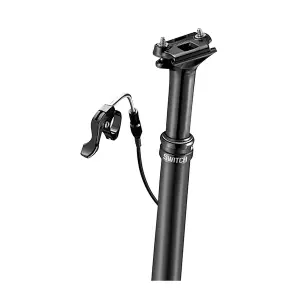


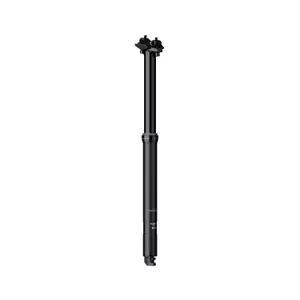


Our selection of Mountain Bike Seat Posts includes the Thomson Elite machined post, the Pro LT dropper, the P2R externally adjustable post, the Zoom and XLC spring-mounted posts, and the aluminium posts from Ergotec and Optimiz. Rigid, dropper or suspended, each post is chosen based on the riding style, the seat tube diameter, and the available insertion length.
The saddle at the right height, at all times.
Telescopic post: control, cable and travel
The telescopic post lowers the saddle with a push of a button on the handlebar, creating space when going downhill, and then raises it with a gesture when climbing. The cabling can be done in two ways: externally, like on the P2R, with a casing fixed along the frame, which is simpler to install on an older bike; or internally, inside the seat tube, which is cleaner and protected from mud, but reserved for frames that are drilled for this purpose. The Pro LT, from the component brand under Shimano, provides this comfort on varied trails. The travel is chosen based on the saddle height and the possible insertion depth into the frame.
The other components
MTB components are also available:
All components are gathered on the peripheral components page.
Rigid post, straight or setback: the Thomson Elite
The rigid post remains popular in cross-country and trekking MTBs, where the saddle stays at the same height. It comes in a straight or setback version, where the bracket shifted back moves the saddle a few centimetres to adjust the position without changing the frame. The Thomson Elite, made by a company in Macon, Georgia, is machined and forged from aluminium; its two-bolt bracket allows for very fine tilt adjustment that stays put once tightened. The Ergotec and Optimiz posts, made of aluminium, provide a robust solution to replace a factory post.
Suspension post and seat tube diameter
The suspension post absorbs small bumps under the saddle on a semi-rigid MTB or a leisure bike. The XLC spring post is chosen based on the rider's weight, which is indicated on the reference, while the Zoom, made of aluminium, works on the same principle. For all posts, the diameter must match the seat tube exactly: twenty-seven point two millimetres on many semi-rigid and older bikes, thirty point nine, thirty-one point six or thirty-four point nine on newer frames. The minimum insertion mark, engraved on the post, should never exceed the frame.
Good deals
Some great finds are also in the good deals, promotions, clearance sales, sales, Black Friday. The new arrivals feature the latest collections, and items shipped within 24h are prepared and sent in 24 hours. The highlights of the year follow a regular pattern: the Black Friday at the end of autumn, the end of year holidays, the winter sales, the French Days in spring, followed by summer sales and the back-to-school season.
Frequently asked questions
How to measure the diameter of a seat post?
The diameter is often engraved on the original post, near the insertion marker. If not, you measure it with a caliper, to the nearest tenth of a millimetre, as a post that is too thin will move, and one that is too thick won't fit.
What length of seat post should I choose?
The post should remain inserted beyond the minimum mark while reaching the correct saddle height. On a large frame or for a rider with long legs, a post of three hundred and fifty to four hundred millimetres prevents reaching the limit.
Can you install a telescopic post on an old MTB?
Yes, with an external control model whose casing fits along the frame, as long as the seat tube diameter is compatible. You also need to check that the available insertion length allows for the desired travel.
What torque should be used for a seat post?
You should follow the value indicated on the clamp or post, usually a few newton-metres, using a torque wrench. With carbon, you add a mounting paste that increases grip without needing to tighten further.
Why does the seat post lower by itself?
The clamp might be insufficiently tightened, or the post may be too thin by a tenth of a millimetre. On a telescopic post, a gradual drop usually indicates a cartridge that needs servicing.






