
Handlebar extensions for time trial and triathlon
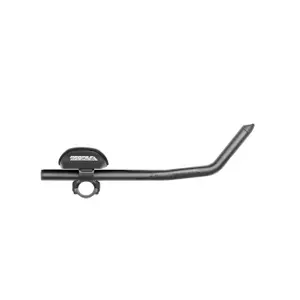


Starting at £115.71
£102.47


Our selection of Handlebar Extensions brings together the add-ons for time trials and triathlons: the Zipp Vuka Clip with carbon extensions, the Deda Jet Evo and the 3T S-Bend Pro bars, along with our tips for choosing the shape of the extensions, adjusting the elbow rests and following the competition rules.
The aerodynamic position, within reach.
What extensions bring to a road bike
Handlebar extensions attach to either side of the stem on a road handlebar. The cyclist rests their forearms on armrests and grips the ends of the bars: the arms come together, the torso lowers, and the surface exposed to the wind decreases significantly. Since air resistance constitutes the bulk of the effort at high speed, the gain at equal power is real in a time trial or a triathlon without drafting. The Zipp Vuka Clip clamps onto the 31.8-millimetre section of the handlebar and takes extensions of 22.2, the standard diameter in the market.
Other components
Components also come in various forms:
All components are gathered on the peripheral components page.
Straight, S-shaped or raised extensions
The bars are distinguished by their profile. Straight, they elongate the position and suit flexible cyclists who ride with their hands low. In S shape, like the 3T S-Bend Pro, they rise slightly towards the end for a more natural wrist grip. Raised, they place the hands higher than the elbows, a position very common among triathletes, which opens the shoulder angle and protects the head from the wind. Zipp offers its Vuka extensions in Race curvature, slightly raised, and in Evo curvature, more pronounced. The choice depends on back flexibility and effort duration: on a long-distance triathlon, a sustainable grip is better than a few watts gained.
Adjusting the armrests and following the regulations
Adjustment starts with the spacing of the armrests, placed directly above the shoulders or slightly inward, then their height, adjusted with spacers. The angle between the arms and forearms begins at around ninety degrees and is advanced in small steps while checking breathing and neck position. In terms of regulations, the UCI has regulated the length of extensions according to the rider's height in time trials since January 1, 2023, and banned them in road races. In triathlons with allowed drafting, only short extensions, which do not exceed the front of the brake levers, are tolerated.
Good deals
Good deals can also be found in good plans, promotions, clearance, sales, Black Friday. The new arrivals feature the latest collections, and articles shipped in 24h are prepared and dispatched within 24 hours. The highlights of the year follow a stable order: the Black Friday at the end of autumn, the holiday season, the winter sales, the French Days in spring, followed by the summer sales and back-to-school season.
Frequently asked questions
Can extensions be fitted to any road handlebar?
A round section of 31.8 millimetres is required on each side of the stem, and a handlebar approved by its manufacturer to accept extensions. Aerodynamic handlebars with a profiled upper part often do not allow this.
Are extensions enough to turn a road bike into a time trial bike?
They significantly change the position, but the saddle often needs to move forward to maintain an open hip angle. A setback seat post and an appropriate height adjustment complete the transformation.
Carbon or aluminium extensions: which to choose?
Aluminium is sturdy, economical, and tolerates repeated adjustments better. Carbon lightens the front of the bike and dampens vibrations more, an advantage on long distances, but requires precise torque tightening.
Is a posture analysis needed for riding with extensions?
It is not mandatory, but a posture analysis saves time in finding a position that is both fast and sustainable. It helps avoid neck and lower back pain common during the first long rides.
Are extensions allowed in cyclosportives?
Many organizers prohibit them in mass starts, as the hands are far from the brakes in the middle of the pack. Check the regulations for the event; in solo training, they remain an excellent tool for working on position.






