
Pull-Up Bars for the Home


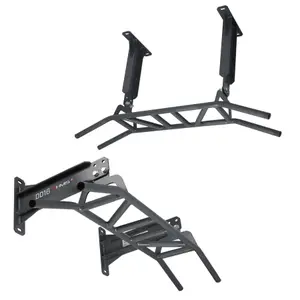


Our Pull Up Bars page brings together our tips for setting up at home: door bar, wall or ceiling bar, pull up station, maximum load, grips in pronation, supination or neutral, and progression methods to succeed in your first pull ups.
The king of bodyweight exercises.
The king exercise for your back
The pull-up is one of the most complete bodyweight exercises: it works the latissimus dorsi, biceps, forearms, shoulders, and core. It develops functional strength useful for many sports, from climbing to combat sports. Having a bar at home allows you to train for a few minutes every day, which significantly speeds up progress.
Weight training accessories
Weight training accessories also come in:
- Weighted vests.
- Weighted accessories.
- Ab wheels.
- Pulling accessories.
- Punching bag.
- Body Pump kit.
- Weight belts.
All the accessories are gathered on the weight training accessories page.
Three setups
The door bar, which fits into the frame without drilling, is the easiest to install: you check the width of the frame and its sturdiness. The wall or ceiling bar, fixed with a bracket, offers more stability and allows for dynamic exercises. The pull-up station, self-supporting, often adds dip handles and supports for the abs. Always respect the maximum load.
Making progress
To achieve your first pull-up, start with negatives: pull up with assistance, then lower yourself as slowly as possible. An elastic band attached to the bar lightens your body weight. Vary your grips: overhand, palms facing away for your back; underhand, palms facing you for your biceps; neutral grip to ease the strain on your shoulders. Then add a weighted vest.
Good deals
Good deals can also be found in good plans, promotions, clearances, sales, Black Friday. The new arrivals showcase the latest collections, and items shipped in 24h are prepared and sent within 24 hours. The key events of the year follow a stable order: Black Friday in late autumn, the end-of-year festivities, the winter sales, the French Days of spring, then the summer sales and back-to-school period.
Frequently asked questions
Door, wall or station: which pull-up bar to choose?
The door bar installs without drilling but limits the range of motion. The wall or ceiling bar, fixed with screws, offers more stability and clearance. The self-supporting station is suitable when drilling isn’t possible, at the cost of taking up more space.
How to achieve your first pull-up when you’re starting out?
Begin with hanging on the bar, then do negative pull-ups, descending as slowly as possible. An elastic band attached to the bar reduces your body weight and allows you to perform complete repetitions.
What’s the difference between overhand, underhand, and neutral grip?
In overhand grip, with palms facing away, the latissimus dorsi works harder. In underhand grip, with palms facing you, the biceps take over and the exercise feels easier. The neutral grip, with palms facing each other, eases the strain on the wrists and shoulders.
Does a door bar risk damaging the frame?
A well-placed door bar distributes the weight across the frame, but it may mark the paint. Foam ends help reduce marks; check the sturdiness of the frame and the maximum load indicated before your first session.
How many times a week should you train on the pull-up bar?
Two to three sessions a week are enough to make progress, allowing at least one rest day for your back and arm muscles. A few short and regular sets are better than one exhaustive session.






