
Circuit Training and its workshops

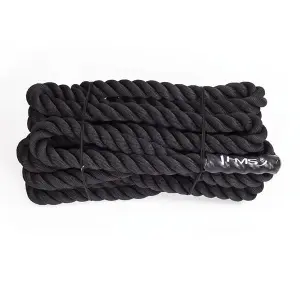

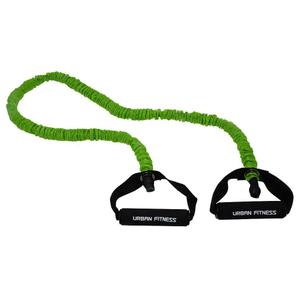
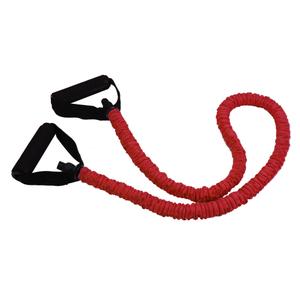
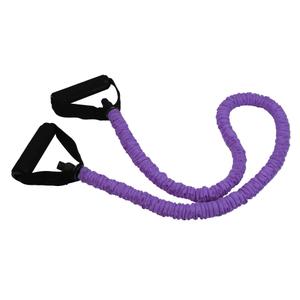
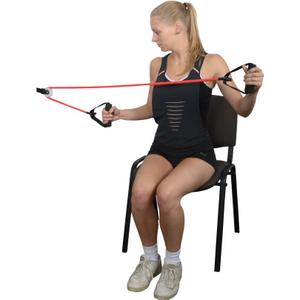
Our Circuit Training page brings together our tips for building a workout with linked stations: choice and order of exercises, durations of effort and recovery, number of rounds, useful equipment such as the battling rope, medicine ball, resistance band, or step, and progression to start and then intensify your sessions at home or in the gym.
Station by station, the whole body works.
The principle of circuit training
Circuit training consists of a series of stations, each dedicated to an exercise, with a short transition from one station to another. The method was formalised at the University of Leeds in England in the 1950s to train many people at the same time in a small space. Its appeal lies in the combination: by alternating strength and cardio exercises without long breaks, the heart rate stays elevated throughout the session, which develops both endurance and muscle strength. Everyone progresses at their own pace on the same circuit, making it a popular format in group classes as well as solo sessions.
The rest of the equipment
Fitness equipment also comes in different varieties:
All the accessories are gathered on the fitness accessories page.
Effort duration, recovery and number of rounds
A typical circuit includes six to ten stations. The most common format sets an effort time of thirty to forty-five seconds, followed by fifteen to thirty seconds to switch stations; a variant requires a number of repetitions per station. Once the circuit is completed, you recover for two to three minutes before starting again, for two to four rounds. The order matters: you alternate upper body, lower body, core, and cardio, so one muscle group rests while another works. The beginner takes longer breaks and reduces the effort, while the experienced practitioner does the opposite or adds a round. An interval timer helps avoid watching the clock.
Wavy rope and workshop equipment
A circuit can be set up with minimal equipment, but each accessory opens up new stations. The wavy rope, long and heavy, wrapped in the middle around an anchor point, is waved with both hands in alternate or simultaneous waves, with hits against the floor or in circles: thirty seconds is enough to engage shoulders, arms, core and heart. The medicine ball is used for wall throws and torso rotations, the elastic for pulling and shoulder strengthening, and the step for step-ups and jumps. A mat protects exercises on the floor. The most intense stations, like the rope, are interspersed between two calmer stations to keep the entire circuit going.
Great deals
Good deals can also be found in great deals, promotions, clearance, sales, and Black Friday. New arrivals showcase the latest collections, and items shipped in 24h are prepared and sent out within 24 hours. The highlights of the year follow a stable order: Black Friday in late autumn, year-end celebrations, the winter sales, the French Days in spring, then the summer sales and back-to-school season.
Frequently Asked Questions
Can you do circuit training without equipment?
Yes, push-ups, squats, lunges, planks, high knees, and burpees are enough for a complete bodyweight circuit. Equipment can then be added to vary the movements and increase the load as the exercises become easier.
How many circuit training sessions should I do per week?
Two to three sessions per week are enough for progress, allowing at least one rest day between two intense circuits. Muscles strengthen during recovery, not during the effort itself.
Does circuit training help with weight loss?
It combines strength and cardio at a sustained pace, which increases energy expenditure during and after the session. Combined with a balanced diet, it reduces body fat while preserving muscle.
What’s the difference between circuit training and HIIT?
HIIT alternates very intense, short efforts with breaks, often on one or two exercises. Circuit training consists of a series of varied stations that work the entire body, at an intensity that can be adjusted to the individual's level.
Which exercises should beginners start with?
Start with six simple bodyweight exercises, thirty seconds of effort and thirty seconds of rest, for two rounds. Add a round or shorten the breaks after a few weeks when the circuit becomes comfortable.






