
Squash Equipment
The Squash page brings together the equipment for this racquet sport played within four walls: rackets, coloured point balls, indoor shoes, strings, bags, and protective goggles, from Tecnifibre, Head, Prince, Dunlop, or Oliver Sport. It is aimed at both the player who is booking a court for the first time and the club competitor looking for a livelier frame.
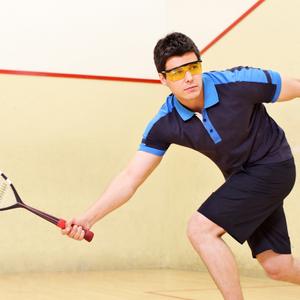
A fast and complete sport, played in an indoor hall.
Point blue, red or double yellow: reading the colour of a squash ball
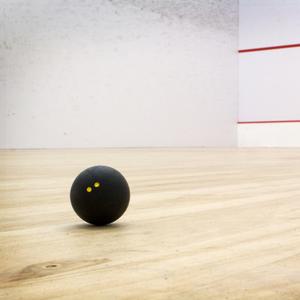
The squash ball is a hollow rubber sphere about forty millimetres in diameter, and the point of colour printed on it indicates its speed and the height of its bounce. The point blue, the most bouncy one, is used by beginners and children, the point red for progressing players, and the simple point yellow for experienced club players. The ball with the double point yellow, that of the Dunlop Pro, has the least bounce and remains the official ball of World Squash and the professional PSA circuit. The tubes of three Prince Rebel balls ensure you always have a spare ball at the bottom of your bag, as a cracked ball quickly becomes noticeable by its uneven bounce.
The selection
Squash is organized by type:
Dimensions, headshape and materials of a squash racket
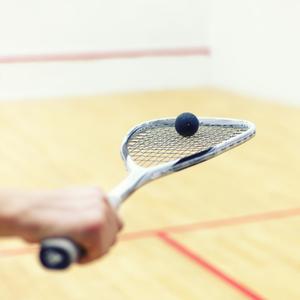
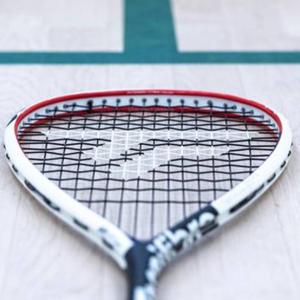
A squash racket measures a maximum of 686 millimetres in length, with a stringed area limited to 500 square centimetres according to World Squash regulations. Modern frames are made of carbon, allowing them to often weigh less than one hundred and fifty grams. Two head shapes coexist: the teardrop head, without a bridge between the handle and the stringing area, offers a larger striking surface and more power, while the classic head, with a bridge, prioritizes precision. The choice between these two shapes depends more on playing style than on skill level. The grip, which is thin enough to allow for wrist flexibility, should be replaced as soon as it slips in the hand.
Other sports
The other sports on the site, swimming, padel, badminton, handball, basketball, golf, fitness, climbing, camping, fishing, motorcycling, are gathered on the other sports page.
Goggles, shoes, bag: the rest of the court equipment
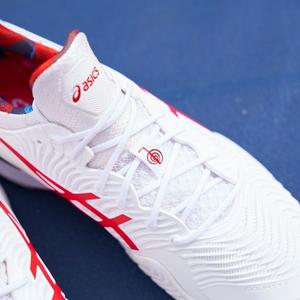
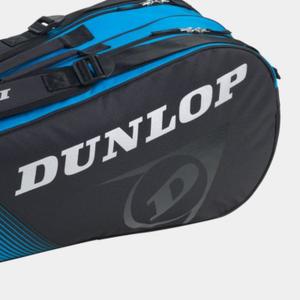
Protective goggles are mandatory for those under nineteen years in World Squash competitions and are strongly recommended for adults, as the ball can bounce in all directions in an enclosed space. Indoor shoes with a clear rubber sole, required on club floors, provide a low sole and lateral support for lunges to the corners. A thermobag or an insulated racket bag protects carbon frames and strings from temperature changes in the car boot, which can loosen the string. It also holds a towel, a water bottle, and a spare ball, as the ball tends to crack after many games.
Deals
Great deals can also be found in the deals, promotions, clearance, sales, Black Friday. The new arrivals showcase the latest collections, and the items shipped within 24 hours are prepared and dispatched in 24 hours. The key events of the year follow a steady order: the Black Friday at the end of autumn, the year-end holidays, the winter sales, the French Days of spring, followed by the summer sales and back to school.
Frequently asked questions
Why should a squash ball be warmed up?
When cold, the squash ball barely bounces, especially the double point yellow. Two or three minutes of hitting against the wall raises the temperature of the air it contains, and the ball regains the bounce expected for the match.
How are points scored in squash?
Each rally earns a point for the winner, regardless of whether they served or not. A game is won at eleven points, with a two-point lead required at ten all, and matches are most often played best of five games.
Will squash be in the Olympic Games?
Yes, the International Olympic Committee has selected squash for the Los Angeles Games in 2028. This is a first for the sport, whose bids had been rejected several times before.
What are the dimensions of a squash court?
A singles court measures 9.75 metres long by 6.40 metres wide. On the front wall, the high line is marked at 4.57 metres and the lower band, called the tin, rises to 48 centimetres.
At what age can you play squash?
Many clubs welcome children from around six or seven years old, with a shorter junior racket and a point blue ball that bounces more. Protective goggles are mandatory for them from the first structured session.






