
Volleyball training equipment
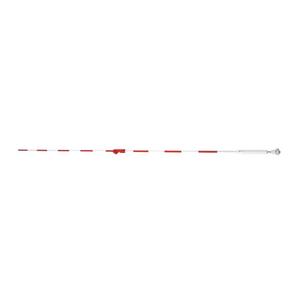


Starting at £150.00
£105.38


Starting at £112.48
£74.07


Starting at £49.94
£42.76


Starting at £49.94
£39.63

Starting at £69.96
£55.28

Our selection of Training Equipment brings together the gear for playing and training in volleyball: multi-sport net Hudora, referee card set Mikasa, and our tips for equipping a club, a school, or a garden with nets, posts, markers, and balls.
Everything you need to play and improve, everywhere.
The net, the foundation of the game
To play volleyball, the first piece of equipment is the net. In competitions, it is set at a regulated height, higher for men than for women, and adjusted for youth categories. For leisure, in the garden, at the beach, or in the park, an adjustable multisport net, like the Hudora, mounted on telescopic poles, allows for playing volley as well as badminton, by adjusting the height for the players and the discipline.
Other equipment
Volleyball equipment also includes:
All equipment is gathered on the equipment page.
Refereeing and cards
The referee in volleyball has cards, like in the game Mikasa, to sanction unsporting behaviour. The yellow card corresponds to a warning, with no impact on the score. The red card corresponds to a penalty: the opposing team scores a point and gets the service. Showing both the yellow and red cards results in expulsion for the remainder of the set, and showing them separately results in disqualification for the rest of the match. A club trains its referees for youth matches.
The coach's equipment
For training, the coach uses other tools: cones and hoops to mark movement and serve precision workshops, a trolley or a bag for balls to follow up exercises without losing time, light balls for introducing children, and sometimes a target to hang to work on accuracy. A manometer checks the pressure of the balls. The net is stored dry and rolled up to prevent the mesh from tangling.
Good deals
Good deals can also be found in good deals, promotions, clearance, sales, and Black Friday. The new items showcase the latest collections, and items shipped in 24h are prepared and sent in 24 hours. The highlights of the year follow a stable order: Black Friday in late autumn, the end-of-year holidays, winter sales, French Days in spring, then the summer sales and back-to-school.
Frequently asked questions
What is the height of the volleyball net?
In competitions, the net is set at two metres forty-three for men and two metres twenty-four for women, with lower heights for youth categories.
How to set up a volley net in the garden?
An adjustable multisport net, like the Hudora, mounted on telescopic poles, is set up on a flat lawn. It can also be adjusted to the right height for badminton.
What do the yellow and red cards mean in volley?
The yellow card is a warning with no point loss; the red card penalises gross conduct and gives a point and the service to the opponent.
What equipment is needed to train a volley team?
Prepare balls, cones for movement, vests, and a bag for balls. A tactical board helps explain rotations and defensive placements.
What ball is best to start with in volley?
A light and soft ball, with a gentle touch, is easy on the forearms of beginners and children. Competition balls, which are stiffer, are suitable for experienced players.






