
Neoprene wetsuits for water sports


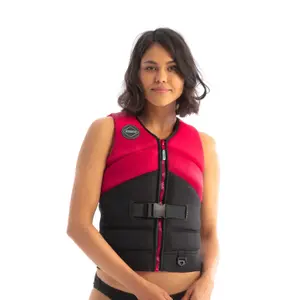


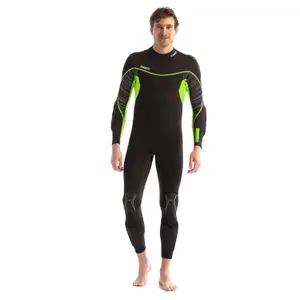


The Wetsuits page brings together neoprene outfits for surfing, diving, wakeboarding, and jet skiing: O'Neill Reactor shorty and Abysstar Sea spring suits for warm water, Jobe Yukon and Sofia full suits, Jobe Boston for kids, GUL Radiation undersuit. There are styles for men, women, and children, from lightweight options for sunny days to thicker models for cooler water.
Stay warm in the water, from summer to autumn.
How neoprene keeps the body warm
Neoprene is a synthetic rubber filled with tiny gas bubbles: it's these that insulate against the cold. The wetsuit lets in a thin layer of water, which the body heats up and that stays trapped against the skin as long as the suit is well fitted; if it's too loose, it allows this water to be replaced with every movement, cooling the swimmer down. Californian surfer Jack O'Neill, who opened his first surf shop in San Francisco in 1952, was one of the first to make jackets from this material to stay in the icy waters of the Pacific longer, before building the brand that bears his name and popularizing the wetsuit among surfers worldwide.
Other water sports
Water sports also come in various forms:
All water sports are gathered on the water sports page.
Shorty, full suit or under-suit: which cut to choose
The shorty, with short sleeves and legs, like the O'Neill Reactor or the Abysstar Sea Spring, is for warm water in the summer: it protects the torso while keeping the arms and knees free for paddling on a board or getting up on a wakeboard. The full suit covers arms and legs and extends outings into spring and autumn: the Jobe Yukon for men, the Jobe Sofia, designed for women's shapes, with wider hips and a shorter torso. The under-suit GUL Radiation, thin and body-hugging, can be worn on its own in good weather or under a thicker suit; it protects children's skin from the sun and from rubbing against the jet ski seat.
Understanding the numbers and seams of a wetsuit
Two numbers separated by a slash indicate the thickness of the neoprene in millimetres: the Jobe Boston for kids, rated three and two, has three millimetres on the torso to keep the trunk warm and two on the arms and legs to move without effort. The seams then make the difference: flat and visible on summer models, they let in a bit of water; glued and then stitched without going through the neoprene, they make the wetsuit almost watertight for cold water. The zip at the back, with a long pull tab, makes putting it on easier, especially for kids; the chest zip, more watertight, requires a bit more shoulder flexibility to get into the suit.
Good deals
Good deals can also be found in good deals, promotions, clearance, sales, Black Friday. The new arrivals showcase the latest collections, and items shipped in 24h are prepared and sent within 24 hours. The highlights of the year follow in a stable order: Black Friday at the end of autumn, the end-of-year holidays, the winter sales, the French Days in spring, then the summer sales and back-to-school.
Frequently Asked Questions
What thickness of neoprene for water temperature?
Above about twenty degrees, a shorty or a full suit of two millimetres is enough. Between fifteen and twenty degrees, we move to three and two millimetres, and below fifteen degrees to four and three, even five millimetres with boots and a hood.
How to know if a wetsuit is the right size?
When dry, it should stick to the skin without folds at the back, under the arms, or behind the knees, while allowing the arms to be raised and breathing easily. Neoprene stretches a bit once wet: a slightly tight suit in the changing room will be fine in the water.
Surf suit or diving suit: what's the difference?
The surf suit prioritizes shoulder flexibility for paddling for hours. The diving suit, often thicker and reinforced at the knees, retains heat while stationary and compensates for neoprene that compresses and insulates less at depth.
How to rinse and dry a neoprene wetsuit?
Rinse it with fresh water after each outing, inside and out, to remove salt, sand, and chlorine. Dry it in the shade on a wide hanger, first inside out: direct sunlight hardens and cracks the neoprene.
Which wetsuit for a child discovering surfing?
A child cools down faster than an adult, as their skin surface is large compared to their weight. A thin full suit, like the Jobe Boston, is suitable as soon as the water is cool or the session lasts; the shorty is kept for brief summer swims.






