
Golf accessories on clearance


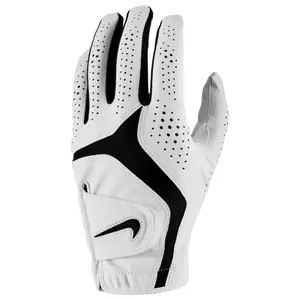
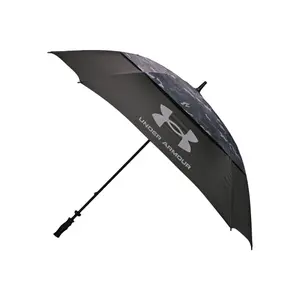


The clearance of golf accessories brings together end-of-line items for the course and training: gloves Nike, adidas, Callaway, TaylorMade, Srixon, Cobra and Under Armour for right-handed and left-handed players, wooden tees Legend and Gamblin, umbrellas JuCad, towel Nike, putting mats JuCad and training nets Boston Golf. The small equipment that every golfer renews during their games.
The small course accessories, at reduced prices.
Golf glove: hand, material and fit
The golf glove is worn on the hand at the top of the grip: the left for a right-handed player, the right for a left-handed player, which is why it's important to check the handedness indicated on each model. Leather, thin and flexible, provides the best feel and moulds to the hand over time; microfibre and synthetics, like those on the women's gloves Srixon, last longer and dry quicker. All-weather gloves maintain their grip in the rain, and the winter pair Cobra Stormgrip, worn on both hands, protects from the cold without losing grip. A well-fitted glove forms no creases in the palm and does not pull at the fingertips.
Other clearance items
The golf clearance also includes:
All clearance items are gathered on the golf page.
Wood tees: the right height for the club
The tee lifts the ball on the teeing ground; the rules limit its length to just over ten centimeters and prohibit it from indicating the line of play. With a driver, the ball is placed high, about halfway above the head of the club resting on the ground, to be struck on the upswing; with a fairway wood or hybrid, it is positioned just above the grass, almost on the ground with an iron on shorter holes. Wooden tees, like the Legend sold in bulk or the Gamblin, break without damaging the clubface and degrade naturally. Stacked tees ensure a consistent height from one tee to another.
Umbrella and towel: playing in the rain
The golf umbrella, significantly larger than a city model, shelters the player and their bag between shots. The JuCad models offer a wind-resistant frame, a canopy that protects from UV rays for sunny days, and a stem version that attaches to the trolley. The towel Nike, clipped to the bag with a carabiner, dries wet grips, grooves on the irons, and the ball on the green. In a downpour, keep a spare glove dry in a pocket of the bag and attach the open umbrella to the trolley to protect the clubheads and grips while walking.
Putting mat and net: training at home
The putting represents a significant portion of the strokes played in a round, and it's the skill that can be practiced most easily at home. The putting mat JuCad, rolled out in a living room or office, is used to repeat the alignment of the face, the pace, and the consistency of the swing on short putts. The training net Boston Golf, set up in a garden, allows you to hit balls with your own clubs without having to retrieve them far away: it keeps the swing in shape between outings and prepares for a return after winter. The book of golf rules in French complements this training and helps to play calmly in competition.
Frequently asked questions
What golf accessory should I gift to a player?
A set of tees, a glove in their size, or a towel are simple gifts that will be useful for every round. For a golfer looking to improve, a putting mat or training net allows them to work on their game at home.
How do you choose the size of a golf glove?
You measure the hand, then check the brand's size guide, as sizing varies between manufacturers. When trying it on, the glove should fit snugly without creases in the palm; leather loosens slightly with use, hence the importance of a fairly close fit.
Are women's golf gloves different?
Yes, they are tailored for a finer hand, with shorter fingers and a narrower palm. Brands like Srixon or Cobra offer them for right-handed and left-handed golfers, in microfibre or synthetic material with good grip.
How long does a golf glove last?
It depends on the frequency of play and the pressure applied on the grip: regular players often change them several times a year. You can extend its life by removing it between shots, allowing it to dry flat, and alternating between two gloves in hot weather.
Do you need a glove for each hand in golf?
No, one glove is enough in most cases, on the top hand, as that's the one that holds the club most securely. Gloves worn on both hands are reserved for cold weather or for players looking for more support.






