
Judogi on clearance


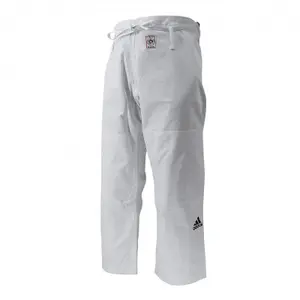


The judo and jiu-jitsu kimonos gathered here at the end of the series range from the lightweight judogi for the child discovering the tatami to the double weave approved for international competitions. Mizuno is the flagship brand with Keiko, Hayato, Shiro, Komodo, and Yusho, alongside adidas, Kwon, Danrho, and Metal Boxe, with jackets and trousers sold separately to replace a worn piece.
A sturdy kimono for the dojo, at a softer price.
Single or double weave: the weight of a judogi
The weave of the jacket makes the difference between two judogis. The single weave, light and flexible, dries quickly and is comfortable to wear: it's the kimono for children and beginners, like the Mizuno Shiro and Komodo. The double weave, much thicker and stiffer, withstands repeated grabs and makes it harder for the opponent to get a hold: it's used by regular judokas and competitors, like the Mizuno Yusho. The Keiko range from Mizuno, which means training in Japanese, and the Hayato are designed for regular practice at clubs. The trousers, reinforced at the knees, are also sold separately, like the Mizuno Yoroi, to replace a worn bottom before the jacket.
Other clearance items
The clearance for judo and jiu-jitsu also includes:
All clearance items are gathered on the judo and jiu-jitsu page.
White or blue kimono, IJF and FFJ labels
The white is the traditional colour of judo. In 1997, the International Judo Federation adopted the blue judogi to better distinguish the two fighters; it made its Olympic debut in Sydney in 2000. Since then, in major competitions, the first called wears white and the second blue. To participate, the kimono must bear the IJF label, which guarantees the weave, the dimensions of the sleeves and collar, and the fabric's quality, like the Mizuno Yusho or the approved adidas jackets and bottoms. In France, the federation's label, present on the Mizuno Shiro Plus and Komodo Plus, certifies a kimono that meets its requirements for club practice.
Brazilian jiu-jitsu kimono: fit and collar
The Brazilian jiu-jitsu kimono differs from the judogi by its more fitted cut: shorter jacket, narrower sleeves, and trousers reinforced at the knees to limit opponents' grips and withstand groundwork. Its collar, thick and stiff, often lined with a core of foam or rubber, hampers choking attempts. The adidas Contest and Danrho Shogun models follow these guidelines. In competition, the international Brazilian jiu-jitsu federation accepts only three colours: white, blue, and black, with no mixing between the jacket and trousers. Traditional ju-jitsu, of Japanese origin, is practiced with a kimono similar to that of judo.
Size, shrinking, and washing of the kimono
Kimonos are sized according to height, in centimetres: a size one hundred sixty fits a practitioner of about one metre sixty, sometimes with a build indication. Cotton shrinks in the first wash, by a few centimetres in the sleeves and trousers: if in doubt, opt for the next size up, especially for a growing child. One should wash their kimono after each session, at thirty degrees max, inside out and without fabric softener, then let it dry hanging in the open air; the drier speeds up shrinking and damages the fibres. Spread out on a wide hanger, the jacket dries without distorting the collar or shoulders.
Frequently asked questions
What kimono for a child starting judo?
A single weave kimono, light and easy to wash, is enough for the first years. The French federation's label guarantees a suitable fit, and you should choose a size up to accommodate growth and the shrinking of cotton.
Why are judo kimonos so thick?
Judo relies on grips: the fabric must withstand repeated pulls without tearing. A thick, stiff jacket is also harder for the opponent to grab, which explains the use of double weave in competition.
Can you train in JJB with a judogi?
In training, many clubs accept it to start. However, its wide sleeves offer easy grips for the opponent, and the competition regulations for Brazilian jiu-jitsu require a more fitted cut: a dedicated kimono soon becomes necessary.
How to remove a kimono's odour?
Wash it immediately after the session, without letting it ferment in the bag, with a bit of white vinegar in the rinse compartment. Complete drying in the open air, preferably in the sun, eliminates the bacteria responsible for smells.
How to fold your judo kimono?
Lay the jacket flat, place the folded trousers on top, then fold the sleeves and the jacket's sides over it. Roll or fold it all up, and tie the belt around it to carry it without coming undone.






