
Judo / Jiu-Jitsu clearance sale
The clearance sale for judo and jiu-jitsu features end-of-line products from grappling martial arts: training and competition judo kimonos, IJF approved judogis, FFJ labelled children's kimonos, Brazilian jiu-jitsu kimonos, trousers and belts, from Mizuno, adidas, Danrho, Kwon or Metal Boxe. From the first class to the competition mat.
A kimono for the club or competition, at a more affordable price.
Judo gi: weaving, weight and certification
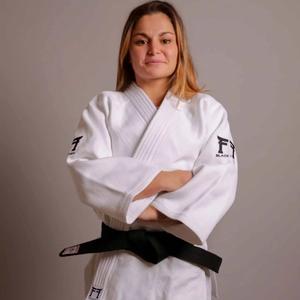
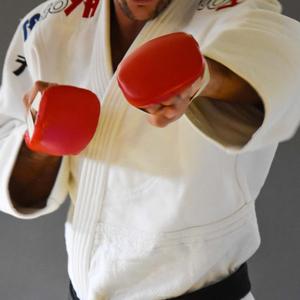
A judogi is primarily distinguished by its weave. Training models, like the Mizuno Keiko, which are lighter and more flexible, wash and dry easily. Competition kimonos, with denser and heavier weave, withstand grabs and make it harder for the opponent to gain hold. Judogis bearing the official IJF label, like the Mizuno Yusho or the adidas IJF bottom, meet the requirements for cut, sleeve length, and weight for international competitions; the blue judogi, proposed by the Dutchman Anton Geesink, was adopted in 1997. Children's kimonos labelled FFJ, such as the Mizuno Shiro or the Komodo, are suitable for French clubs.
Clearance sales
The clearance sale is organized by type:
Brazilian jiu-jitsu gi: cut and regulations
The brazilian jiu-jitsu gi is more fitted than a judogi, with sleeves and trousers closer to the body to provide less grip on the ground. The IBJJF regulations require a cotton gi of a solid color: white, royal blue, or black, with no jacket or collar of a different shade than the trousers. The thick collar withstands pulls from chokes, and the reinforcements at the knees absorb friction from the tatami during guard passes. At adidas, the JJ430 Contest is designed for competition, while Danrho offers the Shogun Plus for jiu-jitsu training.
Other sports on clearance
The clearance sale is available in other sports: football, running, lifestyle, bikes, motorcycle, handball, basketball, equestrian, camping, on the clearance page.
Belts and grades in judo and jiu-jitsu
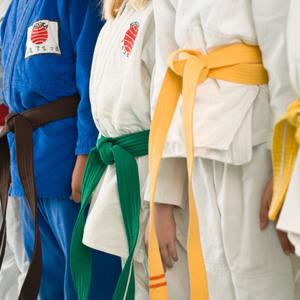
In France, judo has a progression of colored belts before the black: white, yellow, orange, green, blue and brown, with intermediate two-colored belts for children, such as white and yellow. Brazilian jiu-jitsu progresses more slowly, featuring five main colors for adults: white, blue, purple, brown and black, along with sewn stripes on the belt to mark progress. A belt is chosen by length: once tied, the ends should extend about twenty centimeters. Stitched belts, like the one from Metal Boxe, hold the knot better than soft models.
Frequently asked questions
What is the difference between judo and Brazilian jiu-jitsu?
Judo primarily aims to throw the opponent onto their back from a standing position, with the ground coming later. Brazilian jiu-jitsu, which originates from judo, focuses on ground fighting, using joint locks and chokes to achieve a submission.
Judo or jiu-jitsu for a child?
Judo, well-established in France, offers a structured educational framework and frequent grading that motivates younger students. Brazilian jiu-jitsu can also be practiced by children; the choice mainly depends on the nearby club and the child's interest.
How to limit shrinking of a cotton gi?
Washing in cold water or at thirty degrees and air drying helps limit cotton shrinkage. After the first wash, a gi might lose a few centimeters: choosing a size up compensates for this shrinkage.
How to choose the size of a judo gi?
Sizes are expressed in centimeters, based on the judoka's height: a gi of 160 is suitable for someone about one meter sixty. Larger builds often take the next size up for shoulder comfort.
How to tie a judo belt?
Place the middle of the belt on your belly, wrap it around your waist twice, then cross the ends in front and tuck one under the two layers before finishing with a flat knot. The two ends should hang at equal length.






