
Racket shoes for French Days


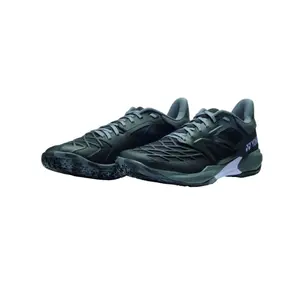
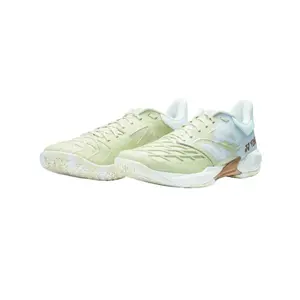

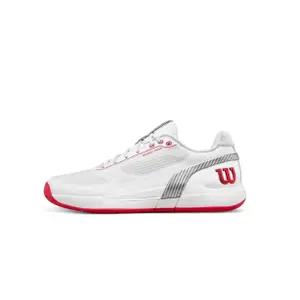
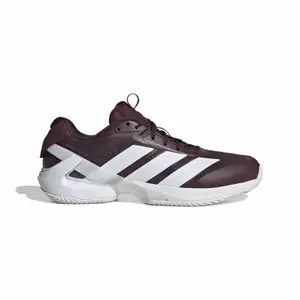


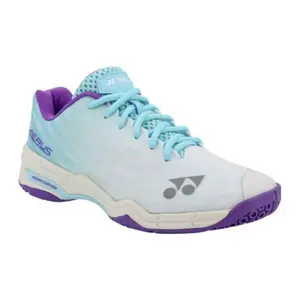


The selection of racket sports shoes from the French Days features models for tennis, padel, and badminton: Asics Gel-Resolution, Solution Speed, Gel-Challenger, and Gel-Dedicate, Head Revolt, Endure, and Sprint, Yonex Power Cushion, adidas Defiant Speed, and Skechers Viper Court. Each surface and each game has its sole, for both adults and children.
A pair suited to your game, at a reduced price.
Clay, hard or all surfaces: which outsole
In tennis, the outsole adapts to the surface. On clay, a tightly chevroned outsole, like the Clay version of the Asics Gel-Resolution, grips the crushed brick and sheds dirt with every slide. On hard, resin or porous concrete, the rubber needs to be thick and abrasion-resistant, especially under the forefoot and on the outer edge. The all surfaces outsole combines chevron areas and more open patterns: it suits the player who alternates between their club's courts and makes a good first choice. On sanded synthetic grass, very common in French clubs, clay outsoles often provide the best grip.
The rest of the equipment
The French Days rackets are also available in:
All offers are gathered on the racket sports page.
Baseliner or volleyer: a shoe for your game
The baseliner, who slides, brakes and moves back to the line, focuses mainly on lateral stability: the Asics Gel-Resolution, with its DYNAWALL structure that reinforces the sides of the outsole, or the Head Revolt Pro absorb these supports. The player who comes to the net seeks the lightness and responsiveness of the Asics Solution Speed, with FlyteFoam cushioning, or the adidas Defiant Speed. The recreational player finds a good balance between comfort and durability in the Gel-Challenger or the Gel-Dedicate. The BOA system of the Head Endure Pro replaces laces with a dial that tightens the upper evenly and loosens with a gesture.
Padel and pickleball: specific floors and supports
Padel is most often played on sanded synthetic grass, where a chevron outsole, similar to that of clay, prevents slipping too far during direction changes. The Head Motion Pro, available in men's, women's, and BOA dial versions, targets these players who execute lunges, glass exits and repositioning. Pickleball, played on a small hard court, requires a flatter and stickier outsole, low supports, and good lateral support: the Skechers Viper Court, designed for this sport, combines a cushioned outsole with a lightweight upper. In both cases, running shoes should be avoided as they are too unstable laterally.
Badminton: rubber outsole and Power Cushion
Badminton is played indoors on wood or synthetic floors: it requires a thin outsole made of clear rubber, very grippy, that doesn't mark the floor and keeps the foot close to the ground for lunges and jumps. Yonex, a specialist in this sport, equips its shoes with the Power Cushion technology, a foam that absorbs the shock of smashes and returns some of it for a quick response. The range includes very stable models for competition, including a special edition for Danish champion Viktor Axelsen, and lighter versions like the Cascade Accel. The Asics Upcourt, more versatile, is also suitable for beginners indoors.
Frequently asked questions
How to choose tennis shoes for a child?
A child needs a lightweight and flexible shoe, with a well-held heel and an outsole suitable for their club's surface. The Head Sprint with Velcro can be put on by the youngest without help; leave half a centimetre of growth margin.
What shoe size to take for tennis shoes?
You take your usual size while keeping half a centimetre in front of the toes to absorb sudden stops. The fitting should be done at the end of the day, with the heel well-set at the back of the shoe and laces tightened as in a match.
Can you play padel with tennis shoes?
Tennis shoes designed for clay surfaces are suitable for padel, as their chevron outsole grips the sanded grass. However, a smoother outsole for hard surfaces tends to slip more; for regular play, a padel shoe remains preferable.
When to change tennis shoes?
As soon as the patterns on the outsole fade under the forefoot or the cushioning compresses, grip and joint protection decrease. A regular player often changes pairs once or twice a year, more frequently if their slides wear the rubber quickly.
Is a highly cushioned shoe necessary for playing tennis?
A heavy player or one prone to knee pain benefits from choosing a well-cushioned model, such as the Asics Gel-Dedicate. Lighter, faster players prefer a lower shoe that keeps the foot close to the ground for quick supports.






