
Padel on Black Friday


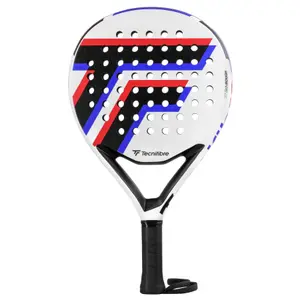
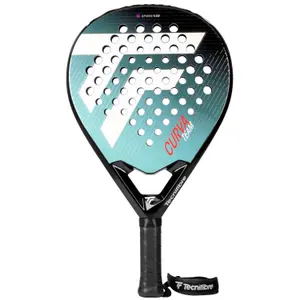


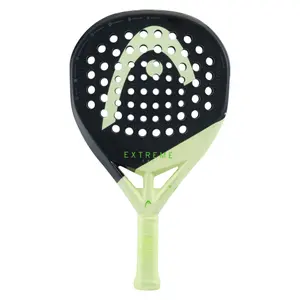


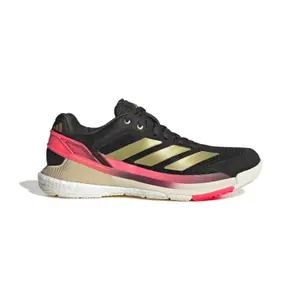
The Black Friday padel collection includes court gear: Nox rackets by Agustín Tapia and Edu Alonso, Head, adidas Metalbone and Tecnifibre, Head Motion Pro and Sprint Pro shoes, Wilson, Head, Dunlop and Tecnifibre balls, bags, protective gear, overgrips, and shorts. Everything you need to gear up for a first game of four or to refine the skills of an experienced player.
All padel gear, at discounted prices.
Round, teardrop or diamond: the shape of the racket
The shape of a padel racket determines its character. Round, like the Tecnifibre Curva Soft, it places the weight close to the handle and offers a wide effective hitting area: the ball goes straight even when not perfectly centred, which reassures beginners and defenders. In teardrop, like the Nox Ventus Hybrid or the Head Speed Motion, it balances control and hitting, for versatile players. In diamond, like the Nox Genius Attack of Argentine Agustín Tapia or Edu Alonso's Ventus Attack, the weight shifts towards the head: the smash gains power, but any slight centring error is costly. The regulations limit the racket to forty-five and a half centimetres in length.
Other racket sports
Racket sports at Black Friday are also varied:
All racket sports are brought together on the racket sports page.
EVA foam, carbon and racket weight
A padel racket has no strings: its face is a panel with holes, placed on a core made of foam. A hard EVA foam returns the ball with power when hitting hard; a softer foam, often called soft, absorbs vibrations and makes slow balls easier. Carbon fibre faces are woven tighter or looser: a weave of twelve thousand filaments per bundle, noted 12K, gives a stiffer and more precise face than a weave of three thousand. The weight, often around three hundred and sixty grams, also changes the game: a lighter racket is quicker to handle at the net; a heavier one puts more mass into the hit.
Padel shoes: herringbone sole and Clay version
Padel is played on synthetic grass filled with sand, which rolls underfoot like small balls. The padel shoe responds with a herringbone sole, whose edges grip the grass during lateral runs and stops near the walls. The Head Motion Pro, available in men's and women's versions, features a Boa lacing system, adjustable with a dial, with no knots to redo during the game; the Head Sprint Pro, lighter, targets nimble players. The Clay version has a sole designed for courts heavily laden with sand. A running shoe, with a smooth and high sole, slips and risks exposing the ankle.
Balls, overgrips and frame protection
A padel ball looks like a tennis ball but it is a bit less pressurised: less lively, it suits the shorter court and bounces off the walls. The Wilson, Head, Dunlop and Tecnifibre balls, sold in tubes of three, are replaced as soon as they lose their bounce, often after a few games. The overgrip, wrapped around the handle, absorbs sweat and needs replacing after a few hours of play, as soon as it becomes smooth. Glued on the top of the frame, the protection Starvie takes the hits against the walls and the ground, where rackets chip the most. The Head bag keeps the gear safe from the heat.
Frequently asked questions
Where did padel come from?
Padel originated in Mexico, in Acapulco, in 1969, when Enrique Corcuera enclosed a court on his property with walls. The game then developed in Spain and Argentina before conquering France.
What age can you start padel?
Children often start around six or seven years old, with a shorter and lighter junior racket. The underarm serve and the walls extending the rally make the game accessible at any age, even for seniors.
What muscles does padel work?
Padel mainly works the legs, thighs and calves, in short movements and lunges, as well as the shoulders and forearms during hits. The rotation of the torso also engages the abs and obliques.
How is the score counted in padel?
Like in tennis: fifteen, thirty, forty and game, with sets to six games. The serve is underarm, the ball hit below the waist after a bounce on the ground, diagonally into the opponent's box.
How many players are needed for a padel match?
Padel is almost always played in doubles, with four players, on a court twenty metres by ten surrounded by walls and fencing. A singles version exists, on a narrower court, but it remains rare.






