
BMX brake levers
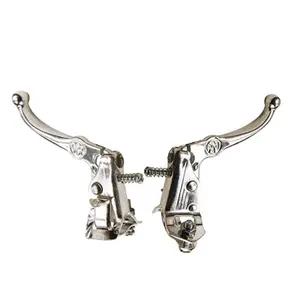
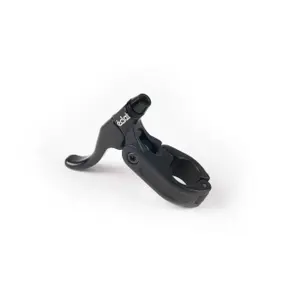
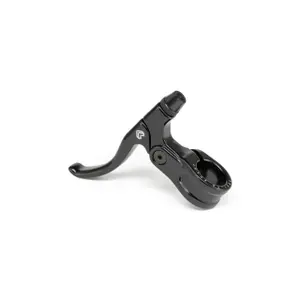
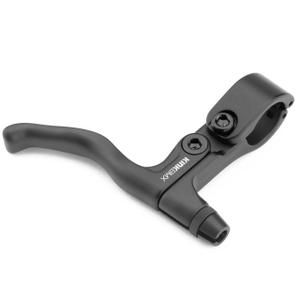
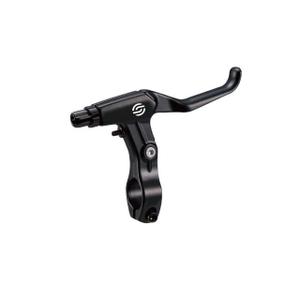
Our page Brake Levers for BMX gathers our tips for choosing your lever: short lever for one or two fingers, compatibility with a rotor, adjustment of the reach and gap, materials and position on the handlebars, for precise braking in street, park, and race.
Precise braking, at your fingertips.
A secure grip
The BMX brake lever is usually short, operated with one or two fingers, to maintain a secure grip on the handle during jumps and tricks. It is most often positioned on the left or right depending on the rider's preference, to control the rear brake. Made of aluminium or composite material, it must withstand falls, and some models come with a stop to limit damage in case of a knock.
The rest of the braking system
BMX braking also includes:
All braking information can be found on the braking page.
Barspins
Riders performing barspins with a brake use a rotor under the stem. Some levers are designed for this setup, with a double cable exit, one upward and the other downward from the rotor. Compatibility between the lever and its system must be checked, or a separate cable can be used. The lever must also fit the handlebars’ diameter, which is typically twenty-two millimeters on most BMX bikes.
Proper adjustment
The spacing of the lever, adjustable by a screw, adapts to hand size: it should naturally fall under the fingers without altering the grip. The play, adjusted by cable tension, determines when the brake engages. The lever should be inclined in line with the forearm while riding, and the collar should be tightened enough to hold it in place without preventing it from pivoting in case of a fall.
Deals
Good deals can also be found in the deals, promotions, clearance, sales, Black Friday. The new arrivals feature the latest collections, and items shipped in 24 hours are prepared and sent out within that time frame. The year's key events follow a consistent order: Black Friday at the end of autumn, the holiday season, winter sales, the spring French Days, followed by summer sales and back-to-school.
Frequently asked questions
How do you adjust the play on a BMX brake lever?
The adjustment screw, located on the lever, brings it closer or further away from the handle. It is adjusted so that the lever can be caught at the fingertips without losing grip, regardless of hand size.
Short or long lever for a BMX?
The short lever, operated with one or two fingers, allows braking while keeping the other fingers on the handle, essential in freestyle. A longer lever provides more force, which beginners and racers appreciate.
How do you change a bike brake lever?
You detach the cable from the lever, loosen the mounting collar, and remove the handle to slide out the old lever. Then you install the new one, reattach the cable, and adjust its position and play.
Does a BMX lever work with a rotor?
Yes, most BMX levers are compatible with a rotor, which divides the cable to allow the handlebars to turn freely. A cable of suitable length is chosen, and the tension of both cables is adjusted for balanced braking.
Why isn't a brake lever returning?
Most often, the cable is rubbing in a dirty or bent housing, or the caliper spring is too weak. Clean and lubricate the cable, change the housing if necessary, and check that the lever hasn’t been bent during a fall.






